
Valero's Refinery Closures and the Energy Transition: Policy Pressures Reshape Refining Sector Valuations
Policy Pressures in California: A Case Study
California's regulatory environment has become a bellwether for the energy transition's impact on refining. The state's stringent emissions targets, fuel blend requirements, and high gas taxes have created a challenging landscape for refiners. Valero's decision to exit these markets follows Phillips 66's closure of its Los Angeles-area refinery, signaling a trend. Governor Gavin Newsom has acknowledged the risks to fuel supply stability, yet the state's commitment to reducing gasoline consumption and promoting electric vehicles remains unwavering, according to an Institute for Energy Research analysis.
The financial toll is evident. Valero recorded a $1.1 billion pre-tax impairment charge for the Benicia and Wilmington refineries, reflecting the sector's vulnerability to policy shifts, as detailed in a Valero shutdown announcement. Meanwhile, California's gasoline prices are already 52% higher than the national average, sparking debates over economic strain versus environmental progress. These closures will also eliminate nearly 18% of the state's refining capacity, raising questions about regional supply resilience, according to a BCG study.
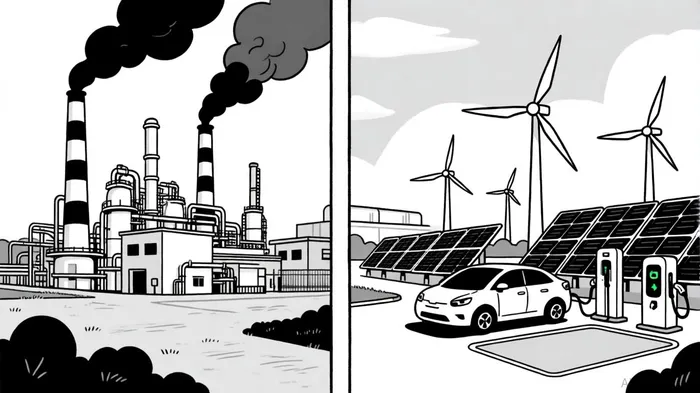
Broader Industry Implications: A Sector in Transition
Valero's moves are emblematic of a global shift. According to that Institute for Energy Research analysis, energy transition policies in 2025 are expected to reduce refining capacity by 10% to 30% across regions, particularly in Europe, as demand for refined products peaks or plateaus by 2030. Gasoline demand, in particular, faces existential risks, while jet fuel and diesel may retain resilience due to slower electrification in aviation and heavy transport.
Refiners are responding by prioritizing cost efficiency and operational flexibility. Companies that optimize maintenance, reduce energy use, and adopt low-carbon technologies are gaining competitive advantages. However, weaker players-those unable to adapt-risk being pushed out of the market, leading to a sector-wide shakeout. This dynamic is already evident in the EU, where phasing out free emissions allowances under carbon trading systems is eroding margins for less efficient refineries.
Financial Metrics and Investor Considerations
The financial metrics of the refining sector are increasingly influenced by energy transition policies. Carbon pricing, emissions regulations, and internal carbon accounting are reshaping EBITDA calculations and stock performance. For instance, Valero's first-quarter 2025 net loss of $595 million-partly attributed to $1 billion in impairment charges-highlights the sector's vulnerability to margin compression and regulatory costs.
Investors are now factoring in "climate risk-adjusted EBITDA," which incorporates compliance expenses and carbon pricing. MSCI's Energy Transition Framework, for example, evaluates companies based on governance, emissions performance, and policy exposure, offering a forward-looking lens for valuations. By 2025, carbon pricing covers 28% of global emissions, generating over $100 billion annually for public budgets-a trend that will intensify as markets mature.
Conclusion: Navigating the New Energy Paradigm
Valero's refinery closures are a microcosm of the refining sector's struggle to adapt to the energy transition. While policy pressures are undeniably disruptive, they also create opportunities for refiners that pivot toward cost efficiency, low-carbon technologies, and diversified product portfolios. For investors, the key lies in identifying companies that can navigate regulatory headwinds while capitalizing on emerging markets for biofuels, hydrogen, and carbon capture.
The refining sector's future is no longer defined by sheer scale but by agility and alignment with decarbonization goals. As California's experience shows, the pace of change is accelerating-and those who fail to adapt will find themselves left behind.







Comentarios
Aún no hay comentarios