
Valero Energy Corporation: Navigating the Clean Energy Transition While Sustaining Refining Margin Resilience
The global energy transition is reshaping the landscape for traditional energy companies, demanding a delicate balance between decarbonization and operational profitability. Valero Energy CorporationVLO--, a leader in refining and renewable fuels, has emerged as a case study in strategic adaptability. By 2025, the company has demonstrated a dual focus: advancing ambitious clean energy initiatives while maintaining robust refining margins. This analysis examines Valero's positioning in the evolving energy market, drawing on its 2025 performance and long-term strategic goals.
Strategic Positioning in the Clean Energy Transition
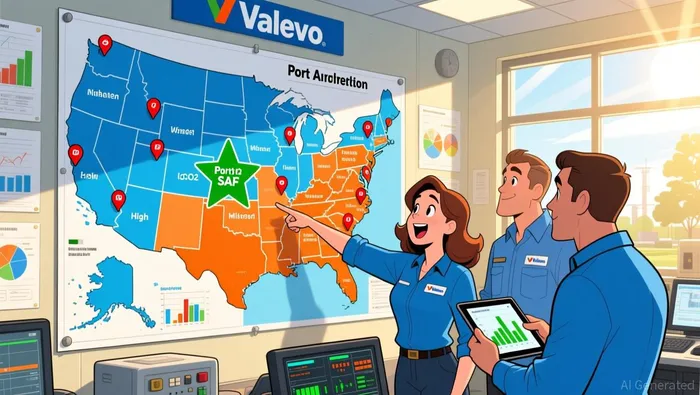
Valero's clean energy strategy is anchored in renewable fuels and carbon management. By 2025, the company had achieved a significant milestone with renewable diesel sales projected to reach 1.1 billion gallons, reflecting its pivot toward low-carbon production. A cornerstone of this effort is the $315 million Sustainable Aviation Fuel (SAF) project at its Port Arthur, Texas, plant, which became fully operational in early 2025. This project allows up to 50% of the site's existing 470 million gallon renewable diesel capacity to be repurposed for SAF, aligning with global demand for decarbonized aviation fuels.
 Beyond SAF, ValeroVLO-- is exploring innovative pathways such as ethanol-to-jet fuel conversion and has partnered on a $8 billion carbon capture and storage (CCS) initiative with Summit Carbon Solutions. This project, spanning eight Midwest ethanol plants, is expected to capture 3.1 million metric tons of CO2 annually, addressing Scope 3 emissions while enhancing Valero's environmental credentials. These investments underscore a long-term ambition to reduce and displace over 45 million metric tons of CO2e by 2050, covering all emission scopes.
However, the transition is not without challenges. Valero reported a $79 million operating loss in Q2 2025 for its renewable diesel segment, highlighting the financial risks of scaling new technologies. The company is countering these pressures through AI-driven optimization and strategic partnerships, aiming to improve efficiency and profitability in the renewable fuels sector.
Refining Margin Resilience: A Pillar of Stability
While Valero's clean energy investments capture headlines, its traditional refining operations remain a critical pillar of financial resilience. In Q3 2025, the company achieved a 44% surge in refining margins per barrel, driven by a 97% refinery throughput utilization rate across its global facilities. This operational excellence translated into a $1.6 billion operating income for the refining segment in Q3 2025, a sharp increase from $565 million in the same period in 2024.
Cost management has been equally pivotal. Despite higher throughput volumes, refining operating expenses per barrel remained flat at $4.71, demonstrating Valero's ability to control costs. The company is further enhancing efficiency through capital projects such as the $230 million FCC Unit optimization at its St. Charles Refinery, slated for completion in late 2026. This project aims to boost production of high-value products, reinforcing Valero's competitive edge in a volatile market.
Strategic Synergies and Long-Term Outlook
Valero's dual focus on clean energy and refining resilience creates a strategic synergy. The company's investments in carbon capture and renewable fuels not only align with regulatory trends but also diversify revenue streams, reducing reliance on cyclical oil markets. Meanwhile, its refining operations provide the financial flexibility to fund innovation, as evidenced by the $8 billion CCS partnership and the Port Arthur SAF project.
The integration of AI and digital tools further strengthens this model. By optimizing production processes and supply chains, Valero is mitigating operational risks while accelerating the deployment of low-carbon technologies. This approach positions the company to navigate near-term volatility while advancing its decarbonization goals.
Conclusion
Valero Energy Corporation's 2025 performance illustrates a company adept at navigating the dual imperatives of the energy transition and profitability. Its clean energy initiatives, though capital-intensive, are underpinned by a resilient refining business that has delivered strong margins and operational efficiency. While challenges such as the Q2 renewable diesel loss remain, Valero's strategic investments and technological agility suggest a path toward long-term sustainability. For investors, the company's balanced approach offers a compelling case: a traditional energy player reinventing itself without sacrificing financial stability.







Comentarios
Aún no hay comentarios