
Uzbekistan's Tightening Monetary Policy and Its Implications for Foreign Investors
In 2025, Uzbekistan's Central Bank has maintained a 14% key interest rate to combat inflation, which stood at 8.8% in August-a slight decline from 9% in July but still above the bank's 7–8% target range, according to Gazeta.uz. This tightening policy reflects a strategic effort to stabilize prices amid global headwinds, including rising energy costs and imported inflation from key trading partners, according to Trading Economics. For foreign investors, the interplay between inflation control and capital inflows is critical: high interest rates can attract yield-seeking capital but may also constrain economic growth if lending becomes too restrictive.
Inflation Control as a Double-Edged Sword
The Central Bank's 14% rate has curbed headline inflation, though core inflation (excluding food and energy) remains at 7.6%, as reported by Gazeta.uz. By prioritizing price stability, the bank aims to anchor inflation expectations, which are currently elevated due to strong domestic demand, remittance inflows, and government spending - a pattern visible in Trading Economics data. This stability is essential for investor confidence, as volatile inflation erodes purchasing power and complicates long-term planning. However, the bank warns that global disinflation is slowing, and rising food prices could reignite inflationary pressures (Gazeta.uz).
The policy's effectiveness is evident in Uzbekistan's robust Q1 2025 GDP growth of 6.8%, driven by private investment and consumer activity, according to an Invexi review. Yet, the Central Bank has not ruled out further rate hikes if inflationary risks intensify, signaling a cautious approach to balancing growth and stability, as Kursiv reported. This measured stance aligns with the IMF's recent advice, reported by KUN.UZ, to avoid procyclical fiscal policies and adhere to foreign debt limits to ensure macroeconomic resilience.
Attracting Capital: A Calculated Balance
Uzbekistan's monetary policy has already begun to attract foreign capital. In Q1 2025, the country recorded $8.7 billion in foreign investment inflows-a 20% increase compared to 2024-directed toward energy, agriculture, and infrastructure projects (Gazeta.uz). The government's ambitious $42 billion 2025 target underscores its commitment to leveraging foreign capital for industrial diversification and export growth (Gazeta.uz). High interest rates make Uzbekistan's financial assets relatively attractive, particularly in a global environment of low yields. However, the Central Bank's focus on reducing dollarization (currently 40.2% for loans) and managing non-performing loans in the banking sector remains a key challenge (Invexi review).
The real effective exchange rate (REER) has also stabilized, with appreciation forecasts of 1.5–2% for 2025 (Invexi review). This stability reduces currency risk for investors, a critical factor in a region where exchange rate volatility has historically deterred long-term commitments. By insulating the economy from external shocks-such as U.S. tariffs and commodity price swings-Uzbekistan is positioning itself as a more predictable destination for capital (Invexi review).
Risks and the Road Ahead
Despite progress, risks persist. The Central Bank projects inflation to reach 8.7% by year-end, slightly above its target, due to lingering energy price effects and global supply chain disruptions (Gazeta.uz). Additionally, geopolitical tensions and protectionist policies could disrupt trade flows, indirectly affecting inflation and investor sentiment (Invexi review). Structural reforms, including tax collection improvements and privatization, will be vital to sustaining investor trust (KUN.UZ).
For foreign investors, Uzbekistan's 2025 policy framework offers a compelling mix of high returns and macroeconomic discipline. However, success hinges on the Central Bank's ability to navigate these risks while maintaining the delicate balance between inflation control and growth. As the country aims to double exports to $45 billion by 2030 (Gazeta.uz), its monetary policy will remain a key determinant of its attractiveness to global capital. 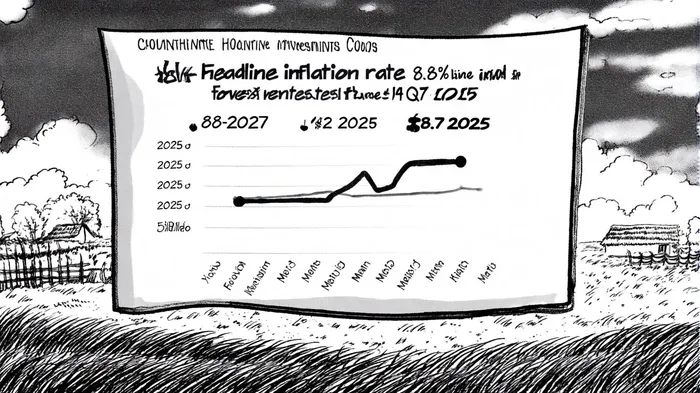







Comentarios
Aún no hay comentarios