
Uzbekistan's Energy Storage Leap: Strategic Investment Opportunities in Renewable Integration and Grid Modernization
A Blueprint for Grid Resilience
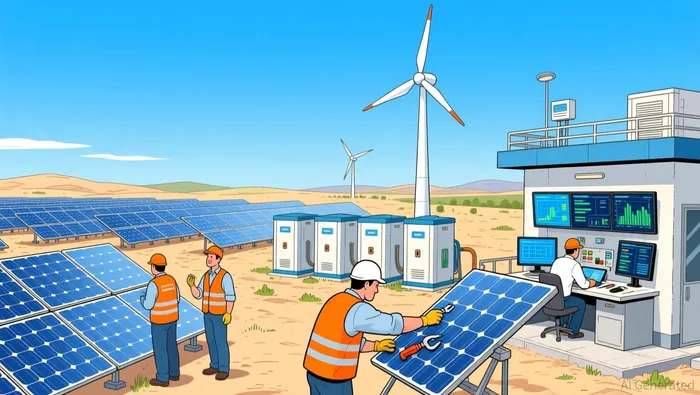
The BESS component of Masdar's project is critical to addressing Uzbekistan's grid reliability challenges. Over 50% of the country's power infrastructure is more than 30 years old, resulting in technical losses of 13% and frequent outages, according to a World Bank press release. By pairing solar generation with battery storage, the project mitigates the intermittency of renewables, ensuring a stable supply for 75,000 households and displacing 367,000 tonnes of CO₂ annually, according to the Nur-Bukhara PV project page. This model could serve as a template for neighboring countries, where renewable integration is hampered by similar grid vulnerabilities.
The systemic impact extends beyond Uzbekistan. Central Asia's renewable potential-spanning 195,000–3.76 million MW of solar PV and 1,500–354,000 MW of wind-remains largely untapped due to fragmented regulatory frameworks and underdeveloped transmission networks, as described in a ScienceDirect overview. Masdar's success in deploying BESS could spur cross-border investments, particularly as the World Bank and ADB expand their grid modernization programs. For instance, Uzbekistan's $100 million concessional credit for upgrading 6,000 km of distribution lines and installing 150,000 smart meters is part of a broader strategy to reduce losses and enable distributed renewable integration, as noted in the World Bank press release.
Equity Investment Opportunities in a Shifting Landscape
The project's financial structure highlights the growing role of blended finance in emerging market energy infrastructure. Concessional loans from the Canada-IFC Blended Climate Finance Program and the ADB's LEAP fund have de-risked private participation, attracting equity inflows that surged 53.6% in 2024 to $11.9 billion, according to a World Bank press release. This trend is unlikely to slow: Uzbekistan's 25-year Power Purchase Agreement with Masdar, coupled with its 2030 renewable targets, creates a predictable revenue stream that appeals to long-term investors.
Equity opportunities are also emerging in adjacent sectors. The U.S. has committed $20 billion to Central Asia's critical mineral supply chains, including tungsten and rare earth elements essential for battery production, as reported in a Discovery Alert article. While this focus is on resource extraction, it indirectly supports renewable infrastructure by securing raw materials for storage systems. Investors could capitalize on this synergy by targeting projects that combine mineral extraction with downstream energy storage development.
Systemic Risks and Regional Synergies
Despite the optimism, challenges persist. Central Asia's grid reliability metrics-measured by SAIDI and SAIFI-remain suboptimal, with bottlenecks in transmission infrastructure threatening to curtail renewable output, according to the ScienceDirect overview. However, Masdar's BESS demonstrates how storage can bridge this gap. The project's 10-year operational term under the Power Purchase Agreement suggests a phase where equity investors could enter post-construction, capitalizing on maintenance and optimization opportunities, as noted in the Nur-Bukhara PV project page.
Regionally, the project aligns with broader efforts to enhance cross-border energy flows. For example, Egypt and Germany's €50 million debt swap to connect wind farms to the grid illustrates how international partnerships can de-risk investments in renewable infrastructure, according to a Zawya article. Similar collaborations could emerge in Central Asia, particularly as countries like Kazakhstan and Turkmenistan seek to leverage their mineral wealth for energy storage projects.
Conclusion: A Strategic Inflection Point
Masdar's BESS project in Uzbekistan is more than a technical achievement-it is a strategic inflection point for Central Asia's energy transition. By demonstrating the viability of renewable integration and grid modernization, it opens a pathway for equity investors to participate in a region poised for rapid growth. The key lies in leveraging blended finance models, aligning with multilateral institutions, and targeting projects that address both energy security and systemic grid resilience. For those who act early, the rewards could be substantial.







Comentarios
Aún no hay comentarios