
Utz Brands' Strategic Expansion into California as a Catalyst for National Growth
A Strategic Acquisition to Unlock Market Potential
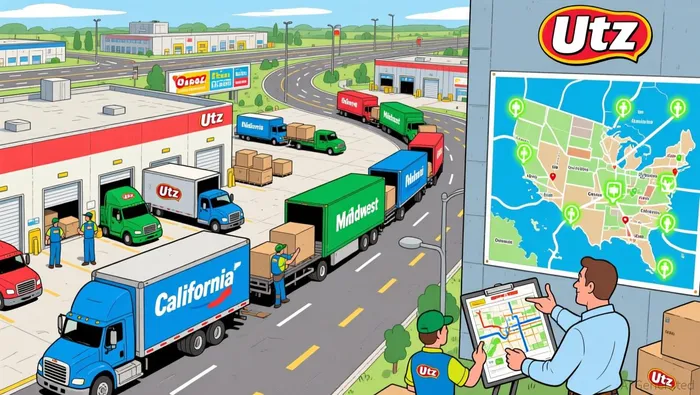
Utz's acquisition of Insignia's DSD network in 2025 is a calculated move to fast-track its presence in California, a state where the company currently holds just 1.9% retail market share according to financial reports. By integrating these routes, UtzUTZ-- gains immediate access to high-traffic retail corridors, enabling it to bypass the limitations of third-party logistics and deploy its proprietary DSD model. This approach allows for real-time inventory management, tailored promotions, and stronger retailer relationships-advantages that warehouse-based competitors struggle to replicate according to Seeking Alpha analysis.
 The significance of this expansion is underscored by California's status as a bellwether for the salty snack sector. The state's demand for premium, health-conscious products aligns with Utz's portfolio of branded snacks, including its recent innovations in protein-enriched and low-sodium offerings according to industry data. As a report by IBISWorld notes, the U.S. salty snack industry is increasingly dominated by brands that balance indulgence with nutritional appeal, a niche Utz is well-positioned to exploit according to industry research.
Distribution as a Competitive Moat
Utz's DSD model has long been a cornerstone of its competitive advantage. Unlike traditional warehouse distribution, which relies on centralized fulfillment centers, Utz's route-based delivery system allows for greater flexibility in responding to retail demand. This model reduces lead times, minimizes stockouts, and enables the company to maintain tighter control over pricing and promotional strategies according to Seeking Alpha analysis. According to a 2025 analysis by Seeking Alpha, Utz's route density-bolstered by its acquisition of Insignia's assets-has already driven nine consecutive quarters of volume share growth according to Seeking Alpha analysis.
The company's strategic use of large value packs during inflationary periods further illustrates the power of its distribution infrastructure. By bundling products and leveraging its route network to ensure rapid deployment, Utz has maintained pricing stability while delivering cost savings to consumers-a critical factor in a market where price sensitivity remains high according to Seeking Alpha analysis. This agility contrasts sharply with the rigid supply chains of national competitors, many of whom struggle to balance cost pressures with customer expectations according to market research.
Industry Tailwinds and Long-Term Prospects
The salty snack sector is poised for sustained growth, with the global market projected to expand at a 5% CAGR through 2033, driven by trends such as premiumization and sustainability according to market research. Utz's recent investments in eco-friendly packaging and plant-based product lines align with these trends, enhancing its appeal to environmentally conscious consumers according to industry data. However, the company's true edge lies in its ability to translate these innovations into market share through its distribution network.
For instance, Utz's Q3 2025 financial results-marked by 3.4% year-over-year net sales growth-highlight the effectiveness of its dual strategy: expanding into high-growth regions while optimizing existing operations according to financial reports. The acquisition of Insignia's California routes is expected to amplify this momentum, enabling Utz to scale its presence in a market where it currently generates $79 million in retail sales according to financial reports. Analysts estimate that even a modest increase in market share could translate into hundreds of millions in incremental revenue, given California's size and purchasing power according to local news.
Conclusion
Utz Brands' expansion into California is more than a geographic play-it is a masterclass in leveraging distribution infrastructure to drive national growth. By acquiring Insignia's DSD assets, the company has fortified its ability to compete with industry giants while capitalizing on the salty snack sector's shift toward health-conscious, premium products. For investors, the combination of a scalable DSD model, strategic acquisitions, and favorable industry tailwinds presents a compelling case for long-term value creation. As Utz continues to refine its infrastructure and expand its footprint, it is well-positioned to redefine what it means to be a regional snack brand in an increasingly nationalized market.







Comentarios
Aún no hay comentarios