
Utility Sector Credit Recovery: PG&E's Post-Bankruptcy Upgrade as a Bellwether for Systemic Risk Mitigation
The utility sector's credit landscape has undergone a transformative shift in the past six years, with Pacific Gas & Electric (PG&E) emerging as a pivotal case study in systemic risk mitigation. Following its 2019 bankruptcy—a landmark event attributed to liabilities from wildfire-related disasters—PG&E's recent credit upgrades by Moody'sMCO-- and Fitch Ratings signal a broader industry recalibration. These upgrades, driven by reduced wildfire exposure and legislative safeguards, underscore how utilities are redefining resilience in the face of climate-driven threats. For investors, PG&E's trajectory offers critical insights into the sector's evolving credit dynamics and the role of proactive risk management in restoring financial stability.
PG&E's Credit Recovery: A Blueprint for Resilience
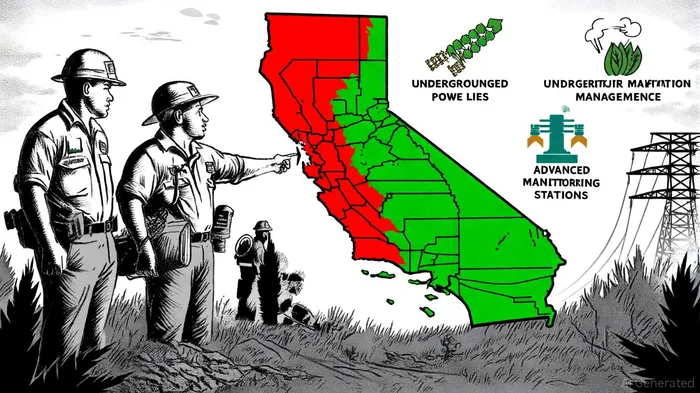
PG&E's emergence from bankruptcy in 2020 marked the beginning of a strategic overhaul. By 2025, the company had invested over $20 billion in wildfire mitigation, including grid hardening, vegetation management, and advanced monitoring systems[1]. These efforts, combined with California's AB 1054 legislation—a $21 billion framework capping liability and establishing a state wildfire insurance fund—reduced the company's financial vulnerability[2]. Moody's upgraded PG&E's senior secured debt to Ba2 in March 2025, while Fitch elevated its rating to BBB- in September 2025, citing “improved creditworthiness” and “stable outlook”[3].
This recovery is not merely operational but structural. PG&E's ability to access the wildfire insurance fund and its absence of catastrophic wildfire events since 2020 have alleviated investor concerns about liability volatility[4]. As Fitch noted, the company's “progress in combating wildfire risk” reflects a paradigm shift in utility risk management, where capital expenditures and regulatory alignment converge to stabilize credit profiles[5].
Systemic Risk Mitigation: A Sector-Wide Trend
PG&E's experience mirrors broader trends in the utility sector. The 2019 bankruptcy highlighted the existential threat of climate-related liabilities, prompting utilities nationwide to adopt multi-pronged mitigation strategies. For instance, the U.S. Department of Energy's Grid Resilience and Innovation Partnerships (GRIP) Program allocated $3.46 billion for projects like undergrounding power lines and deploying fire-resistant infrastructure[6]. Similarly, utilities in Oregon, Colorado, and Arizona have implemented dynamic grid management techniques—adjusting protective device sensitivity during high-risk conditions—to reduce wildfire ignition risks at a lower cost than traditional methods[7].
Regulatory frameworks have also evolved. California's AB 1054, which shields utilities from unlimited liability for wildfires, has become a model for other states. This legislative approach, coupled with federal tax reforms allowing utilities to recover wildfire mitigation costs, has created a more predictable financial environment[8]. Moody's, however, cautions that the sector's overall debt levels remain elevated, with funds from operations (FFO) to debt ratios declining from 19% in 2013 to 17% by 2017[9]. While PG&E's upgrades suggest optimism, the sector's long-term credit health will depend on sustained investment and policy support.
Challenges and Considerations for Investors
Despite PG&E's progress, challenges persist. S&P Global Ratings has yet to upgrade PG&E to investment grade, reflecting lingering concerns about the company's historical liabilities and the scalability of its mitigation strategies[10]. Moreover, climate change continues to exacerbate wildfire risks, with rising temperatures and population growth in wildland-urban interface areas creating new vulnerabilities[11]. For investors, these factors highlight the importance of differentiating between utilities with robust risk management frameworks and those relying on short-term fixes.
A critical consideration is the role of systemic risk in utility credit dynamics. Research indicates that lending to non-tradable sectors like utilities is positively correlated with systemic risk, particularly when large banks dominate credit allocation[12]. This underscores the need for diversified portfolios and close monitoring of regulatory developments, such as the Federal Energy Regulatory Commission's (FERC) evolving stance on wildfire liability.
Conclusion: A New Era for Utility Credit
PG&E's credit upgrades represent more than a corporate rebound—they signal a maturing approach to climate risk in the utility sector. By integrating capital-intensive mitigation, legislative safeguards, and technological innovation, utilities are redefining resilience in an era of escalating climate threats. For investors, the key takeaway is clear: credit recovery in the sector hinges on proactive risk management and policy alignment. As PG&E's journey demonstrates, the path to financial stability lies not in avoiding risk but in transforming it into a catalyst for innovation.







Comentarios
Aún no hay comentarios