
Utility Infrastructure Resilience: Long-Term Value Creation Through Wildfire Mitigation
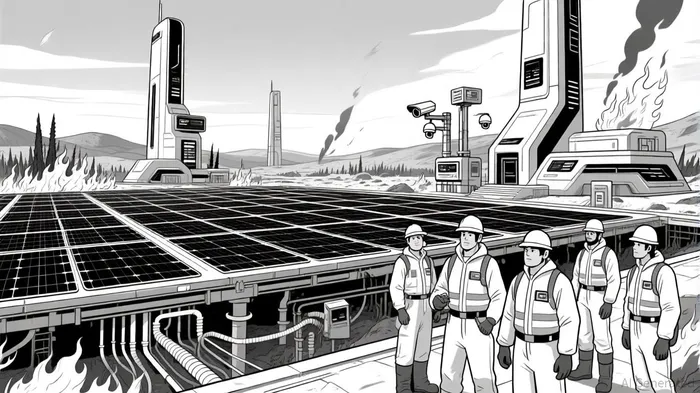
The escalating threat of wildfires has become a defining challenge for U.S. utilities, particularly in the arid West. Between 2020 and 2025, companies like Pacific Gas & Electric (PG&E) and PacifiCorp have faced liabilities exceeding $45 billion due to catastrophic fires, with some forced into bankruptcy, according to a Stateline report. These events have not only strained balance sheets but also exposed systemic vulnerabilities in aging infrastructure. Yet, amid this crisis lies an opportunity: proactive wildfire mitigation strategies are proving to be a cornerstone of long-term value creation, stabilizing credit profiles, reducing liability risks, and attracting investor confidence.
The Financial Toll of Wildfires
Wildfires have imposed a dual burden on utilities-operational disruptions and legal liabilities. For instance, PG&E's bankruptcy in 2019, triggered by the Camp Fire, underscored the existential risks of unmitigated fire exposure, according to a DBRS Morningstar analysis. Similarly, Oregon's PacifiCorp now grapples with liabilities from the 2020 Labor Day fires, limiting its ability to invest in clean energy, as Stateline reported. These costs are compounded by rising insurance premiums and regulatory scrutiny. Nearly 100 utilities faced credit downgrades since 2020, with wildfire risk cited as a primary factor, according to a Utility Dive analysis. The result? Higher borrowing costs and rate hikes for consumers, creating a vicious cycle of financial strain.
Mitigation as a Strategic Investment
The solution lies in reimagining infrastructure resilience. Utilities are adopting a mix of technological innovation and physical hardening. For example, Austin Energy partners with Pano AI to deploy high-definition cameras for early fire detection, as noted in a Public Power article, while others leverage wildfire modeling to prioritize vegetation management, according to a Bartlett West analysis. Grid hardening-replacing wooden poles with steel, undergrounding lines in high-risk zones-has become standard practice. However, the most cost-effective strategies are emerging from dynamic grid management. A 2025 Nature study found that adjusting protective device sensitivity during high-risk conditions reduces wildfire risk at a lower cost per avoided structure burned than traditional methods like undergrounding. This approach, which optimizes existing infrastructure, highlights the importance of balancing capital expenditures with operational agility.
Financial Returns and Investor Confidence
The ROI of mitigation is evident. PG&E and Southern California Edison (SCE) have committed $23 billion to wildfire mitigation from 2023–2025, a 26% increase from prior cycles, according to a Buchalter note. These investments are paying off: PG&E's credit rating improved after bankruptcy, and SCE's proactive measures have stabilized its financial outlook, as Utility Dive reported. Regulatory frameworks are also evolving. California's $21 billion Wildfire Fund, which insures utilities against catastrophic losses, has reduced liability exposure and restored investor confidence, according to a FactSet analysis. In contrast, utilities in states without such protections-like Texas-face higher borrowing costs due to perceived instability, as noted in a Stanford Law post.
The stock market reflects this shift. While the Morningstar US Utilities Index rose 15.49% year-to-date in 2025, according to Morningstar, individual performers like Edison InternationalEIX-- (SCE's parent) trade at discounts to fair value, reflecting lingering fire-related uncertainties. Yet, the broader trend is clear: utilities with robust mitigation plans are rewarded with lower capital costs and stronger regulatory support.
The Path Forward
For investors, the lesson is twofold. First, utilities that integrate wildfire risk into their capital planning-through dynamic grid management, public-private partnerships, and transparent mitigation plans-are better positioned to thrive. Second, regulatory environments will increasingly determine financial outcomes. States like Utah and California, which have established insurance pools and liability protections, offer templates for systemic resilience.
As climate change intensifies fire risks, the utilities that survive and prosper will be those that treat mitigation not as a cost, but as an investment in long-term value. The data is unequivocal: resilience pays.





Comentarios
Aún no hay comentarios