
Usiminas' Strategic Turnaround and Growth Prospects in Brazil's Steel Sector
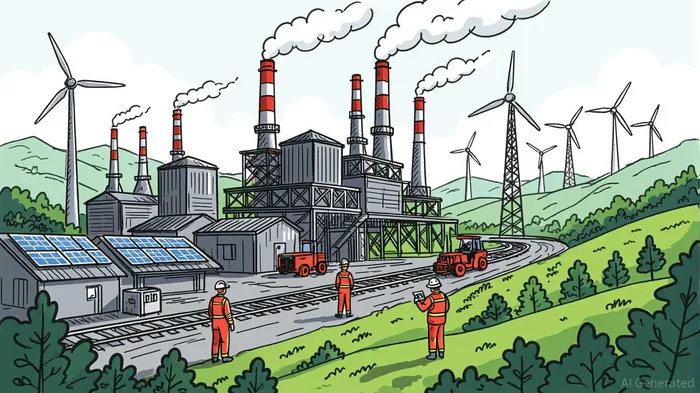
In the post-pandemic industrial recovery, Brazil's steel sector has emerged as a critical arena for strategic reinvention. Usiminas, one of the country's largest flat steel producers, has embarked on a dual strategy of operational restructuring and market repositioning to navigate a volatile economic landscape. With Brazil's steel market projected to grow from $73.06 billion in 2024 to $80 billion by 2035[1], driven by infrastructure and automotive demand, Usiminas' ability to balance cost discipline with sustainability initiatives will determine its long-term competitiveness.
Operational Restructuring: Efficiency as a Catalyst
Usiminas has prioritized cost-cutting and efficiency gains since 2020, with measurable results in 2025. According to its Q2 2025 earnings call, the company reduced its cost of goods sold (COGS) through operational efficiency and declining raw material prices, with half of the quarter's cost savings attributed to lower material costs[2]. Complementing this, management slashed 2025 capital expenditures (CapEx) to BRL 1.2–1.4 billion, reallocating resources to high-impact projects like a BRL 1.7 billion investment in a new coke battery. This upgrade is expected to enhance fuel efficiency and reduce energy costs, directly addressing one of the steel industry's largest expense drivers[2].
The restructuring has also yielded financial discipline: Usiminas reduced net debt by 24% in Q2 2025, a testament to its cash flow optimization[2]. Looking ahead, the company anticipates further margin expansion from production efficiency and cost-cutting, positioning it to outperform peers in a sector where profit margins remain fragile.
Market Positioning: Navigating Competition and Policy Shifts
Brazil's steel industry is highly competitive, with Usiminas vying against giants like Gerdau, ArcelorMittalMT--, and CSN. However, the company has leveraged strategic partnerships and policy tailwinds to strengthen its position. A 2025 report highlights how government-imposed tariffs on imported steel have shielded domestic producers from unfair international competition, a move Usiminas has actively supported[3]. These policies align with broader industry efforts to localize supply chains, a trend accelerated by global geopolitical tensions.
Simultaneously, Usiminas has aligned with Brazil's push for green steel. While the industry still relies heavily on coal-based blast furnaces, the country's abundant renewable energy and high-quality iron ore reserves position it as a potential leader in decarbonization[4]. Usiminas has invested in emissions control technologies, water recirculation systems, and reforestation programs, including its Usiminas Seedling Nursery, which produces 20,000 seedlings annually for environmental recovery[5]. These initiatives not only mitigate regulatory risks but also cater to growing demand from ESG-focused investors.
Green Steel and the COP30 Catalyst
The global shift toward green steel presents both a challenge and an opportunity for Usiminas. While ArcelorMittal leads Brazil's hydrogen-based green steel experiments in Ceará, Usiminas is well-positioned to follow suit. Hosting COP30 in 2025 could accelerate policy alignment and private-sector investment in low-emission technologies, creating a favorable environment for companies that prioritize sustainability[6]. Usiminas' existing focus on electric arc furnace (EAF) readiness and hydrogen-compatible infrastructure suggests it is primed to capitalize on this transition.
Risks and Opportunities
Despite its progress, Usiminas faces headwinds. High interest rates and trade pressures, as noted in a 2025 EnergyNews report, could dampen demand in the second half of the year[3]. Additionally, the upfront costs of green steel technologies remain a barrier. However, the company's debt reduction and operational efficiency gains provide a buffer to navigate these challenges.
For investors, the key question is whether Usiminas can sustain its cost-competitiveness while scaling green initiatives. Its recent restructuring demonstrates a clear path to profitability, but execution risks—such as project delays or rising input costs—could test management's resolve.
Conclusion
Usiminas' strategic turnaround reflects a nuanced understanding of Brazil's industrial landscape. By combining operational rigor with sustainability leadership, the company is not only addressing immediate financial pressures but also aligning with long-term industry trends. As Brazil's steel market expands and global decarbonization goals intensify, Usiminas' ability to balance efficiency with innovation will be critical. For now, its progress suggests it is well-positioned to thrive in a post-pandemic era where resilience and adaptability define success.







Comentarios
Aún no hay comentarios