
USDC's $250M Minting Surge: A Catalyst for Institutional-Grade Crypto Liquidity and Stablecoin Innovation
In late December 2025, the cryptocurrency ecosystem witnessed a seismic shift as the USDCUSDC-- Treasury minted $250 million in stablecoin liquidity, signaling a strategic injection of capital into the market. This event, tracked by blockchain analytics platforms like Whale Alert, has sparked intense debate among on-chain observers and institutional investors. The sudden surge in USDC creation-backed by U.S. dollar reserves held by Circle-reflects a broader trend of institutional-grade capital deployment and underscores the evolving role of stablecoins in global finance.
Context and Implications of the Minting Surge
The minting of 250 million USDC represents more than just a liquidity boost; it is a harbinger of market preparation for large-scale capital movements. Analysts suggest that this injection could be tied to liquidity provision for exchanges, DeFi protocol funding, or institutional asset acquisitions according to MEXC analysis. The immediate impact includes enhanced trading volume, reduced volatility, and a demonstration of institutional confidence in crypto's stability. For instance, platforms like GCEX have already begun leveraging stablecoin pairs to facilitate high-speed, low-cost transactions, a trend likely to accelerate post-minting.
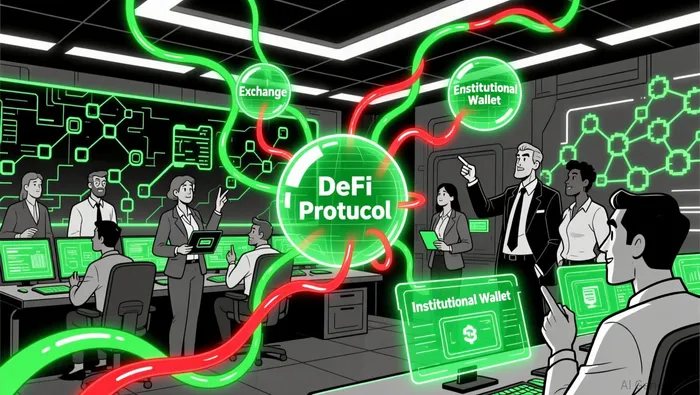
The real significance of this event lies in where the funds flow. If the newly minted USDC is deployed into DeFi protocols or tokenized real-world assets (RWAs), it could catalyze a new wave of yield generation and cross-border capital efficiency. Conversely, if the funds remain in stablecoin holdings, the market may see a temporary pause in speculative activity. Either way, the minting surge is a clear signal that institutional players are positioning themselves for strategic opportunities in 2025.
Stablecoin Market Dynamics in 2025
Stablecoins have emerged as the backbone of institutional-grade crypto liquidity. By mid-2025, the stablecoin market had reached a $252 billion market cap, growing at a 28% annualized rate. This growth is driven by regulatory clarity, such as the U.S. GENIUS Act, which mandates that stablecoins be fully backed by high-quality liquid assets (HQLA). Such frameworks have normalized stablecoin usage for cross-border settlements, treasury management, and yield strategies according to Federal Reserve analysis.
Institutional adoption is no longer speculative. Traditional financial giants like JPMorgan and BNY Mellon now offer tokenized deposits via stablecoins like JPM Coin and EURCV, while platforms like Circle's USYC (a tokenized money market fund) enable 24/7 onchain liquidity with yield according to Circle's blog. These innovations are reshaping capital markets, with tokenized U.S. Treasuries alone reaching a $7.4 billion market cap by September 2025 according to Medium analysis.
Institutional-Grade Liquidity Strategies
The post-USDC surge environment has unlocked new opportunities for institutional players. Tokenized assets-including private credit, commodities, and real estate-are now accessible via stablecoin-backed collateral. For example, private credit tokenization, led by platforms like Maple FinanceSYRUP--, has grown to $14 billion in Q3 2025, offering high-yield opportunities for institutional investors. Similarly, tokenized gold (e.g., Tether Gold, XAUT) and carbon credits are gaining traction as programmable, liquid assets according to DTCC analysis.
Yield strategies have also evolved. Institutions are deploying stablecoins into short-term Treasury instruments or using them as collateral for money market funds. These strategies prioritize transparency and regulatory compliance, mitigating counterparty risks while maximizing returns according to GCEX analysis. For instance, BlackRock's BUIDL fund, which tokenizes U.S. Treasuries, now accounts for nearly half of the $7.4 billion tokenized Treasury market.
Regulatory Tailwinds and Future Outlook
Regulatory progress in 2025 has been a game-changer. The SEC's clearer definitions of commodities vs. securities have placed BitcoinBTC-- and EthereumETH-- under CFTC oversight, while the GENIUS Act has bolstered stablecoin credibility according to Amundi research. These developments have encouraged 55% of traditional hedge funds to allocate to digital assets in 2025.
Looking ahead, the integration of stablecoins into tokenized money market funds and government securities will likely accelerate. The U.S. Federal Reserve's recent analysis on stablecoin implications for deposits and credit further underscores the need for institutional-grade infrastructure according to Federal Reserve analysis. As blockchain technology and regulatory frameworks mature, stablecoins will become even more integral to global finance-bridging traditional and digital asset ecosystems.
Conclusion
The USDC $250 million minting surge is not an isolated event but a symptom of a larger transformation. It highlights the growing institutional appetite for stablecoin-driven liquidity, tokenized assets, and yield strategies. For investors, this is a pivotal moment to monitor on-chain flows and regulatory developments. The future of finance is increasingly digital, and stablecoins like USDC are at the forefront of this revolution.







Comentarios
Aún no hay comentarios