
USD Strength and Global Asset Classes: Decoding the 2025 Economic Data-Driven Dynamics
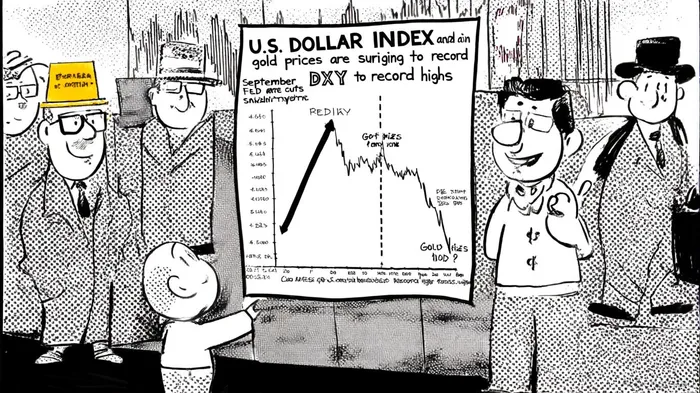
The U.S. dollar's strength in 2025 has been a tug-of-war between resilient domestic demand and structural trade imbalances, with cascading effects on global commodity markets. As key economic data releases and Federal Reserve policy shifts shape the dollar's trajectory, investors must navigate a complex interplay of macroeconomic signals and asset-class correlations.
U.S. Economic Data: A Mixed Signal for Dollar Momentum
The U.S. economy's second-quarter 2025 rebound, marked by a 3.3% annualized GDP growth, initially bolstered the dollar. This growth was driven by declining imports and robust consumer spending, with personal consumption expenditures rising 0.5% in July 2025 [1]. However, the current-account deficit widened to $450.2 billion in Q1 2025, and the goods and services trade deficit hit $78.3 billion in July, signaling persistent structural weaknesses [1]. These trade deficits, coupled with weak export performance, have historically pressured the dollar, as foreign demand for U.S. currency wanes.
Nonfarm payrolls data further complicated the narrative. The June 2025 report added 147,000 jobs, exceeding expectations and pushing the USD index (DXY) to 97.16, a modest gain amid broader year-to-date declines [4]. Yet, slowing wage growth (3.7% YoY) and a 4.1% unemployment rate suggested the Federal Reserve might prioritize labor market stability over aggressive rate hikes [4]. Meanwhile, the August retail sales surge of 0.6%—driven by automotive, apparel, and dining sectors—highlighted consumer resilience but also inflationary pressures from tariffs, which contributed to a 2.9% annual rise in food prices [4].
Federal Reserve Policy: Dovish Pivots and Dollar Volatility
The Fed's September 2025 rate cut—a 0.25% reduction to a 4.00%-4.25% target range—marked a pivotal shift toward easing. This decision, driven by moderating growth and elevated inflation (core CPI at 0.2% MoM in July), aimed to balance labor market risks with price stability [2]. While lower rates typically weaken the dollar by reducing the appeal of U.S. assets, the Fed's forward guidance—anticipating two more 2025 cuts—tempered immediate depreciation. The DXY dipped modestly post-announcement but remained supported by strong GDP data and global economic fragility [4].
However, the Fed's dovish pivot amplified safe-haven flows into commodities. Gold prices surged to $3,650 per ounce, while silver traded above $41, reflecting reduced real interest rates and inflationary concerns [3]. Base metals like copper and aluminum also benefited from dollar weakness and robust Chinese demand, though oil markets remained range-bound due to oversupply fears [3].
Commodity Markets: Dollar Weakness as a Tailwind
The inverse relationship between the dollar and commodities intensified in 2025. A weaker dollar reduces the cost of dollar-denominated assets for foreign buyers, fueling demand for commodities as hedges against currency depreciation. For instance, the August retail sales data, which showed a 0.6% MoM rise, initially pressured the DXY to fall 0.23% as markets priced in delayed Fed easing [4]. This created a tailwind for gold and industrial metals, with copper on the LME rising 4.2% in the following week [4].
Energy markets, however, exhibited mixed responses. While the September rate cut initially supported oil prices, oversupply concerns and geopolitical uncertainties limited gains. Natural gas prices stabilized but remained constrained by seasonal demand [3]. Precious metals, by contrast, thrived: gold's 12-month rally was driven by a combination of dollar weakness, inflation expectations, and central bank purchases [3].
Conclusion: Navigating the Dollar-Commodity Nexus
The 2025 U.S. economic landscape underscores the dollar's sensitivity to conflicting forces: strong domestic demand versus trade deficits, and dovish monetary policy versus inflationary pressures. For investors, the key takeaway lies in monitoring how these dynamics interact with global capital flows. A weaker dollar is likely to sustain commodity bull markets, particularly in gold and base metals, while energy prices will remain tethered to supply-demand fundamentals.
As the Fed continues its easing cycle and trade imbalances persist, the dollar's trajectory will remain a critical determinant of global asset allocation. Investors should brace for volatility and position portfolios to capitalize on the dollar's cyclical shifts—hedging against currency risks while leveraging commodity opportunities.







Comentarios
Aún no hay comentarios