
Urban Revitalization in Small American Cities: The Case of Mount Clemens as a Blueprint for Investment
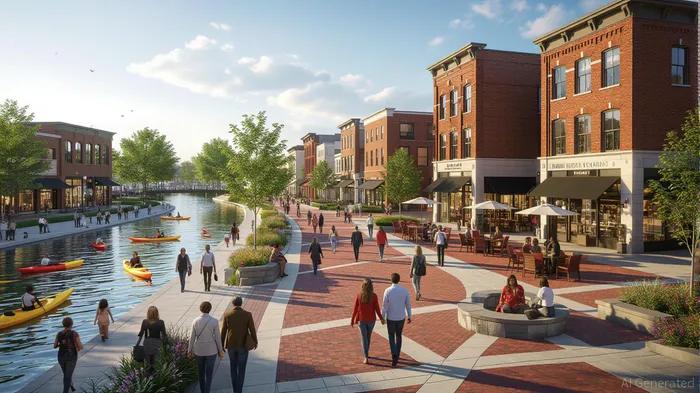
Urban revitalization in small American cities is no longer a pipe dream but a calculated strategy for value creation. Mount Clemens, Michigan—a post-industrial town of 18,000 residents—has emerged as a compelling case study in how infrastructure, demographics, and strategic planning can transform a struggling city into a magnet for real estate investment. As of June 2025, the median home price in Mount Clemens has surged to $187,500, a 14.3% year-over-year increase, despite a 11.66% population decline since 2001. This paradox—rising property values in a shrinking town—highlights the power of targeted urban renewal and the growing appeal of “micro-urban” hubs for middle-income families and retirees.
The Mount Clemens Model: Infrastructure as a Catalyst
Mount Clemens' $6.5 million Downtown Revitalization Project (DRP) has redefined the city's economic DNA. By removing curbs for accessibility, upgrading sewer and electrical systems, and redesigning public spaces, the city has created a walkable, accessible core that mirrors the appeal of larger urban centers. These improvements are not just cosmetic; they are economic levers. For example, the introduction of universally accessible kayak launches and redesigned parks has positioned Mount Clemens as a destination for outdoor enthusiasts, a demographic often overlooked in traditional small-city development.
The results are measurable. By June 2025, 75% of homes in the revitalized corridor sold within 30 days, with an average sale time of 27 days. While 43.8% of homes sold below asking price, the tight inventory (58 active listings in June 2025, up 38.1% from May 2025) suggests a sellers' market where demand outpaces supply. This dynamic is fueled by two key factors: proximity to Detroit and a demographic pivot.
Demographics and Demand: The Hidden Engine
Mount Clemens' median age of 42.4 and a median household income of $57,663 (up 4.55% year-over-year) indicate a market skewed toward middle-income families and retirees. These groups are drawn to the city's blend of affordability and accessibility. For instance, the 88-unit Mineral Lofts—a mixed-use development with modern apartments and ground-floor retail—has attracted young professionals and empty-nesters who prioritize walkability and low property taxes (which are 25% below Detroit's average).
The city's strategic location—30 minutes from downtown Detroit—further amplifies its appeal. Commuters seeking to escape Detroit's high costs or suburban sprawl are finding a sweet spot in Mount Clemens. This “cusp city” dynamic is replicated in other post-industrial towns, where proximity to major metro areas creates a gravitational pull for housing demand.
Investment Opportunities and Risks
For investors, Mount Clemens offers a clear playbook: focus on properties within a 1-mile radius of the revitalized downtown. This corridor is expected to see the highest appreciation, driven by infrastructure spending and the influx of residential developments like the upcoming 120-unit market-rate apartment complex. The city's diverse housing stock—from Victorian-era homes to mid-century ranches—also provides opportunities for value-add strategies, such as renovations targeting accessibility or energy efficiency.
However, risks persist. The population decline raises questions about long-term demand, and the industrial development of Alro Steel's 250,000-square-foot metals plant could attract a younger, blue-collar demographic that may not align with the city's current residential profile. Investors must weigh these factors against the city's strengths, including its proactive governance and diverse funding sources (public-private partnerships, federal grants, and state infrastructure bonds).
A National Blueprint for Small-City Revitalization
Mount Clemens' success challenges the narrative that small cities are “doomed” in the 21st century. By investing in infrastructure that aligns with the needs of middle-income families and retirees, the city has created a self-reinforcing cycle: better amenities attract residents, which drives real estate demand, which funds further improvements. This model is replicable in towns across the Midwest and Rust Belt, where aging infrastructure and population loss have long stifled growth.
For investors, the lesson is clear: post-industrial towns are not relics but laboratories for innovation. The key is to identify cities that combine strategic location, demographic tailwinds, and governance capable of executing bold plans. Mount Clemens' $6.5 million bet is paying off—not just for local residents, but for a new generation of urban investors who see small cities as the next frontier of value creation.
In the end, the revitalization of Mount Clemens is more than a local story—it is a national blueprint. As cities like Detroit and Chicago grapple with sprawl and inequality, the micro-urban model offers a path to inclusive, sustainable growth. For those with the patience to see it through, the rewards are substantial.







Comentarios
Aún no hay comentarios