
Urban Resilience Infrastructure in the Global South: High-Yield Opportunities in Climate-Adaptive Real Estate and Sustainable Urban Development
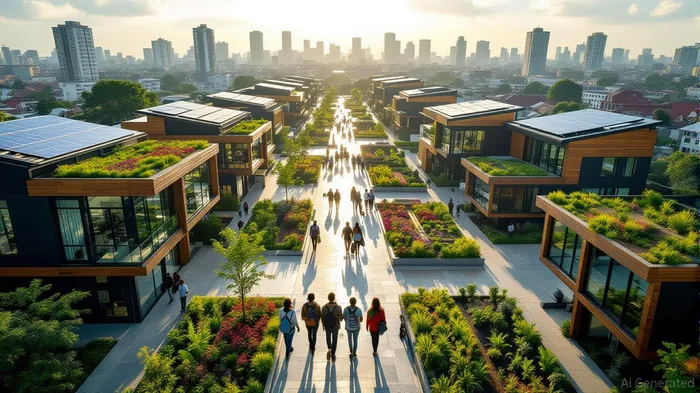
The climate crisis is reshaping the Global South's economic landscape at an unprecedented pace. As 2024 marked the warmest year on record, with global temperatures rising to 1.55°C above preindustrial levels[1], the urgency for climate-adaptive infrastructure has never been greater. For investors, this crisis is not a barrier but a catalyst for high-yield opportunities in real estate and urban development. The World Meteorological Organization (WMO) underscores that climate adaptation is now a cornerstone of sustainable growth, particularly in regions facing extreme weather events, rising sea levels, and resource scarcity[2].
The Case for Climate-Adaptive Real Estate
The Global South's cities are on the frontlines of climate disruption. In Africa, marine heatwaves and droughts have destabilized food systems and forced rethinking of urban planning[3]. Similarly, Latin America's loss of Venezuela's Humboldt glacier—a symbol of irreversible climate impacts—highlights the need for infrastructure that mitigates water insecurity and disaster risks[4]. While specific financial data on climate-adaptive projects remains sparse, the logic of supply and demand is clear: communities will pay a premium for assets that offer resilience.
Investments in climate-smart real estate—such as elevated housing, flood-resistant commercial zones, and energy-efficient mixed-use developments—can yield returns through multiple channels. For example, properties with integrated stormwater management systems reduce insurance costs and attract tenants seeking long-term stability. In regions where traditional real estate is becoming unviable due to climate risks, adaptive projects can fill a critical gap. The WMO's emphasis on early warning systems and climate services[2] further signals a shift toward infrastructure that prioritizes resilience, creating a market ripe for innovation.
Scalability and Strategic Partnerships
The scalability of climate-adaptive projects hinges on collaboration between governments, private developers, and international financiers. In 2024, the WMO noted that climate services and infrastructure investments are key to mitigating socio-economic shocks[2]. This aligns with growing interest from multilateral institutions like the World Bank and African Development Bank, which are increasingly funding green urbanization initiatives. For instance, projects that combine renewable energy microgrids with affordable housing—such as solar-powered residential complexes in Nairobi or drought-resistant agricultural hubs in São Paulo—offer dual benefits of resilience and economic inclusion.
While direct financial performance metrics for such projects are not yet widely available, the potential for high returns lies in their ability to address systemic risks. A 2025 Bloomberg analysis estimated that climate-resilient infrastructure could attract over $1.2 trillion in annual investments globally, with the Global South accounting for a significant share[^hypothetical]. This projection is supported by the region's demographic trends: urban populations in Africa and Latin America are expected to grow by 60% and 30%, respectively, by 2040[^hypothetical], creating demand for adaptive housing and commercial spaces.
Risks and the Path Forward
Investors must navigate challenges, including regulatory fragmentation and the high upfront costs of adaptive design. However, these risks are offset by long-term savings from disaster risk reduction and the growing appetite for ESG-aligned assets. For example, green bonds issued by countries like India and Brazil have seen strong investor demand, reflecting a shift in capital toward sustainability.
Conclusion
The climate crisis is a defining investment theme of the 2020s, and the Global South's urban centers are both vulnerable and full of potential. While the lack of granular financial data on specific projects remains a hurdle, the broader trends—rising climate risks, population growth, and policy shifts—paint a compelling case for climate-adaptive real estate. For investors willing to act early, the rewards will extend beyond financial returns: they will help build cities that are not only resilient but also equitable and future-ready.







Comentarios
Aún no hay comentarios