
Urban Energy Infrastructure Resilience in the Wake of the San Francisco Blackout
The 2025 San Francisco blackout, triggered by a PG&E substation fire and a cascading failure at the city's central converter station, left over 130,000 residents and businesses in darkness for more than 24 hours. The outage not only disrupted commerce-costing local retailers millions during a critical shopping weekend-but also exposed vulnerabilities in critical services, including hospitals and student dormitories, which had to rely on backup generators
according to reports. This event underscores a broader challenge: as urban energy systems face increasing strain from climate change, electrification, and digital dependency, long-term infrastructure investment and grid modernization are no longer optional but essential.
The Cost of Inaction
The blackout revealed how even decentralized technologies like cryptocurrency are not immune to infrastructure failures. While blockchain networks continued to function globally, users without power or internet access could not transact or access their assets
according to analysis. For students, particularly international ones, the outage disrupted academic work and raised concerns about meeting deadlines
according to reports. These cascading effects highlight the interconnectedness of modern urban systems and the economic risks of underinvestment in grid resilience.
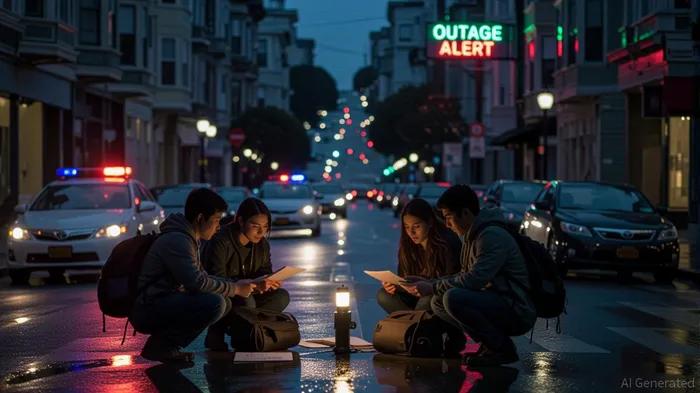 According to a report by the U.S. Department of Energy,
the economic cost of power outages in the U.S. alone exceeds $150 billion annually. In San Francisco, the outage's impact on commerce-where many stores could not process electronic payments-serves as a microcosm of this broader trend. Without robust infrastructure, cities risk not only immediate financial losses but also long-term reputational damage as businesses and residents seek more reliable environments.
Grid Modernization: A Dual-Use Strategy
Investments in grid modernization offer a dual benefit: they mitigate the economic risks of outages while enabling growth through renewable integration and technological innovation. The U.S. Department of Energy's Grid Resilience and Innovation Partnerships (GRIP) Program, with $10.5 billion in funding,
exemplifies this approach by accelerating projects that address extreme weather and rising electricity demand. Similarly, Enel's €26 billion investment plan in 2025, which includes smart grid infrastructure and AI-driven analytics,
demonstrates how modernization can transform the grid into a data-generating platform while expanding renewable energy capacity.
Global examples reinforce this strategy. In 2025, Portugal allocated €137 million for grid upgrades following a major blackout,
focusing on voltage control and automation technologies. EDF in France secured a €1 billion loan from the European Investment Bank to connect 7GW of renewable generation capacity and replace 2,500km of power lines
according to reports. These projects not only enhance resilience but also facilitate the integration of solar and wind energy, aligning with net-zero goals.
Quantifying the ROI
The return on investment (ROI) for grid resilience is increasingly quantifiable.
A U.S. National Laboratory study found that strengthening grid infrastructure can mitigate economic losses from extreme weather events. In China, a planned $442 billion investment in grid modernization from 2021–2025 aims to improve reliability, reduce emissions, and enhance consumer safety
according to projections. Meanwhile, the International Energy Agency (IEA) estimates that over 80 million kilometers of grid infrastructure must be added or refurbished by 2040 to meet renewable energy and energy security goals
according to analysis.
Urban areas, in particular, benefit from modernization through reduced outage risks and increased capacity for decentralized energy models. For instance, the Colorado Electric Transmission Authority's community engagement principles have streamlined transmission development while addressing local needs
according to case studies. Similarly, California's West of Devers project, a co-ownership partnership with the Morongo Band of Mission Indians, advanced tribal sovereignty and shared economic benefits.
Challenges and the Path Forward
Despite these successes, challenges persist.
Supply chain bottlenecks, workforce shortages, and inequitable federal funding distribution-where higher-income counties receive more support-hinder progress. Addressing these issues requires strategic planning, stakeholder engagement, and policy reforms to ensure underserved communities are not left behind.
The San Francisco blackout serves as a wake-up call. As cities electrify and digitize, the cost of inaction will only rise. Grid modernization is not merely a defensive measure but a growth-oriented strategy that enables renewable integration, supports AI-driven data centers, and ensures economic resilience. For investors, policymakers, and urban planners, the message is clear: the future of urban energy lies in proactive, equitable, and technology-driven infrastructure investment.







Comentarios
Aún no hay comentarios