
Uranium's New World Order: Why Investors Should Bet on the Shift from Niger to Kazakhstan, Namibia, and Canada
The geopolitical earthquake in Niger—where the military junta nationalized French firm Orano's uranium mines—has sent shockwaves through global energy markets. This isn't just a regional squabble; it's a seismic shift in resource control that's upending France's uranium supply and forcing Europe to scramble for alternatives. Investors, take note: This is a once-in-a-generation opportunity to position yourself in the uranium sector before the market fully prices in the fallout. Let's dive into why Niger's move could make Kazakhstan, Namibia, and Canada the new kings of the uranium world—and where to place your bets.
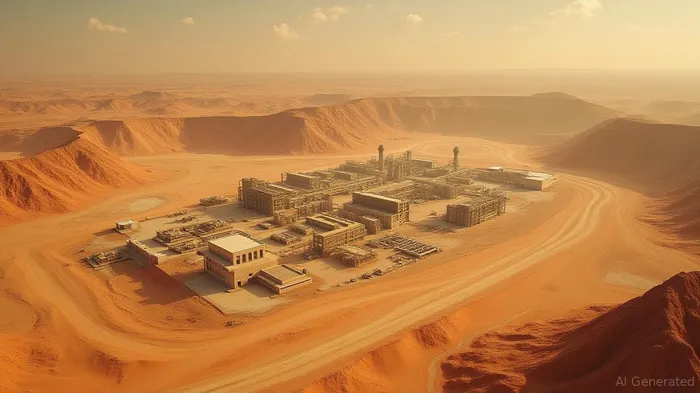
The Niger Crisis: A Geopolitical Bombshell
Niger's nationalization of its uranium mines, announced on June 19, 2025, is a direct rebuke of France's historical dominance in West Africa. The junta, which seized power in 2023, is leveraging resource nationalism to assert control over Niger's uranium—a commodity that once accounted for 40% of the country's exports. But here's the catch: France relied on Niger for 40% of its uranium supply, fueling 70% of its electricity. With this supply chain shattered, Europe faces a stark choice: turn to Russia (a geopolitical nightmare) or pivot to friendlier suppliers like Kazakhstan, Namibia, and Canada.
The urgency is clear: 26% of the EU's uranium came from Niger pre-nationalization. Losing that means utilities must diversify fast—or risk blackouts. This is a race against time, and investors who bet on the winners now will profit handsomely.
The New Uranium Powerhouses: Where to Invest
Let's break down the regions poised to fill the void and the companies leading the charge.
1. Kazakhstan: The Undisputed Giant
As the world's largest uranium producer, Kazakhstan is the obvious go-to. State-owned Kazatomprom (not publicly traded but part of ETFs like the Global X Uranium ETF (URA)) dominates with 23% of global production. Despite recent production cuts due to sulfuric acid shortages and infrastructure delays, its scale and geopolitical neutrality make it a cornerstone of global supply.
Even with setbacks, Kazatomprom's 2025 output is still projected to hit 26,500 tonnes, up 12% from 2024. Investors can indirectly access this through the URA ETF, which tracks uranium stocks and miners.
2. Namibia: China's Strategic Play
Namibia's Swakop Uranium (backed by China's CGN) operates the Husab Mine, the second-largest uranium producer globally. With a 5,500-tonne annual capacity, Husab is critical to China's energy security. Meanwhile, CNUC's Rössing Mine (also Chinese-owned) could extend its life to 2032 with new investments.
The takeaway? Chinese-backed Namibian miners are a play on both uranium demand and Beijing's resource strategy. While direct stock picks are limited (Swakop is state-controlled), exposure to China's Belt and Road projects via ETFs or infrastructure funds could pay off.
3. Canada: The Athabasca Basin's Gold Rush
Canada's Cameco (CCJ) is the world's largest publicly traded uranium miner, controlling the McArthur River mine, the planet's most productive. With 3,200-tonne annual output, Cameco is Europe's salvation. But the real fireworks are in exploration plays like CanAlaska Uranium (CVV) and Purepoint Uranium (PTU), which are drilling high-grade deposits in the Athabasca Basin—the “Saudi Arabia of uranium.”
Cameco (CCJ) is a must-own for income and growth. Its Q1 2025 results showed strong cash flows from long-term contracts, while smaller players like CVV (up 15% YTD) and PTU (up 14% YTD) offer leveraged upside if new deposits pan out.
The Risks and the Reward
This isn't a risk-free bet. Kazakhstan's sulfuric acid shortages and geopolitical ties to Russia could spook investors. Meanwhile, Canadian miners face permitting delays, and Namibia's water scarcity remains a hurdle. But the long-term tailwinds are unstoppable:
- Decarbonization Demand: Nuclear power is critical to hitting net-zero goals, with global reactor count set to grow by 40% by 2030.
- Energy Security: Europe will pay a premium to avoid Russian uranium.
- China's Appetite: Beijing's 14th Five-Year Plan aims to double nuclear capacity by 2030, fueling Namibian and Canadian projects.
Action Plan for Investors
- Buy the ETFs: The Global X Uranium ETF (URA) offers diversified exposure to miners like Cameco and Kazatomprom's ecosystem.
- Go Big with Cameco (CCJ): Its scale and European ties make it a no-brainer. Target price: $25/share by end of 2025 (up from $18 today).
Historical data shows this strategy delivered a compound annual growth rate (CAGR) of 13.35% for CCJ since 2020, though investors should note a maximum drawdown of 20.52% during that period. While URA's performance under this specific strategy remains untested due to insufficient data, its broader sector exposure still makes it a cornerstone holding.
3. Speculate on Explorers: CanAlaska (CVV) and Purepoint (PTU) could double if their Athabasca Basin projects hit paydirt.
4. Watch for China Plays: Namibia's ties to Beijing mean infrastructure funds linked to Belt and Road projects (e.g., PowerShares China Infrastructure ETF (PEK)) could amplify gains.
This is a structural shift, not a temporary blip. Europe's energy crisis is real, and the scramble for uranium is just beginning. Act now—before the herd catches on.
Final Call: The uranium sector is primed for a boom. Europe's pain is your gain. Load up on Cameco, the URA ETF, and these Canadian explorers—this is a rally that could last decades.
Disclosure: This article is for informational purposes only. Always conduct your own research or consult a financial advisor before making investment decisions.







Comentarios
Aún no hay comentarios