
The Uranium Squeeze: Strategic Entry Points in a Supply-Deficient Era
The global uranium market in 2025 is locked in a structural squeeze, driven by a widening supply deficit and surging demand for nuclear energy as a low-carbon solution. Spot prices have surged 28.7% year-to-date, peaking at $82.63 per pound in September 2025, while long-term contracts hit $85 per pound in October, reflecting utilities' desperation for secure supply. Analysts project prices could climb to $92.75 per pound by 2027 as production bottlenecks persist and demand outpaces supply according to market analysis. This environment creates a compelling backdrop for high-conviction investments in junior uranium explorers with Tier 1 assets and strong insider alignment, which are best positioned to capitalize on the sector's renaissance.
Structural Deficits and Geopolitical Tailwinds
The current squeeze is not merely cyclical but structural. Uranium production has lagged behind demand due to underinvestment in mining and constrained enrichment capacity, exacerbated by geopolitical risks. Kazakhstan, the world's largest producer, has adopted a multi-directional strategy to balance Western and Asian markets, while political instability in Niger-a minor producer- triggered an 8% price spike in 2023. Meanwhile, the U.S. and Canada are accelerating efforts to reduce reliance on Russian processing, with the U.S. launching a strategic uranium reserve and pushing for domestic production. These dynamics underscore a shift toward supply-chain resilience, favoring companies with secure, high-grade assets.
Junior Explorers: Tier 1 Assets and Insider Alignment
Junior uranium explorers with Tier 1 assets and strong insider ownership are uniquely positioned to benefit from the current market dynamics. Three standouts-NexGen Energy, Denison Mines, and Paladin Energy-exemplify this thesis.
NexGen Energy: The Arrow Deposit and Insider Commitment
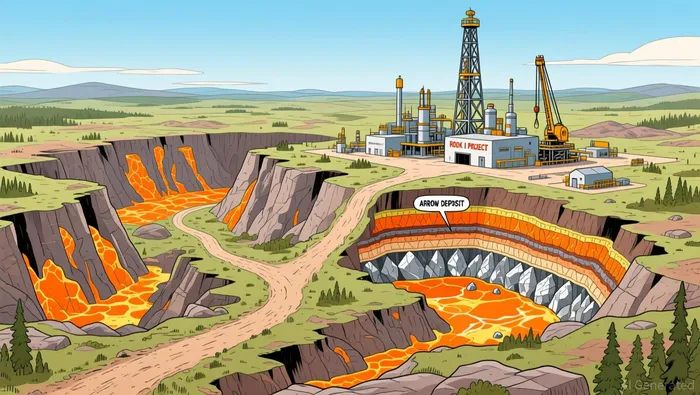 NexGenNXE-- Energy's Arrow deposit, part of the Rook I Project in Canada, is a Tier 1 asset with an after-tax NPV of $3.47 billion and an IRR of 52.4%. The project's 10.7-year mine life and 28.8 million-pound annual output make it one of the most economically robust uranium developments in the sector. Insider alignment is equally compelling: key executives like Leigh Curyer and Warren Gilman hold over 5 million and 1.7 million shares, respectively. While some insiders, such as Richard Patricio, have sold shares in late 2025, the overall insider ownership remains substantial, signaling long-term confidence in the company's strategic direction.
Denison Mines: Wheeler River and Strategic Expansion
Denison Mines' Wheeler River Project in Saskatchewan is another Tier 1 asset, with a pre-tax NPV of $2.34 billion and a 105.9% IRR. The project's low-cost structure and proximity to the Athabasca Basin's premier uranium deposits make it a cornerstone of Denison's growth. Insider activity has been notable: directors like David Cates and Brian Edgar have exercised options and hold significant stakes, with Cates alone owning 2.12 million shares. Denison's recent joint venture with Skyharbour Resources further expands its exploration footprint, enhancing its potential to unlock additional value.
Paladin Energy: Langer Heinrich and Insider Dynamics
Paladin Energy's Langer Heinrich Mine in Namibia, its flagship asset, has re-established itself as a top-tier producer after a 2024 restart, targeting 6 million pounds of U3O8 annually by 2025. The mine's long-term sales agreements with Tier 1 customers provide revenue visibility, a critical advantage in volatile markets. Insider ownership, while less transparent, shows active management: Gary Haywood and Anna Sudlow hold 116,874 and 282,002 shares, respectively. Institutional ownership at 43.67% also suggests strong external confidence. While some insiders have sold shares, the company's focus on operational efficiency and strategic partnerships positions it to benefit from sustained price strength.
Strategic Entry Points and Outlook
The uranium squeeze is far from a short-term phenomenon. With utilities willing to pay a premium for supply security and governments prioritizing energy sovereignty, the sector's fundamentals are firmly bullish. Junior explorers with Tier 1 assets and aligned management teams-such as NexGen, DenisonDNN--, and Paladin-are best positioned to outperform. Investors should focus on companies with clear production timelines, robust project economics, and insider ownership that reflects long-term conviction.
As the market continues to tighten, strategic entry points will emerge for those who act decisively. The uranium squeeze is not just a commodity play-it is a geopolitical and environmental imperative, and the winners will be those who secure the resources to power the low-carbon future.







Comentarios
Aún no hay comentarios