
The Upside-Down Food Pyramid: Assessing Investment Opportunities in Real-Food Producers and Sustainable Agriculture
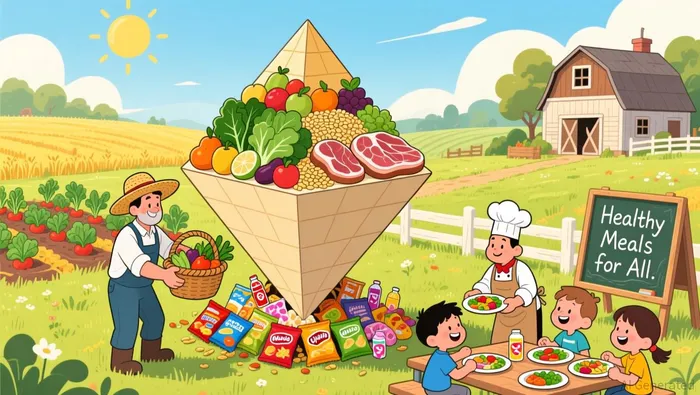
The 2025–2030 Dietary Guidelines for Americans, unveiled under the "Make America Healthy Again" (MAHA) agenda, have redefined the nation's approach to nutrition by introducing the "upside-down food pyramid." This policy flips the traditional food pyramid, prioritizing whole, minimally processed foods like protein, dairy, vegetables, fruits, and healthy fats at the top while relegating refined carbohydrates and ultra-processed foods to the bottom. Spearheaded by U.S. Health Secretary Robert F. Kennedy Jr. and Agriculture Secretary Brooke Rollins, the guidelines aim to combat chronic disease by promoting nutrient-dense diets and reducing reliance on industrial food systems. For investors, this shift signals a seismic realignment in the food and agriculture sectors, creating both opportunities and challenges for real-food producers and sustainable agriculture enterprises.
Policy Implications and Market Trends
The upside-down food pyramid's emphasis on unprocessed, whole foods has immediate implications for federal nutrition programs, including the National School Lunch Program, which must now align with the new dietary framework. This policy also reflects a broader cultural and political movement to reduce the influence of processed food giants, instead championing small-scale farmers and ranchers who supply nutrient-rich staples. Financial projections suggest that sectors aligned with these priorities-such as high-quality protein, dairy, and organic produce- will experience robust growth over the next five years.
 Market trends underscore this shift. Demand for real-food products has surged, driven by consumer awareness of health risks associated with ultra-processed foods. For instance, the sustainable agriculture market is expanding as companies adopt regenerative practices to meet new dietary standards. However, short-term volatility persists: while food inflation is projected to slow in 2025, rising farm-level prices for fruits and vegetables in late 2024 highlight the sector's sensitivity to supply chain disruptions.
Investment Opportunities in Real-Food Producers
Several companies are well-positioned to capitalize on the upside-down food pyramid agenda. United Natural Foods (UNFI), a leading distributor of natural and organic products, reported a 7.5% increase in Q3 2025 net sales, reaching $8.1 billion, driven by cost-saving initiatives and expanded private-label offerings. Its AI-powered supply chain innovations further enhance efficiency, aligning with the guidelines' emphasis on reducing waste.
Vital Farms, a certified B Corporation specializing in pasture-raised eggs and dairy, demonstrated strong growth in Q3 2025, with net revenue rising 37.2% year-over-year to $198.9 million. The company's commitment to animal welfare and sustainable farming practices resonates with the MAHA agenda's focus on ethical food production.
Conversely, Beyond Meat faced headwinds, reporting a 13.3% decline in Q3 2025 net revenues to $70.2 million, attributed to weak demand and operational challenges in China. This underscores the risks for plant-based protein companies that may struggle to align with the new guidelines's emphasis on animal-derived proteins and full-fat dairy.
Sustainable Agriculture and Long-Term Viability
The upside-down food pyramid's success hinges on the scalability of sustainable agriculture. While 60% of food manufacturers now prioritize sustainable sourcing by 2025, industry assessments reveal gaps in regenerative practices. Companies like PepsiCo and McCain Foods have made strides in pesticide monitoring and soil health, but most lack field-level data to measure progress. For investors, this highlights the need to prioritize firms with transparent, science-based sustainability frameworks.
Financially, the USDA's long-term agricultural projections indicate that demand for nutrient-dense crops and livestock will outpace supply, creating opportunities for agribusinesses that invest in precision agriculture and low-input farming. However, input costs and climate-related risks remain critical factors to monitor.
Conclusion
The upside-down food pyramid represents a paradigm shift in U.S. nutrition policy, with profound implications for investors. While real-food producers like UNFIUNFI-- and Vital FarmsVITL-- are poised to benefit from the growing emphasis on whole foods, the sector's long-term success depends on overcoming challenges such as supply chain volatility and sustainability gaps. As the MAHA agenda gains traction, investors who align with companies prioritizing quality, transparency, and regenerative practices will likely reap the rewards of this transformative era in food and agriculture.





Comentarios
Aún no hay comentarios