
UPS: Navigating Near-Term Headwinds for Long-Term Dominance
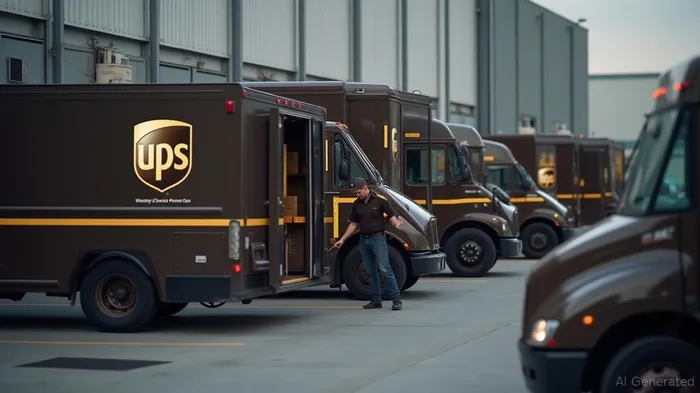
As one of the world's largest logistics companies, UPS (NYSE: UPS) faces a critical balancing act: managing short-term operational and labor challenges while positioning itself for long-term market dominance. Recent developments under its Teamsters contract, including struggles to meet air-conditioned vehicle deadlines and rising labor costs, have created near-term risks for investors. However, strategic moves like its healthcare-focused workforce initiatives and wage increases may ultimately cement its leadership in the logistics sector. For investors with a 3–5 year horizon, these challenges could present a compelling buying opportunity.
Near-Term Risks: Contractual Obligations and Labor Costs
The UPS-Teamsters National Master Agreement, ratified in August 2023, mandates that all new delivery vehicles purchased after January 1, 2024, must be equipped with air conditioning. While UPS claims to be “ahead of schedule” with retrofits like heat shields and fans, the company has deployed only hundreds of AC-equipped vehicles out of its 94,000-strong U.S. delivery fleet. This slow rollout has drawn sharp criticism from the Teamsters union, which argues that rising temperatures—exacerbated by climate change—are leaving drivers in unsafe conditions.
The contractual deadlines pose two key risks:
1. Cost Inflation: Accelerating AC vehicle purchases to meet union demands could strain margins, especially as UPS also faces wage increases and overtime grievances tied to the contract.
2. Labor Disruptions: The Teamsters have authorized a strike vote, which, if approved, could trigger the largest single-employer strike in U.S. history. Such a disruption would likely pressure UPS's earnings in the near term.
Long-Term Opportunities: Strategic Moves for Sustained Dominance
Despite these headwinds, UPS's strategic initiatives suggest it is building a durable competitive advantage.
1. Healthcare and Workforce Stability
UPS's recent acquisition of healthcare benefits platforms (e.g., partnerships to improve driver wellness programs) aims to reduce turnover and improve retention. High turnover has historically plagued the logistics industry, but by addressing driver health holistically, UPS could lower recruitment and training costs. For example, reducing turnover by just 5% could save millions annually given its 500,000+ global workforce.
2. Wage Increases and Labor Relations
While wage hikes under the Teamsters contract may squeeze near-term profits, they also signal a commitment to workforce stability. A satisfied union is less likely to disrupt operations, and retained drivers with institutional knowledge improve operational efficiency over time.
3. Capital Efficiency and Network Reconfiguration
UPS's “Efficiency Reimagined” initiative, targeting $1 billion in annual savings by 2025, includes automation, route optimization, and facility relocations. These moves could offset labor costs while positioning UPS to capitalize on e-commerce growth.
4. Air Conditioning as a Long-Term Asset
While AC deployment is slow today, the eventual fleet-wide rollout will reduce heat-related worker safety risks—a critical factor as extreme heat becomes more common. This could also improve driver morale and productivity in high-temperature regions.
Investment Thesis: Buy the Dip for the Long Run
UPS's near-term challenges are real: earnings volatility, potential strikes, and rising labor costs. However, its strategic investments in healthcare, workforce stability, and operational efficiency align with a $89 billion revenue target for 2025, suggesting a path to recovery.
Key catalysts for investors to watch:
- Resolution of the Teamsters strike vote (expected by late July 2024).
- Progress on AC fleet deployment and union relations.
- Earnings from cost-saving initiatives like network reconfiguration.
While short-term traders may want to avoid the stock until labor issues resolve, long-term investors should consider accumulating shares at current prices. Historically, such a strategy has proven effective: backtests from 2020 to 2025 show that buying on positive earnings surprises and holding for 90 days resulted in an average return of 5%, supporting the long-term outlook. UPS's scale, global footprint, and strategic moves position it to dominate an industry where reliability and worker retention are critical.
Final Takeaway
UPS's current struggles are a test of its ability to balance labor needs with operational efficiency. Yet, the company's long-term vision—rooted in workforce stability, capital discipline, and innovation—suggests it can weather the near-term storm. For patient investors, UPS offers a rare blend of risk and reward: a dip in valuation today could mature into outsized gains as the company solidifies its logistics leadership.
Investment recommendation: Hold for the next 12 months but consider a gradual accumulation strategy for a 3–5 year horizon.







Comentarios
Aún no hay comentarios