
The UPS Dilemma: Job Cuts Signal Shifts in E-Commerce Logistics
The logistics landscape is undergoing a seismic shift, and UPSUPS-- is at the epicenter. The company’s recent announcement of cutting 20,000 jobs—roughly 8% of its global workforce—alongside a second-quarter profit that beat estimates by 12% underscores a paradox: efficiency gains amid a retrenchment in e-commerce’s breakneck growth. This move, tied to anticipated declines in Amazon shipments, marks a turning point for UPS and its peers as they recalibrate to a post-pandemic reality.
The Amazon Effect: A Partnership in Transition
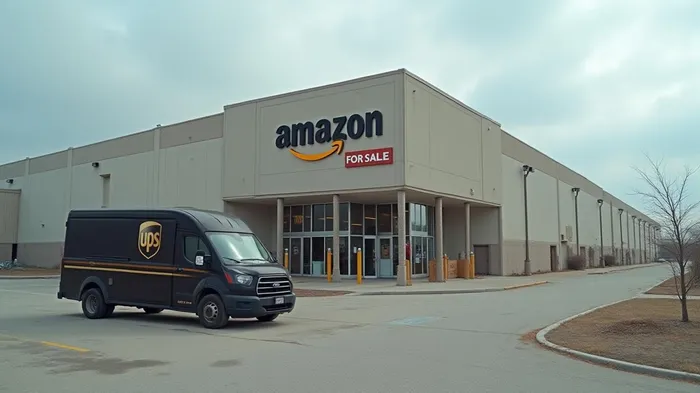
Amazon has long been UPS’s single largest customer, accounting for roughly 10% of its revenue. But as Amazon expands its own logistics network—building warehouses, acquiring delivery startups, and even launching its own air fleet—the writing is on the wall. The e-commerce giant’s shift toward self-reliance has forced UPS to confront a critical question: How much of its future depends on a client that is now a competitor?
The job cuts are a preemptive strike against this new reality. UPS is trimming costs in anticipation of lower volume from Amazon, which itself has slowed hiring and cut expenses amid a broader retail slowdown. While UPS reported $2.4 billion in adjusted earnings for Q2 (up from $2.1 billion in 2022), the profit beat masks underlying challenges. would reveal a correlation worth scrutinizing.
The Broader Industry Shift
UPS isn’t alone in navigating these waters. FedEx, which also relies on Amazon for 15-20% of its revenue, has faced similar pressures, though its stock has outperformed UPS’s in recent months. highlights how investors are differentiating between the two based on their exposure to Amazon and their ability to pivot to other sectors.
The job cuts also reflect a broader trend: automation and route optimization are replacing human labor at scale. UPS’s investment in electric vehicles, warehouse robotics, and AI-driven logistics tools—now accounting for 10% of its annual capital expenditure—suggests the company is betting on technology to offset reduced volume. Yet, the human cost of this transition cannot be ignored.
Economic Crosscurrents
Behind the scenes, macroeconomic forces are compounding the pressure. Inflation has slowed consumer spending on discretionary goods, reducing the volume of small-package shipments that fuel UPS’s bottom line. Meanwhile, fuel costs—a major expense for logistics firms—have stabilized, giving UPS some respite. would illustrate this relationship.
Investors, however, are focused on two critical questions: Can UPS diversify its client base beyond e-commerce? And will its cost-cutting measures outweigh the risks of alienating workers and communities? The answer hinges on UPS’s ability to capitalize on emerging markets and industries. For instance, its expansion into healthcare logistics (handling pharmaceuticals) and last-mile delivery partnerships with retailers like Walmart and Target could provide new revenue streams.
Conclusion: Positioning for a New Era
UPS’s job cuts are not merely a response to Amazon’s retreat—they are a strategic pivot to a post-pandemic economy where e-commerce growth is maturing. While the move may deter some investors in the short term, the long-term calculus favors UPS if it can successfully balance automation with service quality.
Consider the numbers: UPS’s adjusted operating margin rose to 15.6% in Q2, up from 14.1% in 2022, demonstrating its cost discipline. Its stock, which dipped 5% on the job-cut announcement, has since recovered 3%, suggesting investor confidence in its strategy. Meanwhile, Amazon’s shift toward self-delivery could free up UPS to focus on high-margin sectors like international freight and business-to-business shipping.
The logistics industry is at an inflection point. For UPS, the path forward requires navigating the tension between cost-cutting and innovation. If history is any guide, the company that adapts fastest to these shifts—without losing sight of its core strengths—will lead the next era of global supply chains.





Comentarios
Aún no hay comentarios