
How the Upcoming NFP Report Could Shape the Fed's Policy Path and Dollar Strength in 2026
The January 2026 Non-Farm Payrolls (NFP) report will serve as a pivotal economic barometer, influencing Federal Reserve (Fed) policy decisions, the U.S. dollar's trajectory, and asset positioning across gold and equities. With the U.S. economy transitioning into a phase of slower growth and the Fed navigating a delicate balance between inflation control and economic stability, the NFP data will crystallize market expectations for monetary easing and risk appetite. This analysis explores strategic positioning in USD, gold, and equity sectors ahead of the critical January 2026 release, drawing on insights from financial institutions and macroeconomic trends.
Fed Policy Implications: A Divergence Between Market Expectations and Central Bank Projections
The Fed's December 2025 projections indicate only one rate cut in 2026, with no immediate hikes on the horizon. However, financial markets have priced in approximately two 25-basis-point cuts, reflecting a more dovish outlook than the central bank's official stance. This divergence underscores the Fed's challenging balancing act: maintaining inflation control while responding to signs of economic fragility, such as the November 2025 NFP report, which showed 64,000 jobs added-below historical averages-and a rising unemployment rate of 4.6%.
The January 2026 NFP data will determine whether the Fed's current pause in rate cuts is justified or premature. A strong report (exceeding 85,000 jobs) could delay further easing, reinforcing the Fed's stance and increasing the "good news is bad news" effect for risk assets. Conversely, a weak print (below 50,000 jobs) would validate market expectations of continued easing, potentially accelerating the timeline for rate cuts and shaping a risk-on narrative.
USD Dynamics: A Weaker Dollar or a Resilient Rally?
The U.S. dollar's strength is inextricably linked to the Fed's policy path and broader economic data. A strong NFP report would likely bolster the dollar index (DXY) by signaling a resilient labor market and reinforcing the Fed's pause, while a weak report could drive a weaker USD as investors anticipate rate cuts and seek higher-yielding alternatives.
Gold, inversely correlated with the dollar, has already surged to $4,430 per ounce amid expectations of Fed easing and geopolitical tensions.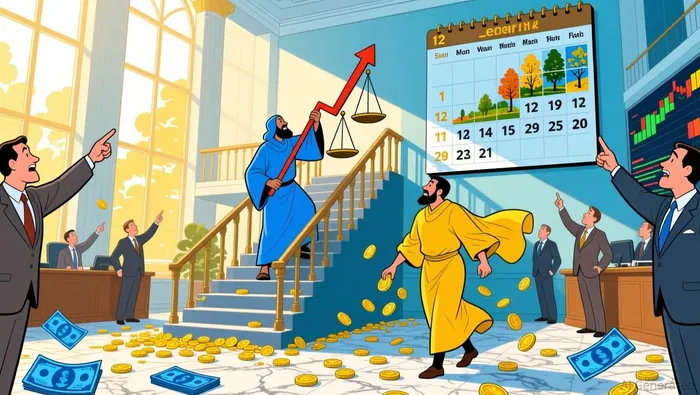 A weaker USD would further support gold prices, while a stronger dollar could pressure the metal due to higher opportunity costs. For equities, a weaker dollar typically supports global growth and commodities, whereas a stronger dollar may weigh on high-valuation tech stocks in the Nasdaq 100.
Gold's Strategic Position: A Hedge in a Dovish Environment
Gold's role as a safe-haven asset and inflation hedge is amplified in a dovish monetary environment. Institutional forecasts suggest gold could reach $5,000 in early 2026, with a projected range of $4,900–$5,400 over 18 months. This optimism is driven by structural demand from emerging market central banks, geopolitical tensions, and the Fed's easing cycle.
Investors are advised to allocate 5–15% of their portfolios to gold, combining physical bullion, futures, and mining stocks to diversify risk. A weak NFP report would likely reaffirm gold's appeal, while a strong report might trigger profit-taking as the dollar strengthens.
Equity Sector Positioning: From Tech to Defensive Sectors
Equity markets have shifted from AI-driven tech stocks to more resilient sectors like healthcare and utilities, reflecting investor caution amid macroeconomic uncertainty. The S&P 500 and Nasdaq remain range-bound as traders assess NFP data and anticipate Fed policy shifts.
A "Goldilocks" NFP report-moderate hiring with cooling wages-would support equities, particularly value-oriented and dividend-paying stocks. Conversely, a strong report could spike Treasury yields and pressure growth stocks, while a weak report might drive a risk-on rally in cyclical sectors. AI-driven sectors, however, remain a key focus for 2026 due to their potential for efficiency gains and margin expansion.
Strategic Investment Recommendations: Balancing Risk and Opportunity
Given the binary outcomes of the January 2026 NFP report, investors should adopt a diversified approach:
1. USD Positioning: Hedge against dollar volatility by maintaining a balanced exposure to both dollar and non-dollar assets. A weak NFP could justify long positions in gold and emerging market equities, while a strong report might favor dollar-long strategies.
2. Gold Allocation: Increase exposure to gold via physical bullion and mining stocks, leveraging its inverse relationship with the dollar and its role as a hedge against inflation and geopolitical risks.
3. Equity Sectors: Prioritize defensive sectors (healthcare, utilities) and high-quality fixed-income instruments to manage risk. For a risk-on scenario, overweight AI-driven sectors and cyclical equities.
Conclusion
The January 2026 NFP report will be a defining event for the Fed's policy path and global asset positioning. A weak labor market could accelerate rate cuts and drive a weaker dollar, bolstering gold and equities, while a strong report might reinforce the Fed's pause and favor dollar strength. Investors must remain agile, balancing strategic allocations across USD, gold, and equities to navigate the divergent outcomes. As the Fed's easing cycle unfolds, a diversified portfolio with exposure to inflation hedges and high-quality assets will be critical to capturing opportunities in 2026.







Comentarios
Aún no hay comentarios