
Upbit's CELO Deposit and Withdrawal Suspension: Signals of Regulatory or Market Risk?
The Official Reason: A Network Upgrade or Regulatory Clampdown?
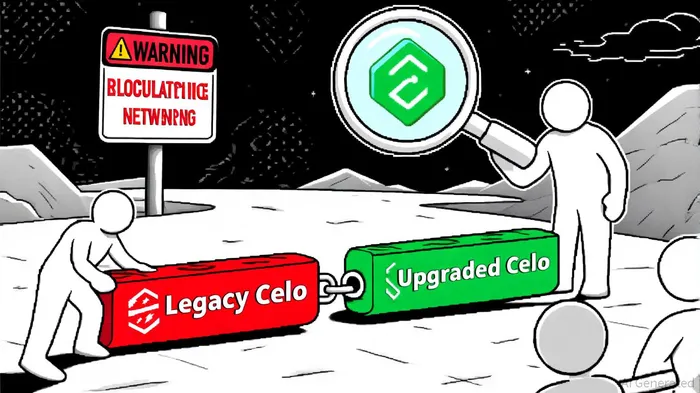
Upbit's official statement attributes the suspension to an upcoming Celo Network hard fork, a major upgrade aimed at enhancing the blockchain's performance, security, and scalability. This transition, while routine in the crypto world, necessitates temporary halts to prevent transaction errors or asset loss during the protocol shift. However, the timing coincides with broader regulatory scrutiny of Upbit itself. South Korean authorities have imposed a three-month partial suspension on the exchange for violations including unregistered transactions, inadequate customer verification, and failure to report suspicious activities.
This dual narrative-technical necessity versus regulatory enforcement-highlights a critical tension in the crypto ecosystem. On one hand, blockchain upgrades are inevitable for long-term growth. On the other, exchanges must now contend with increasingly stringent compliance demands, particularly in markets like South Korea, where regulators are aggressively policing industry standards.
Liquidity Implications: A Temporary Hurdle or Systemic Risk?
The suspension of CELO on Upbit directly impacts asset liquidity, particularly for South Korean investors who rely on the exchange for trading. During the suspension period, CELO's trading volume may contract, leading to wider bid-ask spreads and reduced market depth. While this is a short-term issue tied to the hard fork, the broader regulatory actions against Upbit could have longer-lasting effects. If exchanges face repeated penalties for non-compliance, users may shift to more regulated platforms, further fragmenting liquidity across the market.
For investors, this underscores the importance of exchange diversification. Relying on a single platform for custody or trading exposes portfolios to operational risks, especially in jurisdictions with evolving regulatory landscapes.
Investor Strategy: Adapt or Be Left Behind
- Monitor Protocol Upgrades: Blockchain transitions like Celo's hard fork are often positive for long-term value. Investors should track post-upgrade performance metrics (e.g., transaction speed, security enhancements) to gauge the network's trajectory.
- Prioritize Regulated Exchanges: With regulatory scrutiny intensifying, exchanges that proactively comply with KYC/AML standards will likely retain user trust. Consider allocating assets to platforms with transparent compliance frameworks.
- HODL with Caution: For CELO holders, the suspension may present a buying opportunity if the upgrade is well-received. However, those averse to short-term volatility should consider locking assets in non-custodial wallets until liquidity normalizes.
Conclusion: A Signal, Not a Storm
While Upbit's CELO suspension reflects both technical and regulatory challenges, it is not a harbinger of systemic collapse. Instead, it serves as a reminder of the maturing crypto ecosystem, where innovation and regulation must coexist. Investors who adapt their strategies to account for these dual forces-by diversifying custody solutions, staying informed on protocol upgrades, and favoring compliant platforms-will be better positioned to capitalize on the next phase of crypto's evolution.







Comentarios
Aún no hay comentarios