
Unveiling April 2025's Hidden Gems in the Middle East
Generado por agente de IACyrus Cole
jueves, 10 de abril de 2025, 12:04 am ET4 min de lectura
The Middle East, a region often associated with oil and conflict, is quietly transforming into a hub of innovation and growth. As of April 2025, several sectors are poised for significant expansion, driven by strategic investments, favorable government policies, and a young, skilled workforce. This article explores the undiscovered gems in the Middle East, highlighting the construction industry, renewable energy, technology and e-commerce, and the healthcare sector.
Construction Industry: Building the Future
The construction industry in the Middle East is experiencing a boomBOOM--, fueled by government initiatives aimed at developing modern infrastructure to accommodate the growing population. Countries like the United Arab Emirates, Saudi Arabia, and Qatar have invested heavily in large-scale construction projects, including skyscrapers, housing complexes, airports, and stadiums. This growth has also positively impacted related industries such as real estate, architecture, and engineering.
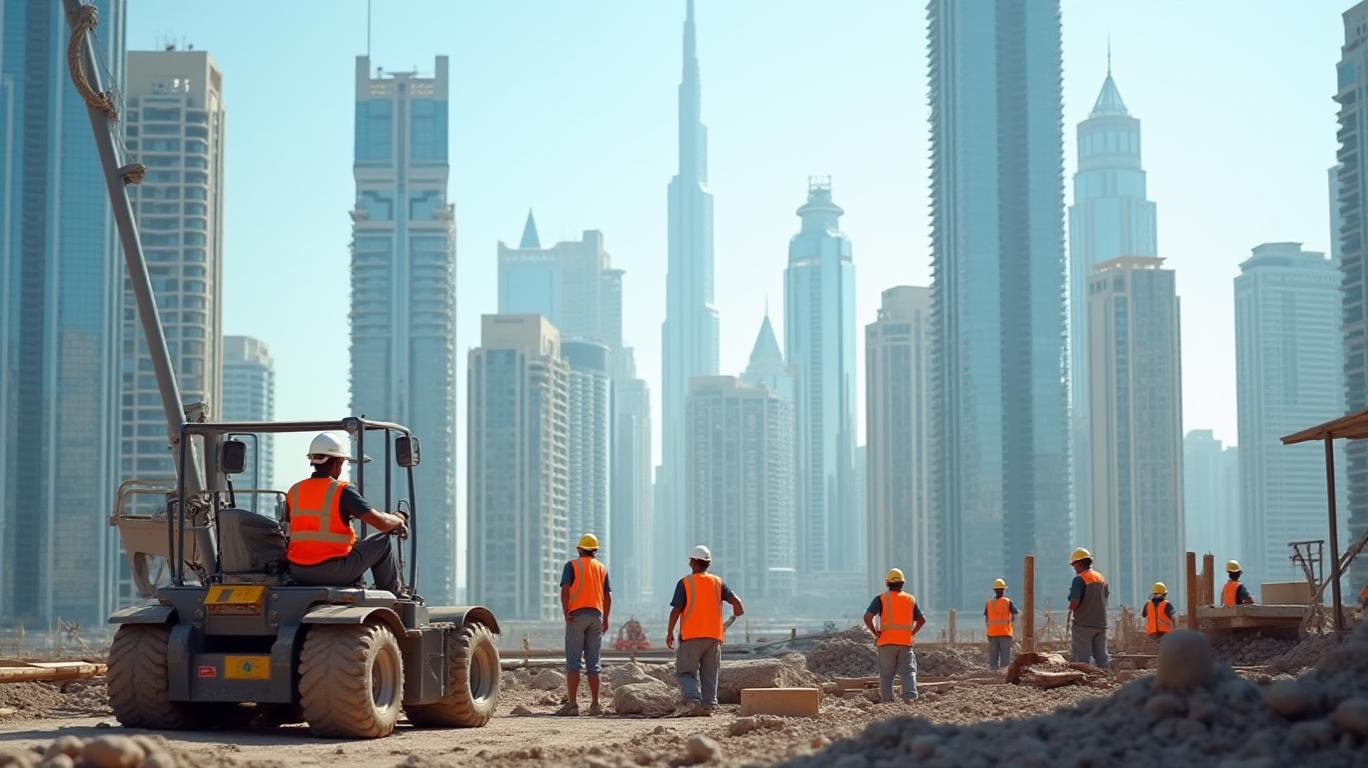
For instance, the construction industry in the Middle East is booming, fueled by government initiatives to develop modern infrastructure and accommodate the growing population. The rapid growth of the construction sector has also had a positive impact on related industries such as real estate, architecture, and engineering. The construction industry in the Middle East is booming, fueled by government initiatives to develop modern infrastructure and accommodate the growing population.
Renewable Energy: Powering Sustainability
While fossilFOSL-- fuels remain a vital part of the region’s economy, there has been a surge in investment in renewable energy sources. Governments across the region are recognizing the importance of diversifying their energy portfolios and capitalizing on renewable resources. Solar and wind energy are experiencing substantial growth, with large-scale solar projects and wind farms being developed in countries like the United Arab Emirates and Saudi Arabia. This shift is driven by the need to reduce reliance on oil revenues and the increasing demand for sustainable energy solutions.
For example, governments across the region are recognizing the importance of diversifying their energy portfolios and capitalizing on renewable resources. The surge in investment in renewable energy sources is driven by the need to reduce reliance on oil revenues and the increasing demand for sustainable energy solutions.
Technology and E-commerce: The Digital Revolution
The Middle East is swiftly evolving into a technology hub, with significant investments being made to develop high-tech infrastructure and encourage digital innovation. Companies in the region are investing heavily in cutting-edge technology, including artificial intelligence, blockchainGBBK--, and 5G networks. Additionally, the e-commerce sector is growing rapidly, driven by a young and tech-savvy population that embraces online shopping. Numerous startups and online marketplaces are emerging, catering to the increasing demand for digital consumer goods and services.
For instance, the Middle East is swiftly evolving into a technology hub, with significant investments being made to develop high-tech infrastructure and encourage digital innovation. The e-commerce sector is growing rapidly, driven by a young and tech-savvy population that embraces online shopping. Numerous startups and online marketplaces are emerging, catering to the increasing demand for digital consumer goods and services.
Healthcare Industry: Innovating for Wellness
The healthcare industry in the Middle East is experiencing a significant surge in demand and investment. Governments in the region are committed to providing quality healthcare services to their citizens, resulting in the construction of world-class hospitals and medical centers. Medical tourism is also on the rise, with patients from neighboring countries and beyond seeking advanced medical treatments in the Middle East. This growth in the healthcare sector has created a demand for healthcare professionals and related services.
For example, the healthcare industry in the Middle East is experiencing a significant surge in demand and investment. Governments in the region are committed to providing quality healthcare services to their citizens, resulting in the construction of world-class hospitals and medical centers. Medical tourism is also on the rise, with patients from neighboring countries and beyond seeking advanced medical treatments in the Middle East.
Geopolitical Dynamics: Opportunities and Risks
The geopolitical dynamics in the Middle East significantly influence investment opportunities and risks in the region as of April 2025. The region's strategic location, rich natural resources, and ongoing conflicts create a complex environment for investors.
Firstly, the Middle East's strategic location as a crossroads of trade routes has historically increased its importance as a significant region. This strategic location has attracted powerful political actors throughout history, making it a focal point for global trade and energy supply. For instance, the discovery of oil in the region and its subsequent dominance as a global energy source have further heightened the region’s importance. This is evident in the continued investments in the oil and gas industry, with countries like Saudi Arabia, the United Arab Emirates, and Qatar being major exporters of oil and gas, contributing significantly to global energy supplies.
Secondly, the region's geopolitical landscape is marked by ongoing conflicts and tensions, which pose significant risks to investors. The recent events in the Middle East, such as the attack on Israel by Hamas on October 7, 2023, have shifted the dynamics in the region and beyond, impacting geopolitics, security, and global supply chains. The large-scale offensive against Israel launched by Hamas and the Palestinian Islamic Jihad was the deadliest terrorist attack against Israel since its creation, with 1,200 victims and more than 250 hostages. In turn, the Israeli response in Gaza has killed more than 35,000 people as of May 2024, according to the Gaza Ministry of Health. This conflict has led to a high risk of unintended escalation at the regional level and has adverse effects on global supply chains, financial markets, and insurance. For example, the Red Sea crisis, where Yemen’s Houthi rebels have persistently targeted merchant vessels in the Red Sea in reprisal for Israel’s military operation in Gaza, has constituted a new precedent in maritime security, with the Houthis’ attacks on merchant vessels potentially influencing other groups to use similar tactics on strategic waterways.
Thirdly, the region's geopolitical dynamics also create opportunities for investors. The Middle East is actively working on diversifying its economy to reduce reliance on oil revenues. This diversification involves strategic investments in tourism, technology, renewable energy, and manufacturing sectors, among others. For instance, the construction industry in the Middle East is booming, fueled by government initiatives to develop modern infrastructure and accommodate the growing population. Countries like the United Arab Emirates, Saudi Arabia, and Qatar have invested heavily in large-scale construction projects, including skyscrapers, housing complexes, airports, and stadiums. The rapid growth of the construction sector has also had a positive impact on related industries such as real estate, architecture, and engineering.
In conclusion, the geopolitical dynamics in the Middle East as of April 2025 present both opportunities and risks for investors. The region's strategic location and rich natural resources create significant investment opportunities, while ongoing conflicts and tensions pose risks to investors. Therefore, investors need to carefully assess the geopolitical risks and opportunities in the region before making investment decisions.



Divulgación editorial y transparencia de la IA: Ainvest News utiliza tecnología avanzada de Modelos de Lenguaje Largo (LLM) para sintetizar y analizar datos de mercado en tiempo real. Para garantizar los más altos estándares de integridad, cada artículo se somete a un riguroso proceso de verificación con participación humana.
Mientras la IA asiste en el procesamiento de datos y la redacción inicial, un miembro editorial profesional de Ainvest revisa, verifica y aprueba de forma independiente todo el contenido para garantizar su precisión y cumplimiento con los estándares editoriales de Ainvest Fintech Inc. Esta supervisión humana está diseñada para mitigar las alucinaciones de la IA y garantizar el contexto financiero.
Advertencia sobre inversiones: Este contenido se proporciona únicamente con fines informativos y no constituye asesoramiento profesional de inversión, legal o financiero. Los mercados conllevan riesgos inherentes. Se recomienda a los usuarios que realicen una investigación independiente o consulten a un asesor financiero certificado antes de tomar cualquier decisión. Ainvest Fintech Inc. se exime de toda responsabilidad por las acciones tomadas con base en esta información. ¿Encontró un error? Reportar un problema


SOBRE NOSOTROS
Nuestra historiaAutores de noticiasBase de conocimientosPolítica de privacidadTérmino de usoDescargo de responsabilidad de corretaje de tercerosTérminos de uso de AIMEDivulgaciones de riesgos de AInvest AICarrerasCONTÁCTENOS
Email: support@ainvest.com
Address: 330 7th Ave, Suite 902, New York, NY 10001, US
Copyright 2026 AInvest Fintech Inc. All rights reserved.


Comentarios
Aún no hay comentarios