
The Unseen Ripple: How Fading Appetite for U.S. Treasuries Signals a Shift in Global Finance
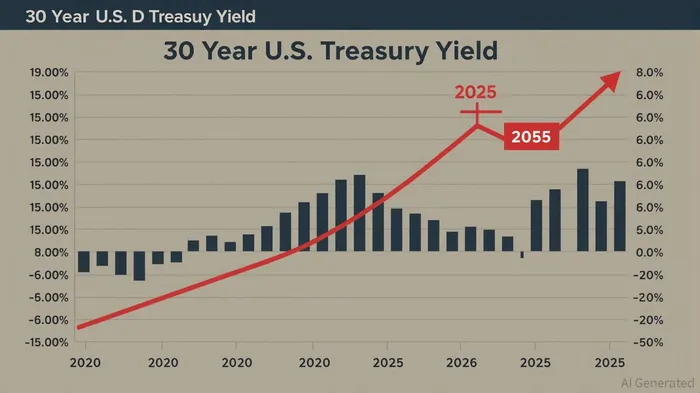
The recent U.S. Treasury 30-year bond auction in August 2025 has sent ripples through financial markets, with a yield of 4.813% and a bid-to-cover ratio of 2.27—well below the 10-year average of 2.43. This weak demand, coupled with similarly tepid results for three- and ten-year notes, raises urgent questions about investor confidence in long-term U.S. debt. While the Treasury market has historically absorbed such fluctuations, the current environment—marked by persistent inflation, geopolitical tensions, and evolving monetary policy—suggests a more profound shift in risk perception.
The Mechanics of Weak Demand
The bid-to-cover ratio, a critical metric for gauging investor appetite, fell short of expectations in the latest auction. A ratio below 2.43 indicates that fewer bidders were willing to commit to long-term Treasuries, a trend mirrored in the ten-year note auction, which saw a bid-to-cover ratio of 1.98. This decline reflects a broader hesitancy among institutional and retail investors to lock in capital for extended periods. Historically, such behavior has been linked to inflationary fears and uncertainty about the Federal Reserve's rate trajectory. For example, the November 2023 auction, which triggered a spike in volatility, saw similar dynamics as investors braced for further rate hikes.
Implications for Interest Rates and Borrowing Costs
The feedback loop between weak demand and rising yields is already in motion. Higher yields increase the U.S. government's borrowing costs, which could strain fiscal policy and force the Treasury to issue more debt to service existing obligations. This, in turn, risks creating a self-fulfilling prophecy: as yields rise, demand may further erode, exacerbating market instability. The Federal Reserve, meanwhile, faces a delicate balancing act. While it has signaled a commitment to maintaining near-zero short-term rates for the next three years, the upward drift in long-term yields—now at 4.81%—suggests that market participants are pricing in higher inflation or economic reflation.
The 30-year yield's sensitivity to macroeconomic shifts is underscored by its historical range: from 15.21% in 1981 to 2% post-2008. The current level of 4.81% sits in a moderate but precarious sweet spot, reflecting cautious optimism about growth but also lingering inflationary pressures. A steepening yield curve (30-year minus 10-year spread at 0.58%) further signals expectations of gradual economic expansion, though this could reverse if inflationary fears resurface.
Market Stability and Systemic Risks
The Treasury market's role as a global safe haven means that weak demand could have cascading effects. In March 2023, the collapse of Silicon Valley Bank and Signature Bank triggered a liquidity shock, with bid-ask spreads for two-year notes widening to levels not seen since 2020. While liquidity has since stabilized, the market's capacity to absorb large trading flows remains a concern. Leveraged strategies—such as basis trades and risk parity portfolios—could force further unwinds if yields continue to rise, amplifying volatility.
Moreover, the Treasury's reliance on non-bank financial intermediaries (NBFIs) to absorb long-term debt introduces new risks. NBFIs, which hold significant portions of Treasuries, are vulnerable to forced asset sales during periods of stress. This was evident in the 2023 banking crisis, where liquidity constraints led to sharp price swings. The Federal Reserve's recent exemption of Treasuries from the supplementary leverage ratio (SLR) for banks is a step toward stabilizing the market, but more proactive measures may be needed if demand continues to wane.
Investment Advice: Navigating the New Normal
For investors, the key takeaway is to remain vigilant about duration risk. The 30-year bond's yield may appear attractive, but its sensitivity to inflation and rate expectations makes it a volatile asset. Consider the following strategies:
1. Diversify Duration Exposure: Allocate a portion of fixed-income portfolios to shorter-term Treasuries or inflation-protected securities (TIPS) to mitigate interest rate risk.
2. Hedge Against Repricing: Use Treasury futures or options to hedge against potential yield spikes, particularly if inflation data remains stubbornly high.
3. Monitor Policy Shifts: Closely track the Fed's quantitative tightening (QT) pace and any regulatory changes aimed at bolstering Treasury demand.
The broader market should also brace for potential spillovers. A sharp rise in long-term yields could pressure mortgage rates, corporate bond spreads, and even equity valuations. Investors in sectors like real estate or utilities—highly sensitive to interest rates—should consider defensive positioning.
Conclusion
The weak demand for U.S. 30-year bonds is not merely a technicality; it is a canary in the coal mine for global financial stability. While the Treasury market has shown resilience in the past, the interplay of inflation, policy uncertainty, and structural liquidity constraints demands a cautious approach. For now, the market is pricing in a soft landing, but history reminds us that complacency can be a costly illusion. As the Fed and Treasury navigate this delicate balancing act, investors must stay agile, prepared for both the opportunities and risks that lie ahead.







Comentarios
Aún no hay comentarios