
The Unseen Profit in Peril: U.S. Military Aid to Ukraine and the Rise of Defense Contractors
The war in Ukraine has become a geopolitical pressure test, with the U.S. at its epicenter. Over $66.5 billion in military aid to Kyiv since 2022 has not only shaped the battlefield but also redefined the calculus of defense contractors. For investors, the conflict has unveiled a paradox: Ukraine's vulnerability has created opportunities for select companies to thrive, even as the risks of overreliance on U.S. largesse loom large.
The Surge in U.S. Military Aid: A Lifeline for Defense Firms
Since 2022, the U.S. has funneled advanced weaponry to Ukraine through the Ukraine Security Assistance Initiative (USAI) and the Presidential Drawdown Authority (PDA). The $12.1 billion allocated in 2023 alone marked a turning point, but it was the 2024 PDA drawdown of $5.55 billion—and its subsequent expansions—that cemented the U.S. as Kyiv's primary supplier. This aid has flowed directly into the coffers of defense contractors, with companies like Lockheed Martin (LMT), Raytheon Technologies (RTX), and General Dynamics (GD) securing multibillion-dollar contracts.
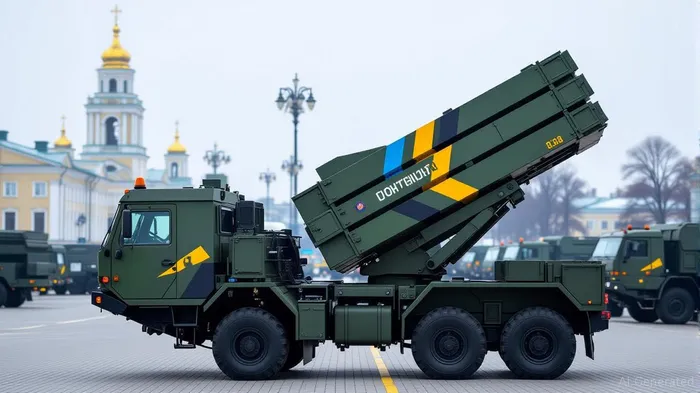
The HIMARS rocket systems (Lockheed Martin) and NASAMS air defense systems (Raytheon) are prime examples. These systems, critical to Ukraine's defense, have driven revenue growth for their manufacturers. Meanwhile, BAE Systems (BA) and Oshkosh Defense have profited from the demand for armored vehicles and logistics equipment.
The Dependency Dilemma: Risks and Rewards
Ukraine's reliance on U.S. aid has two critical implications for defense contractors. First, their fortunes are now tied to the whims of U.S. foreign policy. When President Trump temporarily froze aid in early 2025, shares of defense stocks dipped briefly—a reminder of how geopolitical shifts can disrupt supply chains. Second, the conflict's prolonged nature raises questions about scalability. Can these companies sustain production at wartime levels without overextending their supply chains?
Take Northrop Grumman (NOC), which secured a $522 million contract in 2023 to produce 155mm artillery shells. While this has bolstered near-term earnings, overcapacity risks emerge if the war ends abruptly or Western allies reduce their contributions.
The Geopolitical Multiplier: Beyond Ukraine
The U.S.-Ukraine partnership has broader ripple effects. European allies, pressured to step up their defense spending, are now procuring U.S.-made systems to avoid reliance on Russian infrastructure. This has created a secondary market for defense contractors: Raytheon's air defense systems, for instance, are now sought after by NATO members seeking interoperability with Ukraine's forces.
Meanwhile, the U.S. defense industrial base (DIB) is undergoing a renaissance. A 2024 Pentagon report highlighted how $68 billion in Ukraine-related funding has revitalized domestic manufacturing, with 37 states hosting production facilities. This revitalization isn't just about Ukraine—it's about preparing for future conflicts.
Investment Takeaways: Navigating the Fog of War
For investors, the key is to distinguish between companies with diversified portfolios and those overly reliant on Ukraine-specific contracts.
- Lockheed Martin (LMT) and Raytheon (RTX) remain top picks due to their broad product lines (e.g., F-35 jets and missile systems) that serve both Ukraine and global markets.
- General Dynamics (GD), with its Abrams tank production, benefits from rising global demand for armored vehicles amid heightened regional tensions (e.g., in the Middle East).
- ETF Plays: The iShares U.S. Aerospace & Defense ETF (ITA) offers diversification across the sector, mitigating single-stock risks.
The Bottom Line
Ukraine's military aid dependency has become a double-edged sword for defense contractors. While current contracts ensure profitability, the sector's long-term health hinges on geopolitical stability and the ability to pivot to new markets. Investors should monitor U.S.-Ukraine relations, European procurement trends, and the durability of production capacity. In the theater of war, the next act could be written by Washington's willingness to keep the aid taps open—or shut them down.
Investment Advice: Favor companies with global growth vectors and avoid pure-play Ukraine beneficiaries. The sector's upside remains, but so does its fragility.
Data as of July 2025. Past performance does not guarantee future results.





Comentarios
Aún no hay comentarios