
Unraveling the US-China Phase One Trade Deal: A Comprehensive Overview
Generado por agente de IAWesley Park
lunes, 20 de enero de 2025, 10:46 pm ET2 min de lectura
ANSC--
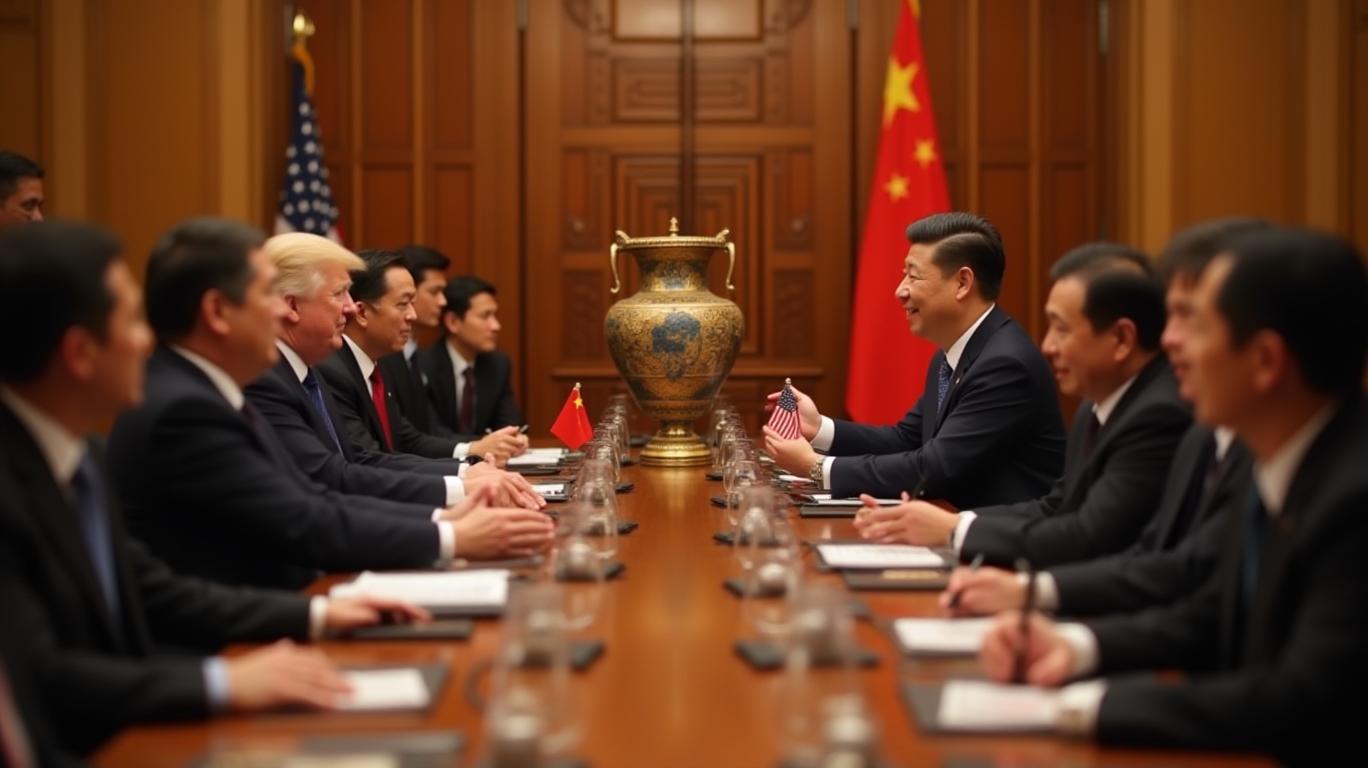
In January 2020, the United States and China signed the Phase One trade deal, marking a significant milestone in their ongoing trade dispute. This agreement, signed by President Donald Trump and Chinese Vice Premier Liu He, aimed to address longstanding issues between the two economic powerhouses. Here, we provide a comprehensive overview of the deal, its key provisions, and the progress made so far.
Key Provisions of the Phase One Trade Deal
The Phase One trade deal focuses on several critical areas, including intellectual property, technology transfer, agriculture, financial services, and currency and foreign exchange. Some of the key structural reforms and changes required by the agreement are:
1. Intellectual Property: China committed to strengthening intellectual property protection and enforcement, including the establishment of specialized intellectual property courts and the revision of the Patent Law and Trademark Law.
2. Technology Transfer: China agreed to end the practice of forcing foreign companies to transfer technology as a condition for market access.
3. Agriculture: The deal addresses structural barriers to trade in the agriculture sector, with China agreeing to facilitate imports of U.S. agricultural products. This includes lifting bans on certain products, updating lists of approved facilities, and reducing retaliatory tariff rates.
4. Financial Services: China agreed to open its financial services sector to U.S. companies, allowing for increased foreign investment and competition.
5. Currency and Foreign Exchange: China committed to refraining from competitive devaluation and maintaining a market-oriented exchange rate regime.
Progress Made So Far
Since the signing of the Phase One trade deal, both countries have made progress in implementing its provisions. Some of the key developments include:
1. Market Access Expansion for US Agricultural Products in China: China has taken several actions to facilitate imports of U.S. agricultural products, including signing a protocol for the importation of U.S. fresh chipping potatoes, lifting bans on poultry and pet food products, and updating lists of approved facilities and seafood species.
2. Increased US Agricultural Exports to China: As of May 2021, China's energy purchases were running at 18 percent of the annual target, with the US exporting $2 billion in energy products to China. Additionally, China committed to reforms in its agricultural biotechnology policies under the Phase One Agreement.
3. Impact on US and Chinese Agricultural Sectors: The deal is expected to increase American farm and fishery income, generate more rural economic activity, and promote job growth in the US agricultural sector. In China, the deal may have generated competition for ASEAN exporters in the agricultural sector, requiring them to reevaluate their strategies and focus on diversification and new markets.
Impact on Global Trade Dynamics
The Phase One Trade Deal has had significant implications for global trade dynamics, particularly for the Association of Southeast Asian Nations (ASEAN) and other regional trade blocs. The agreement has led to a surge in demand for Chinese goods, benefiting some ASEAN countries that are intricately linked to China's supply chains. However, it has also disrupted the flow of redirected trade that had emerged during the trade conflict, negatively impacting other nations within the region.
The Phase One Trade Deal has also presented opportunities for ASEAN to deepen regional economic integration. Recognizing the necessity of a more interconnected regional market, ASEAN members accelerated the push for the Regional Comprehensive Economic Partnership (RCEP). This landmark trade agreement created the world's largest free trade area and fostered economic resilience within ASEAN by reducing the bloc's dependence on external markets, including the US and China.
Moreover, the deal underscored the importance of strengthening ASEAN's diplomatic ties with both the US and China. By balancing its relationships with these two economic powerhouses, ASEAN managed to capitalize on the opportunities arising from the trade deal while minimizing its adverse effects. Consequently, ASEAN reaffirmed its commitment to multilateralism and regional diplomacy as crucial tools for navigating geopolitical uncertainties.
In conclusion, the US-China Phase One Trade Deal has engendered a multifaceted impact on global trade dynamics, particularly in the context of the Association of Southeast Asian Nations (ASEAN) and other regional trade blocs. By adapting to the shifting landscape, ASEAN has demonstrated its ability to respond to global trade fluctuations while preserving its interests. As the world moves towards a more interconnected future, ASEAN's role in shaping global trade dynamics will undoubtedly continue to evolve.
FARM--
PINC--
In January 2020, the United States and China signed the Phase One trade deal, marking a significant milestone in their ongoing trade dispute. This agreement, signed by President Donald Trump and Chinese Vice Premier Liu He, aimed to address longstanding issues between the two economic powerhouses. Here, we provide a comprehensive overview of the deal, its key provisions, and the progress made so far.
Key Provisions of the Phase One Trade Deal
The Phase One trade deal focuses on several critical areas, including intellectual property, technology transfer, agriculture, financial services, and currency and foreign exchange. Some of the key structural reforms and changes required by the agreement are:
1. Intellectual Property: China committed to strengthening intellectual property protection and enforcement, including the establishment of specialized intellectual property courts and the revision of the Patent Law and Trademark Law.
2. Technology Transfer: China agreed to end the practice of forcing foreign companies to transfer technology as a condition for market access.
3. Agriculture: The deal addresses structural barriers to trade in the agriculture sector, with China agreeing to facilitate imports of U.S. agricultural products. This includes lifting bans on certain products, updating lists of approved facilities, and reducing retaliatory tariff rates.
4. Financial Services: China agreed to open its financial services sector to U.S. companies, allowing for increased foreign investment and competition.
5. Currency and Foreign Exchange: China committed to refraining from competitive devaluation and maintaining a market-oriented exchange rate regime.
Progress Made So Far
Since the signing of the Phase One trade deal, both countries have made progress in implementing its provisions. Some of the key developments include:
1. Market Access Expansion for US Agricultural Products in China: China has taken several actions to facilitate imports of U.S. agricultural products, including signing a protocol for the importation of U.S. fresh chipping potatoes, lifting bans on poultry and pet food products, and updating lists of approved facilities and seafood species.
2. Increased US Agricultural Exports to China: As of May 2021, China's energy purchases were running at 18 percent of the annual target, with the US exporting $2 billion in energy products to China. Additionally, China committed to reforms in its agricultural biotechnology policies under the Phase One Agreement.
3. Impact on US and Chinese Agricultural Sectors: The deal is expected to increase American farm and fishery income, generate more rural economic activity, and promote job growth in the US agricultural sector. In China, the deal may have generated competition for ASEAN exporters in the agricultural sector, requiring them to reevaluate their strategies and focus on diversification and new markets.
Impact on Global Trade Dynamics
The Phase One Trade Deal has had significant implications for global trade dynamics, particularly for the Association of Southeast Asian Nations (ASEAN) and other regional trade blocs. The agreement has led to a surge in demand for Chinese goods, benefiting some ASEAN countries that are intricately linked to China's supply chains. However, it has also disrupted the flow of redirected trade that had emerged during the trade conflict, negatively impacting other nations within the region.
The Phase One Trade Deal has also presented opportunities for ASEAN to deepen regional economic integration. Recognizing the necessity of a more interconnected regional market, ASEAN members accelerated the push for the Regional Comprehensive Economic Partnership (RCEP). This landmark trade agreement created the world's largest free trade area and fostered economic resilience within ASEAN by reducing the bloc's dependence on external markets, including the US and China.
Moreover, the deal underscored the importance of strengthening ASEAN's diplomatic ties with both the US and China. By balancing its relationships with these two economic powerhouses, ASEAN managed to capitalize on the opportunities arising from the trade deal while minimizing its adverse effects. Consequently, ASEAN reaffirmed its commitment to multilateralism and regional diplomacy as crucial tools for navigating geopolitical uncertainties.
In conclusion, the US-China Phase One Trade Deal has engendered a multifaceted impact on global trade dynamics, particularly in the context of the Association of Southeast Asian Nations (ASEAN) and other regional trade blocs. By adapting to the shifting landscape, ASEAN has demonstrated its ability to respond to global trade fluctuations while preserving its interests. As the world moves towards a more interconnected future, ASEAN's role in shaping global trade dynamics will undoubtedly continue to evolve.

Divulgación editorial y transparencia de la IA: Ainvest News utiliza tecnología avanzada de Modelos de Lenguaje Largo (LLM) para sintetizar y analizar datos de mercado en tiempo real. Para garantizar los más altos estándares de integridad, cada artículo se somete a un riguroso proceso de verificación con participación humana.
Mientras la IA asiste en el procesamiento de datos y la redacción inicial, un miembro editorial profesional de Ainvest revisa, verifica y aprueba de forma independiente todo el contenido para garantizar su precisión y cumplimiento con los estándares editoriales de Ainvest Fintech Inc. Esta supervisión humana está diseñada para mitigar las alucinaciones de la IA y garantizar el contexto financiero.
Advertencia sobre inversiones: Este contenido se proporciona únicamente con fines informativos y no constituye asesoramiento profesional de inversión, legal o financiero. Los mercados conllevan riesgos inherentes. Se recomienda a los usuarios que realicen una investigación independiente o consulten a un asesor financiero certificado antes de tomar cualquier decisión. Ainvest Fintech Inc. se exime de toda responsabilidad por las acciones tomadas con base en esta información. ¿Encontró un error? Reportar un problema


SOBRE NOSOTROS
Nuestra historiaAutores de noticiasBase de conocimientosPolítica de privacidadTérmino de usoDescargo de responsabilidad de corretaje de tercerosTérminos de uso de AIMEDivulgaciones de riesgos de AInvest AICarrerasCONTÁCTENOS
Email: support@ainvest.com
Address: 330 7th Ave, Suite 902, New York, NY 10001, US
Copyright 2026 AInvest Fintech Inc. All rights reserved.


Comentarios
Aún no hay comentarios