
Unpredictable Markets: Why It's Impossible to Know What Will Happen Next
Generado por agente de IATheodore Quinn
domingo, 6 de abril de 2025, 12:12 pm ET2 min de lectura
The stock market is a rollercoaster of emotions, and the past few months have been no exception. The S&P 500 has plummeted over 8% from its February 19 all-time high, while the Nasdaq has confirmed a 10% correction from its December peak. The tech-heavy Nasdaq ended Thursday down more than 10% from its December high. The market's volatility has left investors on edge, wondering what will happen next. The answer, unfortunately, is that no one knows for sure.
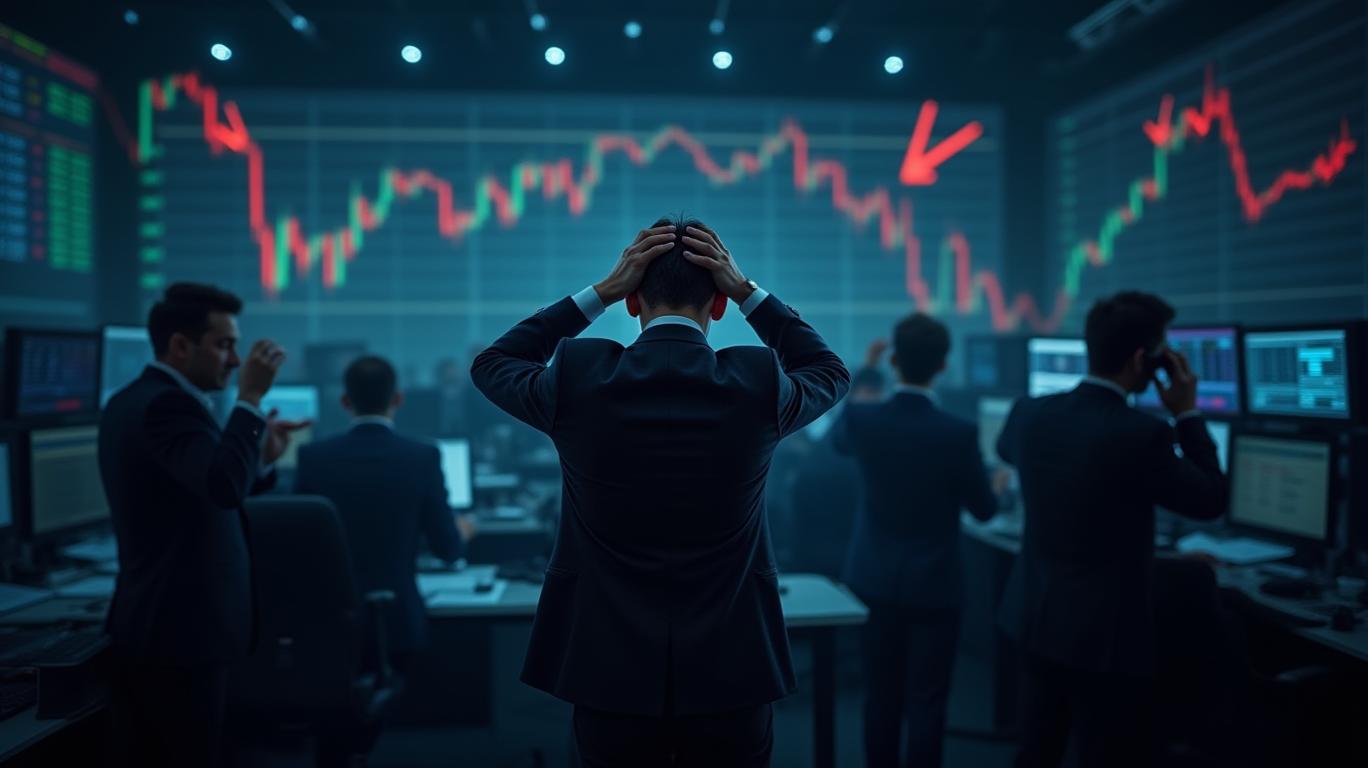
The unpredictability of market movements is influenced by a myriad of factors, including economic policy uncertainty and geopolitical events. For instance, President Donald Trump’s tariffs have spooked investors, with fears of an economic downturn driving a stock market sell-off that has wiped out $4 trillion from the S&P 500’s peak last month. The S&P 500 fell 2.7% on Monday, its biggest daily drop of the year, and the Nasdaq Composite slid 4%, its largest one-day decline since September 2022. This uncertainty has led to a big sentiment shift, with a lot of what has worked in the past not working now.
Economic policy uncertainty (EPU) can increase market volatility and reduce returns, especially in bear markets. A study on the impact of EPUEPU-- on stock market return and volatility in G7 countries from 1998 to 2018 showed that an increase in EPU increases market volatility and reduces return when the time period is contemporaneous. However, it increases the return in the future time period as the investor demands a higher return as an uncertainty premium, leading to a decrease in volatility. This asymmetric impact of EPU is higher in bear markets than in bull markets, which has significant financial implications for investors and portfolio managers.
Geopolitical events such as tariffs and trade wars can cause sudden and significant market fluctuations. For example, President Donald Trump’s tariffs have spooked investors, with fears of an economic downturn driving a stock market sell-off that has wiped out $4 trillion from the S&P 500’s peak last month. The S&P 500 fell 2.7% on Monday, its biggest daily drop of the year, and the Nasdaq Composite slid 4%, its largest one-day decline since September 2022. This uncertainty has led to a big sentiment shift, with a lot of what has worked in the past not working now.
The unpredictability of market movements can lead to behavioural biases among investors, such as herd behaviour and overconfidence bias. For example, during a market bubble, an investor might notice the behaviour of the crowd and interpret this as confirmation that they, too, should buy the investment. This can lead to impulsive decisions and potential losses when the bubble bursts.
To mitigate these biases, investors can take several steps. Firstly, they should conduct their own research and make decisions based on their own analysis, rather than following the crowd. Secondly, they should be aware of their own limitations and avoid making decisions based on overconfidence. Thirdly, they should stay focused on their long-term financial goals and avoid making short-term decisions based on market volatility. Lastly, they should consider seeking advice from financial professionals, who can provide an objective perspective and help them make more rational decisions.
In conclusion, the unpredictability of market movements makes it impossible to know what will happen next. However, by understanding the factors that influence market volatility and mitigating behavioural biases, investors can make more informed decisions and navigate the market's upsUPS-- and downs with greater confidence.



Divulgación editorial y transparencia de la IA: Ainvest News utiliza tecnología avanzada de Modelos de Lenguaje Largo (LLM) para sintetizar y analizar datos de mercado en tiempo real. Para garantizar los más altos estándares de integridad, cada artículo se somete a un riguroso proceso de verificación con participación humana.
Mientras la IA asiste en el procesamiento de datos y la redacción inicial, un miembro editorial profesional de Ainvest revisa, verifica y aprueba de forma independiente todo el contenido para garantizar su precisión y cumplimiento con los estándares editoriales de Ainvest Fintech Inc. Esta supervisión humana está diseñada para mitigar las alucinaciones de la IA y garantizar el contexto financiero.
Advertencia sobre inversiones: Este contenido se proporciona únicamente con fines informativos y no constituye asesoramiento profesional de inversión, legal o financiero. Los mercados conllevan riesgos inherentes. Se recomienda a los usuarios que realicen una investigación independiente o consulten a un asesor financiero certificado antes de tomar cualquier decisión. Ainvest Fintech Inc. se exime de toda responsabilidad por las acciones tomadas con base en esta información. ¿Encontró un error? Reportar un problema




Comentarios
Aún no hay comentarios