
The Unplayed Card: Why Japan’s Treasury Holdings Remain Off the Table in Trade Talks
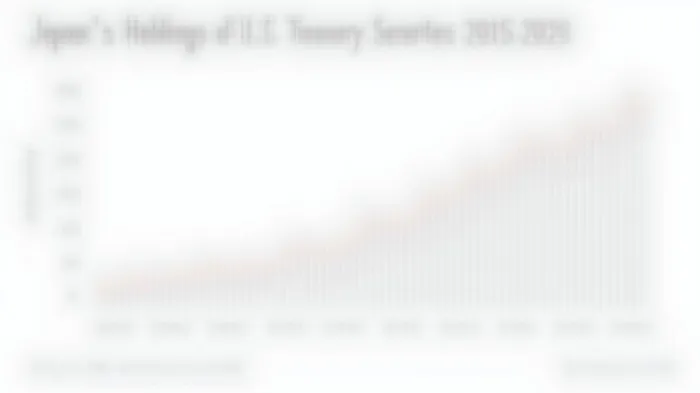
The recent trade tensions between Japan and the U.S., marked by retaliatory tariffs on automotive and industrial goods, have sparked speculation about Japan’s financial leverage. At the heart of this discussion lies a critical question: Could Japan’s $1.13 trillion in U.S. Treasury holdings—a figure surpassing China’s foreign reserves—be weaponized in negotiations? Japan’s Finance Minister Katsunobu Kato has emphatically answered: No. This article dissects the geopolitical and economic calculus behind this decision and its implications for global markets.
The Context of Tension
In early 2025, the U.S. imposed tariffs of up to 25% on Japanese automotive exports, citing unfair trade practices. Tokyo responded by seeking tariff exemptions and proposing concessions, such as opening its agricultural market to U.S. goods. Yet, when Kato mentioned Japan’s Treasury holdings as a “card on the table,” markets braced for a financial showdown. His clarification—reiterated in multiple forums—that this was a misinterpretation, not a threat, underscored Japan’s resolve to avoid destabilizing financial measures.
Japan’s Priorities: Liquidity Over Leverage
Kato’s stance reflects Japan’s dual mandate: safeguarding its forex reserves while maintaining geopolitical stability. The Treasury holdings, accumulated over decades, serve as a liquidity buffer for yen interventions—a tool critical to preventing yen volatility that could disrupt Japan’s export-driven economy. Analysts estimate that selling even 10% of these holdings ($113 billion) could roil global bond markets, raising U.S. borrowing costs and retaliatory actions.
The Risks of Weaponization
The Treasury market’s fragility amplifies the stakes. Japan’s holdings represent 5.6% of all outstanding U.S. government debt. A mass sale would flood the market with bonds, driving yields higher and destabilizing a $24 trillion market. For context, the 2013 “taper tantrum”—when yields rose 1.5 percentage points—caused global equity selloffs. Kato’s refusal aligns with Japan’s historical caution: since 2008, its Treasury holdings have fluctuated by less than 5% annually, prioritizing stability over short-term gains.
Implications for Investors
The decision underscores two realities:
1. Dollar-Yen Correlation: Japan’s Treasury holdings act as a de facto anchor for the yen. Investors in USD/JPY pairs should monitor yen stability, as Kato’s stance limits abrupt shifts.
2. Bond Market Volatility: The absence of a Treasury sell-off reduces tail risks for fixed-income portfolios.
Meanwhile, equities in sectors tied to Japan-U.S. trade—such as autos and semiconductors—may see muted volatility, as the status quo avoids a financial crisis.
Conclusion: A Calculated Equilibrium
Kato’s refusal to weaponize Treasury holdings is a masterclass in strategic restraint. By preserving these assets as a liquidity tool, Japan avoids a self-inflicted wound: selling Treasuries would weaken the yen, inflate U.S. borrowing costs, and risk a retaliatory trade spiral. With the G7 summit deadline looming, Tokyo’s focus on tariff exemptions and market access—not financial brinkmanship—aligns with its long-term interests.
The data speaks plainly: Japan’s $1.13 trillion stake in U.S. Treasuries represents 22% of its foreign reserves, a proportion unchanged since 2010. This consistency signals a policy of prudent stewardship, not short-term leverage. Investors would be wise to heed this: Japan’s Treasury holdings remain a pillar of global financial stability—a fact that transcends trade squabbles.
In a world of escalating tensions, Kato’s measured approach reminds us that the most powerful cards are those held, not played.







Comentarios
Aún no hay comentarios