
Unpayable Leases: The AI Infrastructure Cash Flow Crunch
AI data centers are grappling with significant financial pressures. Debt leverage reaches $300 billion, while lease commitments are large, with 73% of new facilities pre-leased. This strong demand contrasts with rising operational costs and regulatory hurdles.
Electricity expenses have become a major concern, . This increase strains cash flows, especially for developers relying on high energy usage. The U.S. , but energy costs often run into hundreds of millions annually, highlighting the scale of these challenges.
Grid interconnection delays are severe bottlenecks. , . These delays complicate project timelines and add financial uncertainty, forcing operators to use short-term power solutions like generators.
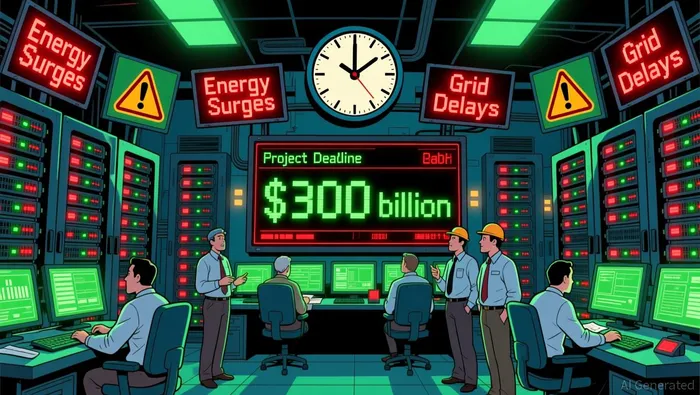
Despite risks, AI demand remains robust. Pre-leased facilities and a booming financing market indicate sustained growth. However, overbuilding and valuation inflation could heighten default risks if revenue projections falter, particularly for less-established operators. Regulatory pressures and power shortages further threaten long-term sustainability, requiring careful risk management.
Leverage, Contracts, and Project Delays
The data center sector, fueled by AI-driven demand, faces rising risks from high leverage and speculative financing as supports rapid infrastructure growth. While current demand and limited supply sustain healthy fundamentals, aggressive debt structures like the 25x seen in some operators could heighten default risks if AI revenue projections falter, particularly for less-established players. This debt load compounds vulnerabilities in contract execution.
Contractual terms present significant cash flow pressures. Operators face surging energy costs (up 30% since 2020) and are increasingly forced to negotiate upfront payments with tenants. While 73% of new facilities are pre-leased, the need to absorb immediate costs like these, combined with tariff pass-through mechanisms that may not fully protect operators, strains liquidity. .
Project delays, particularly around grid access, threaten timelines and budgets. , but Deloitte reports seven-year delays for large-scale upgrades needed for AI facilities demanding up to 2 GW per site. , . These bottlenecks, , create substantial financial exposure for developers.
Regulatory and Macro Risks to Lease Viability
Operators of new AI data centers face mounting regulatory and macroeconomic headwinds that could undermine lease commitments and cash flow stability. While 73% of new facilities have pre-leasing in place, these agreements now sit atop a foundation of significant operational vulnerabilities.
are fragmenting across the U.S., with and Colorado's forthcoming 2026 law creating patchwork compliance demands. Internationally, the (effective 2026) will impose strict requirements on high-risk systems, potentially affecting global operators leasing space in compliant facilities. This regulatory complexity increases legal costs and project planning uncertainty, particularly for multinational tenants.
The grid infrastructure strain presents an immediate physical risk to lease viability. , overwhelming local grids that . This forces operators to deploy costly short-term solutions like on-site generators or renewables, directly eroding profit margins. Simultaneously, , .
Environmental regulatory risks further threaten project continuity. , . , .
For lessees, , , and potential penalties for failing to meet regulatory deadlines. Investors must weigh the competitive edge of pre-leased facilities against these underlying vulnerabilities, .







Comentarios
Aún no hay comentarios