
Unlocking the Next Wave of EV Innovation: Undervalued Component Suppliers to Watch
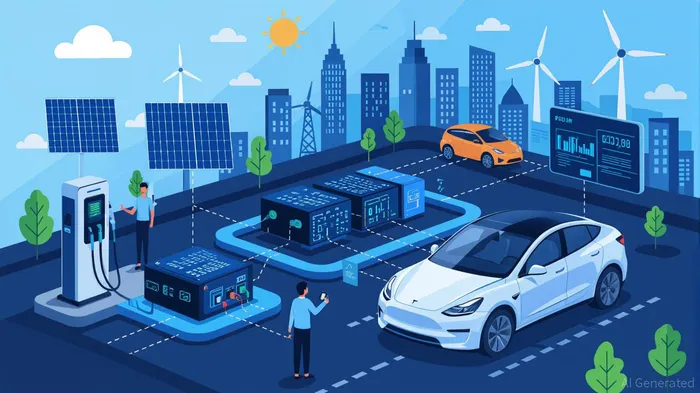
The electric vehicle (EV) industry is entering a pivotal phase, driven by technological breakthroughs and shifting market dynamics. While automakers dominate headlines, the real engine of innovation lies in the component suppliers enabling the next generation of high-performance EVs. For investors, identifying undervalued players in critical sectors—such as advanced battery technologies, scalable infrastructure, and sustainable manufacturing—offers a pathway to capitalize on the sector's rapid evolution.
The Battery Revolution: Solid-State and LFP Lead the Charge
Advanced battery technology remains the cornerstone of EV performance. Solid-state batteries, with their potential for faster charging, higher energy density, and improved safety, are transitioning from lab experiments to commercial viability. According to a report by the International Energy Agency (IEA), solid-state adoption could accelerate by 2030, driven by partnerships between automakers and specialized suppliers[1]. Meanwhile, lithium-iron-phosphate (LFP) batteries are gaining traction due to their lower cost and thermal stability, particularly in commercial and long-haul applications[2].
Emerging chemistries like lithium-sulfur and sodium-ion are also attracting attention for their potential to disrupt traditional lithium-ion dominance. These technologies require specialized manufacturing equipment and materials, creating opportunities for suppliers with niche expertise in electrochemistry and production scalability[3].
Scalability and Infrastructure: The Hidden Backbone of EV Growth
As demand for EVs surges, manufacturers must adopt modular and flexible production systems. Schneider Electric's Galaxy VL with eConversion technology, for instance, exemplifies how modular power solutions can optimize energy efficiency while supporting rapid scaling[4]. Similarly, prefabricated modular data centers are becoming essential for managing the computational demands of EV production, ensuring real-time monitoring and quality control[5].
Investors should focus on suppliers offering adaptable infrastructure solutions, as these companies are critical to enabling automakers to meet aggressive sales targets. The U.S. alone aims for 50% of light-duty vehicle sales to be electric by 2030, a goal that hinges on seamless integration of scalable systems[6].
Sustainability as a Competitive Advantage
Sustainability is no longer a peripheral concern but a core driver of innovation. Companies deploying resource-efficient technologies—such as modular uninterruptible power supplies (UPS) and energy-optimized data centers—are positioning themselves at the forefront of the green transition. These solutions not only reduce carbon footprints but also align with regulatory pressures and consumer demand for eco-friendly products.
Investment Opportunities in the Shadows of the Spotlight
While the spotlight often shines on automakers, the real value lies in the supply chain. Suppliers specializing in solid-state battery materials, LFP production equipment, and modular infrastructure are poised for outsized gains as the industry scales. For example, companies developing proprietary electrolyte formulations for solid-state batteries or automated manufacturing systems for sodium-ion cells could see their market valuations rise sharply as commercialization accelerates.
However, identifying these opportunities requires a nuanced understanding of the sector's technical and regulatory landscape. Investors should prioritize firms with strong R&D pipelines, strategic partnerships with automakers, and a clear path to cost reduction.
Conclusion
The EV revolution is no longer a distant promise but an ongoing transformation. By focusing on undervalued component suppliers—those enabling breakthroughs in battery chemistry, scalable infrastructure, and sustainable practices—investors can position themselves to benefit from the next wave of innovation. As the industry moves beyond early adoption, the companies that power its progress will define the future of mobility.







Comentarios
Aún no hay comentarios