
Unlocking Undervalued Nickel-Copper-Cobalt Potential: GPM Metals' Strategic Drilling at Walker Gossan Project
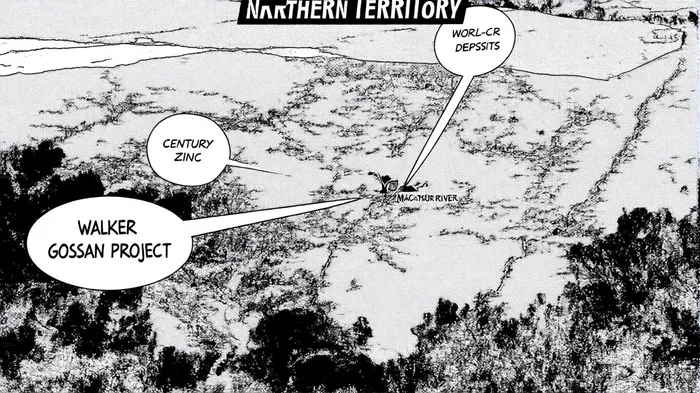
In the evolving landscape of critical mineral exploration, GPM Metals' 3,000-metre diamond drill campaign at the Walker Gossan Project in Australia's Northern Territory represents a compelling opportunity to unlock undervalued nickel-copper-cobalt potential. Situated in a politically stable, mineral-rich jurisdiction, the project leverages Australia's geological endowment and strategic positioning to address global demand for clean energy transition metals.
Strategic Location in a Proven Mineral Province
The Walker Gossan Project lies within the Proterozoic McArthur Basin, a region renowned for hosting world-class zinc-lead-silver deposits such as MacArthur River and Century Zinc[1]. However, the basin's geological complexity extends beyond base metals. Regional studies have identified sediment-hosted and breccia pipe-hosted deposits with nickel-copper-cobalt mineralization, such as the Browns polymetallic ore deposit (0.78% Cu, 0.11% Co, 0.12% Ni) and the Redbank Project's copper resources[2]. These examples underscore the McArthur Basin's underexplored potential for critical metalsCRML--, a narrative GPM is actively pursuing through advanced geophysical and geochemical surveys.
Australia's Northern Territory government has recognized this potential, allocating AUS$150,000 in grants to GPM through its “Resourcing the Territory” Initiative[1]. This support, coupled with cultural clearances from Traditional Owners and collaboration with the Northern Land Council, positions GPM to navigate regulatory and community engagement challenges with minimal friction—a critical advantage in an industry where social license often dictates project success.
Geological Synergies and Exploration Progress
GPM's 2023 airborne gravity gradiometry (AGG) survey identified six discrete gravity anomalies, with one large 2 km by 1 km anomaly coinciding with surface radiometric anomalies and anomalous thalium geochemistry[3]. These findings align with the geological signatures of magmatic sulfide systems, which are often associated with nickel-copper-cobalt mineralization. The presence of gossanous rocks near drill targets further strengthens the analogy to the MacArthur River deposit, where oxidation of sulfide minerals creates similar surface expressions[1].
The company's 2024–2025 exploration program, informed by these anomalies, includes ground gravity surveys, soil sampling, and diamond/RC drilling to test subsurface targets[3]. This systematic approach mirrors successful strategies employed in Australia's Julimar Complex, where the Gonneville Project recently reported 860,000 tonnes of nickel, 520,000 tonnes of copper, and 83,000 tonnes of cobalt[4]. Such discoveries highlight the continent's emerging role as a global hub for critical minerals, a trend GPM is well-positioned to capitalize on.
Strengthening the Investment Thesis
GPM's strategic partnership with Rio Tinto Exploration Pty Limited (RTX) further bolsters its prospects. A 2024 Sale and Purchase Agreement transferred exploration licenses and applications to GPM's subsidiary, expanding its land position along regional fault structures linked to mineralization[5]. This collaboration not only reduces exploration risk but also aligns GPM with a major player's geological expertise, enhancing the credibility of its targets.
While GPM's current focus remains on zinc-lead-silver, the geological context and regional trends suggest a high probability of nickel-copper-cobalt co-occurrence. For instance, the McArthur Basin's mafic volcanics in the Tawallah Group are recognized as fluid pathways for metalliferous brines, a key factor in the formation of polymetallic deposits[2]. Similarly, the Warren Project in Ontario, where Mink Ventures recently intersected nickel-copper-cobalt mineralization, demonstrates how structural controls can concentrate these metals in favorable host rocks[6].
Political Stability and Global Demand
Australia's tier-one mining jurisdiction offers a stable regulatory environment, robust infrastructure, and a skilled workforce—attributes that differentiate it from riskier global projects[4]. This stability is particularly valuable as governments and corporations prioritize ethical sourcing for decarbonization efforts. With global demand for nickel and cobalt projected to surge due to electric vehicle and battery storage growth, GPM's exploration in a politically secure region positions it to meet this demand without the geopolitical risks associated with other jurisdictions.
Conclusion
GPM Metals' Walker Gossan Project embodies the intersection of geological promise, strategic partnerships, and jurisdictional advantage. By leveraging advanced geophysical data and regional analogs, the company is poised to uncover nickel-copper-cobalt deposits in a region historically undervalued for these metals. As the global energy transition accelerates, GPM's disciplined exploration approach and alignment with Australia's critical mineral strategy make it a compelling investment for those seeking exposure to the next generation of resource discoveries.





Comentarios
Aún no hay comentarios