
Unlocking Strategic Manufacturing and Supply Chain Diversification: The EU-ASEAN Trade Nexus
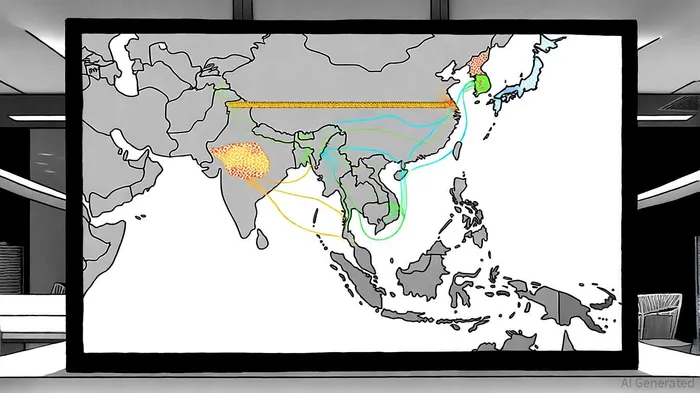
The global supply chain landscape is undergoing a seismic shift, driven by geopolitical tensions, rising production costs in China, and the EU's urgent need to decarbonize its economy. Amid this turbulence, the European Union and the Association of Southeast Asian Nations (ASEAN) have emerged as unlikely but strategic partners. In 2024, ASEAN's trade with the EU hit €258.7 billion, cementing its position as the EU's third-largest trading partner outside Europe [1]. This figure is not just a number—it signals a recalibration of global manufacturing and supply chain strategies, with ASEAN's geographic, demographic, and policy advantages positioning it as a critical node in the EU's quest for resilience.
The Strategic Imperative: Diversification Beyond China
For decades, the EU relied heavily on China for intermediate goods and low-cost manufacturing. However, the U.S.-China trade war, coupled with the EU's own green transition goals, has forced a reevaluation. ASEAN's 650 million consumers, youthful workforce, and growing digital infrastructure offer a compelling alternative. According to a report by the World Economic Forum, ASEAN has actively leveraged global tensions to enhance its economic autonomy, transforming geopolitical risks into opportunities for deeper integration with the EU [2].
A key enabler is the Digital Economy Framework Agreement (DEFA), launched in 2025 to harmonize cross-border data flows and e-commerce rules. This initiative, as noted by the WEF, is critical for sectors like semiconductors and renewable energy, where digital connectivity underpins supply chain efficiency [3]. For instance, Vietnam's emergence as a semiconductor assembly hub—bolstered by EU investments in green tech—highlights how digital infrastructure can bridge traditional manufacturing gaps.
Sector-Specific Opportunities: From Automotive to Green Energy
ASEAN's manufacturing ecosystem is no longer limited to textiles and electronics. The EU's push for carbon neutrality by 2050 has created demand for ASEAN's expertise in sustainable materials and renewable energy components. Thailand's battery production for electric vehicles (EVs), supported by EU green finance, and Indonesia's nickel processing for EV batteries are prime examples. Data from the European Chamber of Commerce in ASEAN indicates that EU firms are increasingly sourcing EV components from the region, with Vietnam and Malaysia accounting for 40% of EU imports in this category .
Meanwhile, the EU's Carbon Border Adjustment Mechanism (CBAM) is driving demand for low-carbon supply chains. ASEAN's ability to produce solar panels, wind turbines, and green hydrogen at competitive costs positions it as a strategic partner. The proposed Singapore-Kunming rail link, part of ASEAN's broader connectivity agenda, will further reduce logistics costs for EU firms seeking to integrate with regional supply chains [5].
Challenges and the Path Forward
Despite these opportunities, hurdles remain. Regulatory fragmentation across ASEAN's 10 members complicates compliance for EU firms. Labor rights concerns in countries like Cambodia and Myanmar also draw scrutiny. However, the EU's emphasis on “responsible sourcing” in its trade strategy suggests that sustainability and governance will be non-negotiables.
For investors, the key lies in aligning with ASEAN's digital and green transitions. The DEFA's focus on cross-border data flows, for example, opens avenues for EU tech firms to collaborate with ASEAN's growing startup ecosystem. Similarly, infrastructure projects like the Singapore-Kunming rail link will require foreign capital, offering returns while enhancing regional connectivity.
Conclusion: A Win-Win for Resilience and Growth
The EU-ASEAN trade relationship is no longer a sideshow—it is a cornerstone of global supply chain strategy. For the EU, ASEAN offers a buffer against overreliance on China and a springboard for its green transition. For ASEAN, the EU provides access to advanced technology and capital. As geopolitical tensions persist, this partnership will likely deepen, creating fertile ground for investors who prioritize resilience over short-term gains.







Comentarios
Aún no hay comentarios