
Unlocking Value in Special Opportunities Fund's Preferred Stock: A High-Yield, Conversion-Driven Opportunity
Investors seeking income with embedded upside potential are increasingly turning to hybrid instruments like preferred stocks. Among the options available, the Special Opportunities Fund 2.75% Series C Preferred Stock (SPE.PRC) stands out for its attractive yield, favorable conversion terms, and discounted price to liquidation preference. With its upcoming dividend and alignment with income-focused strategies, it presents a compelling opportunity in today's yield-starved environment.
The Case for SPE.PRC: A Triple-Legged Stool of Attractiveness
1. Attractive Yield Amid Low Rates
The current yield of 2.81% on SPE.PRC is notably higher than the average preferred stock yield of around 2.5% for its sector. This makes it an attractive fixed-income alternative in a landscape where Treasury yields remain subdued. The stock's annualized dividend of $0.6875 is secured by the fund's income-generating portfolio, which focuses on value-driven special situations in public equities and fixed income.
2. Favorable Conversion Terms: A Dual-Pronged Play
SPE.PRC's conversion ratio of 1.2195 shares of common stock (SPE) per preferred share offers investors a path to participate in the appreciation of the underlying fund. Currently, the common stock trades at $13.45, implying a conversion value of $16.34 per preferred share ($13.45 × 1.2195). This is $1.87 above its recent price of $24.47, but $0.66 below the liquidation preference of $25.
While the common stock's price is below the conversion price of $20.50, the fund's strategy—targeting undervalued assets and special situations—could drive appreciation in the coming quarters. A 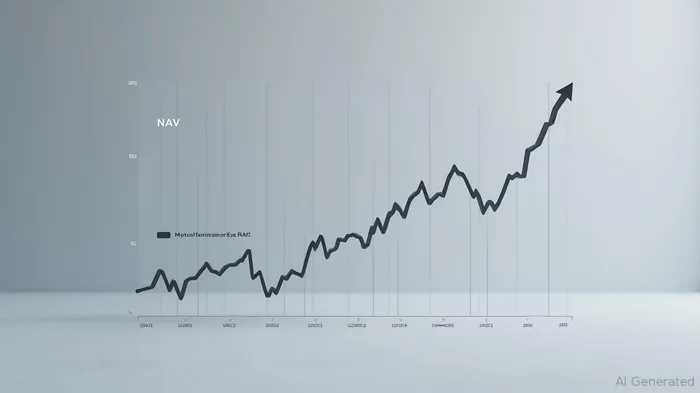 underscores its potential to narrow the gap between its net asset value (NAV) of $16.17 and current trading price.
3. Discount to Liquidation Preference: A Safety Net
SPE.PRC trades at a $0.53 discount (-2.12%) to its $25 liquidation preference, providing a cushion against downside risk. This discount is particularly compelling given the fund's strong capital structure and history of honoring obligations. Investors can view this as a built-in margin of safety, especially in volatile markets.
Upcoming Dividend: A Near-Term Catalyst
The next dividend ex-date is June 18, 2025, with a payout of $0.171875 per share (quarterly). This dividend is not only reliable but also tax-advantaged, as preferred dividends often qualify for lower tax rates than ordinary income. For income-focused portfolios, this timing aligns with the summer market rally season, potentially boosting investor confidence.
Risks to Consider
- Interest Rate Sensitivity: Like all fixed-income instruments, SPE.PRC's price could decline if rates rise sharply.
- Common Stock Performance: The conversion value is tied to SPE's share price, which faces macroeconomic risks.
- Liquidity: While the preferred stock has decent volume, it may experience volatility in thin markets.
Investment Thesis: A Balanced Approach
For conservative income investors, SPE.PRC offers a risk-reward profile that combines yield, capital preservation, and upside potential. The discount to liquidation preference and 2.81% yield provide a solid base, while the conversion terms add a leveraged bet on the fund's success.
Action Items
- Income Seekers: Consider a core position in SPE.PRC for its yield and safety.
- Speculative Investors: Use a portion of capital to “play” the conversion angle, targeting a SPE common price rise to $16.50 (implying a 23% upside from current levels).
- Tax-Sensitive Investors: Benefit from the preferential tax treatment of dividends.
Conclusion
SPE.PRC is a multifaceted instrument that appeals to both income-focused and growth-oriented investors. Its discounted price, reliable dividends, and conversion-linked upside make it a standout in a crowded preferred stock market. As the Special Opportunities FundSPE-- continues to navigate value-driven investments, this preferred stock could emerge as a top performer in 2025.
Final Note: Always conduct further due diligence and consult a financial advisor before making investment decisions.





Comentarios
Aún no hay comentarios