
Unlocking Small-Cap Crypto Potential: Strategic Allocation in a Diversified Web3 Portfolio
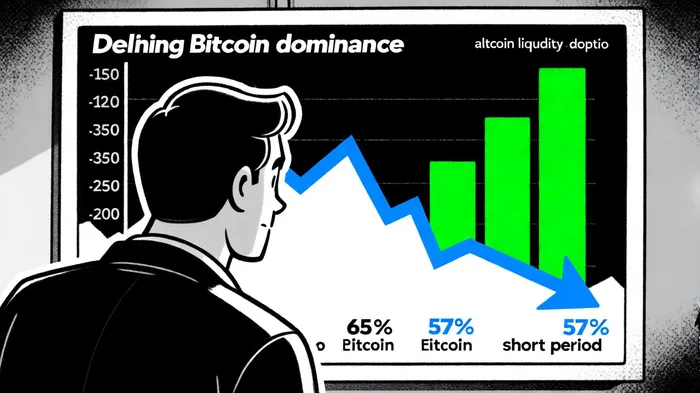
The cryptocurrency market in 2025 is undergoing a structural shift. Bitcoin's dominance, which peaked at 65.1% in April, has retreated to 58.7% by September, signaling a reallocation of capital into altcoins and small-cap Web3 projects[1]. This trend, historically associated with "altcoin seasons," reflects growing investor appetite for innovation beyond Bitcoin's perceived stability. For Web3 portfolios, this presents both opportunity and risk: small-cap assets, while volatile, offer outsized returns for those who allocate strategically.
The Case for Small-Cap Crypto: High Volatility, High Rewards
Small-cap crypto assets—typically valued between $50 million and $300 million—have become the bedrock of Web3's speculative and innovative energy. These projects, such as Bitcoin Hyper ($HYPER), a BitcoinBTC-- Layer-2 solution leveraging Solana's infrastructure, and MAXI Doge ($MAXI), a meme coin inspired by leveraged trading culture, exemplify the sector's duality: high volatility paired with transformative potential[2].
Data from Binance Research underscores this dynamic: the broader crypto market has grown 9.9% year-to-date in 2025, with small-cap projects capturing a disproportionate share of liquidity[1]. Notably, smart contract platform coins like HBARHBAR-- and XLMXLM-- have surged 142% unweighted on average, while DeFi tokens (e.g., CRV, PENDLE) have gained 77% YoY[3]. These figures highlight the importance of sector-specific allocation.
However, not all small-cap projects are created equal. AI tokens, for instance, have underperformed, averaging a 25% decline YoY, despite BittensorTAO-- (TAO) rising 34%[3]. Gaming tokens have also struggled, with the exception of SuperVerseSUPER-- (SUPER), which spiked 750% in 12 months[3]. This variance underscores the need for rigorous due diligence and sector diversification.
Strategic Allocation: Balancing Risk and Innovation
A diversified Web3 portfolio must balance high-risk, high-reward small-cap assets with more stable, utility-driven projects. For example, Flux (FLUX), a decentralized computing platform, and Moonbeam (GLMR), an Ethereum-Polkadot interoperability bridge, offer foundational infrastructure value while maintaining reasonable volatility[4]. Similarly, HeLa, an AI-focused Web3 project launching its mainnet in Q3 2025, represents a bet on decentralized AI development—a sector poised for long-term growth[4].
The key to strategic allocation lies in hedging against macroeconomic headwinds. While Bitcoin's dominance decline suggests a shift toward altcoins, elevated interest rates and tighter liquidity remain headwinds for speculative assets[1]. Investors should treat small-cap crypto as tactical positions rather than strategic holdings. For instance, Ethereum's dominance rising from 11.6% to 13.4% in 2025 reflects its role as a "bridge asset"—offering both stability and exposure to DeFi and smart contract innovation[5].
Navigating the Altcoin Season: Lessons from 2025
The Altcoin Season Index, currently at 42/100, indicates a "Bitcoin season" where altcoins underperform[1]. Yet this metric should not deter investors. Historically, mid-cycle expansions have seen capital rotate into higher-risk altcoins, and 2025 is no exception. Projects like Snorter Bot ($SNORT), a Telegram-based trading bot, and Metahero (HERO), a metaverse identity platform, are attracting attention for their niche utility[2].
However, caution is warranted. The decline in Bitcoin dominance does not negate its role as a store of value; rather, it reflects a maturing market where altcoins are evaluated on their own merits[5]. Institutional adoption of Bitcoin ETFs has further diversified capital flows, with liquidity spilling into DeFi protocols like AaveAAVE-- and MakerDAO via Wrapped BitcoinWBTC-- (wBTC)[5].
Conclusion: Positioning for the Future of Web3
Small-cap crypto assets are the lifeblood of Web3 innovation, but their volatility demands disciplined allocation. Investors should prioritize projects with clear utility, strong fundamentals, and alignment with macro trends (e.g., AI, interoperability, RWA). For example, Bitcoin Hyper's $16.6 million presale and Solana-based infrastructure position it as a bridge between Bitcoin and DeFi[2], while Flux's Proof-of-Useful-Work model addresses real-world computing needs[4].
In a market where Bitcoin dominance has declined to 58.7%, the path forward is clear: diversify across sectors, hedge with EthereumETH-- and stablecoins, and allocate small-cap exposure to projects with defensible use cases. As the Web3 ecosystem evolves, those who balance risk and reward will be best positioned to capitalize on the next wave of innovation.







Comentarios
Aún no hay comentarios