
Unlocking Shareholder Value: Great Pacific Gold's Walhalla Spinout and the Gold Sector's Restructuring Playbook
Corporate restructuring has long been a tool for unlocking value in capital markets, but its efficacy hinges on execution, market conditions, and strategic alignment. Great Pacific Gold's decision to spin out its Walhalla Gold Project into a standalone entity, Walhalla Gold Corp., represents a calculated move to capitalize on these dynamics. By separating the project from its broader operations, the company aims to sharpen focus, attract targeted investment, and align shareholder interests with the potential of a historically significant gold asset.
Strategic Rationale: Focus and Operational Clarity
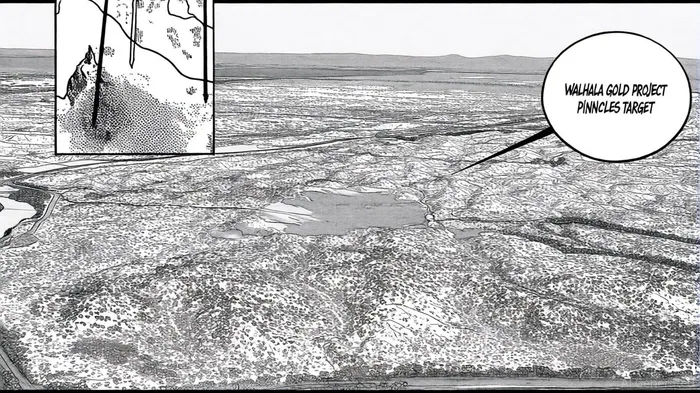
The Walhalla Gold Project, located in Victoria, Australia, has produced 1.5 million ounces of gold at a high-grade 33.59 g/t over its history. Its 1,400-square-kilometer footprint includes the Pinnacles target, which is fully permitted and ready for immediate drilling. By spinning out Walhalla, Great Pacific is enabling the new entity to pursue exploration and development without the operational and financial distractions of its parent company. This mirrors broader trends in the gold sector, as discussed in Spinning Gold, where spinoffs are increasingly used to isolate high-potential assets and streamline capital allocation.
The transaction structure-a 1:1 share distribution to Great Pacific shareholders-ensures that existing investors retain exposure to Walhalla's upside while allowing the new entity to raise capital independently. Shareholders will vote on the spinout at a special meeting on November 27, 2025, with voting rights granted to those registered by October 20. This timeline reflects a deliberate pace to ensure regulatory and shareholder alignment, a critical factor in spinoff success.
Value Creation: Cash, Royalties, and Market Positioning
Great Pacific's retention of a 2% net smelter royalty (NSR) on Walhalla's production provides a recurring revenue stream, while a $1.5 million cash payment from Finco adds immediate liquidity, according to the Stockwatch report. These terms suggest a balanced approach to value extraction, avoiding the dilution often seen in equity-based spinoffs. Additionally, Walhalla's need to secure $4.5 million in pre-spinout financing underscores the importance of capital efficiency-a challenge common to junior miners but one that a focused management team may navigate more effectively, as noted in the company's meeting announcement.
The gold sector's recent performance also bolsters the case for spinouts. Post-2020, gold's role as a safe-haven asset has driven improved cash flows and M&A activity. Spinoffs like Walhalla's can benefit from this environment by attracting investors seeking exposure to high-grade, advanced-stage projects. As noted by Christopher Mayer in Invest Like a Dealmaker, spinoffs often trade at a discount initially but can outperform as market recognition of their standalone potential grows.
Risks and Realities: The Spinoff Paradox
Despite the strategic logic, spinoffs face an uphill battle. Research from Harvard Business Review highlights that only a minority of corporate spinoffs deliver sustained value, often due to misaligned incentives or poor execution. For Walhalla, success will depend on its ability to advance the Pinnacles target quickly and transparently. Delays in drilling or underwhelming results could erode investor confidence, particularly in a sector sensitive to commodity price swings.
Moreover, the gold industry's broader challenges-such as regulatory hurdles in mining jurisdictions and environmental scrutiny-add layers of complexity. Great Pacific's spinout must demonstrate not just geological promise but also robust governance and ESG practices to attract capital.
Historical data on GPAC's shareholder meetings offers limited insight due to a small sample size (only two annual general meetings since 2022), but the backtest reveals a mixed picture. Over 30 days post-meeting, the stock averaged a +1.6% return versus +0.4% for the benchmark, yet the win rate remained at 50%, and no daily returns reached statistical significance. The immediate post-meeting reaction was mildly negative (-0.95%), suggesting no clear "pop" effect. Given the high volatility typical of micro-cap explorers like GPAC, these results underscore the need for caution. Investors should focus on Walhalla's operational execution and the gold sector's macro dynamics rather than short-term price noise.
Conclusion: A Calculated Bet in a Volatile Sector
Great Pacific's Walhalla spinout is a textbook example of corporate restructuring aimed at unlocking value through specialization. By isolating a high-grade asset and retaining a royalty stake, the company balances risk and reward. However, the spinout's ultimate success will hinge on Walhalla's operational execution and the gold sector's ability to maintain its recent momentum. For investors, the move offers a compelling case study in how strategic clarity can drive value-but also a reminder that spinoffs, like gold itself, require both intrinsic quality and the right market conditions to shine.
```







Comentarios
Aún no hay comentarios