
Unlocking Real Estate and Infrastructure Opportunities in Webster, NY
The FAST NY Grant: A Catalyst for Industrial Revitalization
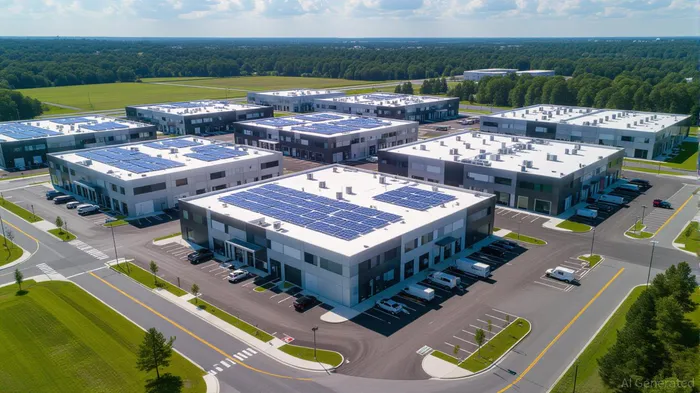
The FAST NY Shovel-Ready Grant Program has allocated $9.8 million to transform a 300-acre brownfield into a modern industrial corridor. This funding is being used to modernize roads, expand sewer systems, and upgrade electrical infrastructure, creating "shovel-ready" sites that attract advanced manufacturers and logistics firms. The initiative aligns with Governor Hochul's broader economic strategy to position Upstate New York as a competitive alternative to Sun Belt industrial markets according to state officials. By 2026, the site is projected to offer one million square feet of industrial space, with vacancy rates already dropping to 2%-well below the national average of 8.5%.
The grant's impact extends beyond industrial development. Residential property values in Webster have surged by 10.1% annually, driven by improved infrastructure and job creation. This dual growth in industrial and residential sectors positions the town as a model for sustainable urban development, where public investment directly fuels private-sector returns.
Xerox Campus Redevelopment: A Blueprint for Industrial Growth
The former Xerox campus, a 300-acre site, is being redeveloped into a mixed-use hub through a combination of state grants, tax incentives, and private partnerships according to local development reports. Key upgrades include road realignment, sewer expansion, and electrical grid modernization, which have reduced development risks and attracted high-value industries such as semiconductor manufacturing and renewable energy. The site's proximity to I-390 and the Rochester International Airport further enhances its appeal for logistics and e-commerce firms.
Public-private partnerships are central to this transformation. For instance, the $650 million fairlife® dairy facility, a flagship project on the campus, is expected to create 250 jobs by 2025. This facility, supported by state infrastructure upgrades, exemplifies how public funding can de-risk private investments and accelerate industrial site readiness. The Xerox campus is also being reclassified for mixed-use development, with parcels sold to developers for manufacturing, office, and residential uses according to development plans.
Fairlife® Facility: A Case Study in Infrastructure-Driven Investment
The fairlife® dairy plant, a $650 million investment by The Coca-Cola Company, underscores the synergy between infrastructure and corporate expansion according to state officials. The facility, set to open in Q4 2025, requires significant infrastructure support, including road improvements to handle 200 daily truck movements and a $20 million state-funded wastewater treatment upgrade according to project specifications. These upgrades not only serve the facility but also enhance the broader industrial corridor's appeal.
For investors, the fairlife® project highlights the importance of infrastructure-linked equities. The Coca-Cola Company's stock (KO) benefits from the facility's operational success, while infrastructure contractors and logistics firms stand to gain from the increased demand for transportation and utilities according to company announcements. Additionally, the project's ESG-aligned features-such as stormwater reuse and energy-efficient systems-align with growing investor interest in sustainable industrial development.
Broader Implications for Real Estate and Infrastructure Investment
Webster's revitalization is part of a $283 million statewide initiative to prepare industrial sites for development according to state economic reports. This includes the Webster Forward Project and the Sandbar Waterfront Revitalization, which aim to enhance residential and commercial appeal through brownfield remediation and recreational infrastructure according to local development plans. The town's strategic location near Buffalo's port and rail networks further strengthens its logistics credentials.
Private equity firms and infrastructure-focused growth stocks are increasingly eyeing Webster's potential. While no specific private equity players are named in the research, the public-private partnership model used in the Xerox campus redevelopment is attractive to investors seeking low-risk, high-return opportunities. For publicly traded companies, firms involved in electrical grid modernization, road construction, and logistics services are well-positioned to benefit from the town's infrastructure boom.
Conclusion: A Strategic Hub for Future Growth
Webster's transformation illustrates how targeted infrastructure investments can unlock value across industrial land, commercial real estate, and equities. The FAST NY grant, Xerox campus redevelopment, and fairlife® facility are creating a self-reinforcing cycle of growth, where improved infrastructure attracts private capital, which in turn drives further development. For investors, the key takeaway is clear: Webster's strategic location, state-backed infrastructure, and low vacancy rates make it a compelling destination for long-term, high-conviction investments in 2025 and beyond.





Comentarios
Aún no hay comentarios