
Unlocking Value: Public-Private Partnerships in Denmark's Regional Airport Infrastructure
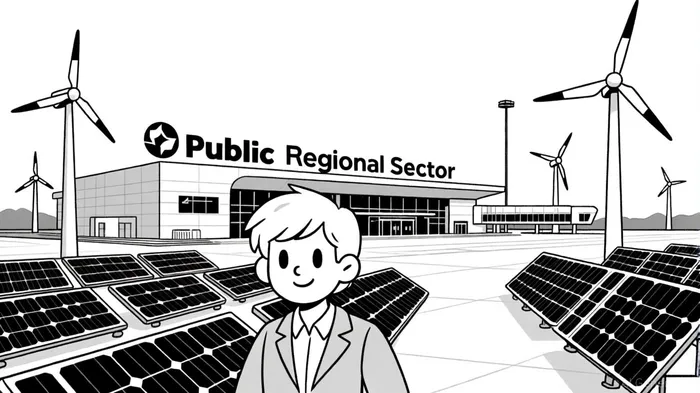
Denmark's public-private partnership (PPP) model has long been a blueprint for sustainable infrastructure development, driving innovation in energy, urban planning, and climate action. With its ambitious goal to reduce greenhouse gas emissions by 70% by 2030, the country has leveraged PPPs to align economic growth with environmental stewardship. Now, regional airports like Aarhus, Odense, and Billund are emerging as strategic focal points for replicating this success, offering untapped potential for investors seeking long-term, value-driven opportunities in secondary aviation hubs.
The Danish PPP Framework: A Foundation for Collaboration
Denmark's PPP approach is rooted in long-term policy stability, shared risk-reward structures, and sector-specific innovation. The 14 Climate Partnerships 2030, launched in 2019, exemplify this model, uniting industry leaders like Ørsted and Danfoss with government stakeholders to decarbonize sectors ranging from shipping to manufacturing [2]. These partnerships emphasize measurable outcomes, such as the integration of wastewater sludge for energy production in cities like Aarhus and Odense, demonstrating how cross-sector collaboration can address both environmental and infrastructural challenges [4].
This framework is particularly relevant for regional airports, which face dual pressures to modernize facilities while reducing carbon footprints. For instance, Aarhus Airport's recent infrastructure upgrades—aimed at accommodating growing passenger numbers and enhancing connectivity—align with Denmark's broader strategy to position regional hubs as gateways for sustainable travel [5]. While specific PPP details for these airports remain underreported, the nation's track record suggests a high likelihood of adopting similar collaborative models in aviation.
Strategic Opportunities in Secondary Aviation Hubs
Aarhus, Odense, and Billund airports are critical to Denmark's regional connectivity, serving as economic engines for their respective regions. Billund, for example, leverages its proximity to the LEGO Group's global headquarters to attract tourism, while Odense supports industrial and academic networks in southern Jutland. These airports are poised to benefit from PPPs that prioritize:
- Sustainable Infrastructure: Integrating renewable energy systems, such as solar panels or bioenergy from local waste streams, mirrors the success of urban PPPs in energy production [4].
- Digital Transformation: Enhanced digital infrastructure, including smart baggage systems and AI-driven traffic management, could reduce operational costs and improve passenger experiences [3].
- Community-Centric Development: PPPs could fund amenities like green spaces or co-working hubs, aligning with Denmark's emphasis on long-term community value [5].
While direct data on airport-specific PPPs is scarce, the broader Danish infrastructure landscape provides a compelling case for optimism. For example, the nation's experience with PPPs in schools and public buildings—prioritizing operational efficiency and lifecycle costs—offers a replicable template for aviation projects [5].
Risks and Mitigation Strategies
Investors must navigate challenges such as regulatory shifts and the high upfront costs of green technologies. However, Denmark's stable political environment and strong public trust in PPPs mitigate these risks. The Climate Partnerships 2030 model, which binds private firms to sector-specific carbon reduction targets, ensures alignment between investors and policymakers [3]. Additionally, the government's commitment to stable policy frameworks—evidenced by its 50-year history of PPPs—reduces uncertainty for long-term projects [4].
Conclusion: A Call for Strategic Investment
Denmark's regional airports represent a nexus of opportunity for investors seeking to capitalize on sustainable infrastructure. By applying the nation's proven PPP model—characterized by innovation, collaboration, and long-term vision—these secondary hubs can evolve into exemplars of green aviation. While direct data on airport-specific projects remains limited, the broader success of Danish PPPs in energy and urban development provides a robust foundation for optimism. For investors, the message is clear: Denmark's regional airports are not just gateways to the country but gateways to a future where infrastructure and sustainability converge.







Comentarios
Aún no hay comentarios