
Unlocking Potential: Middle Eastern Penny Stocks Under US$100M Market Cap
Generado por agente de IACyrus Cole
domingo, 23 de marzo de 2025, 11:49 pm ET3 min de lectura
ALAR--
In the ever-evolving landscape of global finance, investors are increasingly turning their attention to the Middle East, a region rich with opportunities and challenges. As trade tensions and geopolitical uncertainties cast a shadow over major Gulf markets, penny stocks with market capitalizations under US$100 million are emerging as a compelling investment avenue. These smaller-cap companies, often overlooked due to their size, present unique opportunities for growth and high returns, especially when backed by strong financial fundamentals.
Market Dynamics
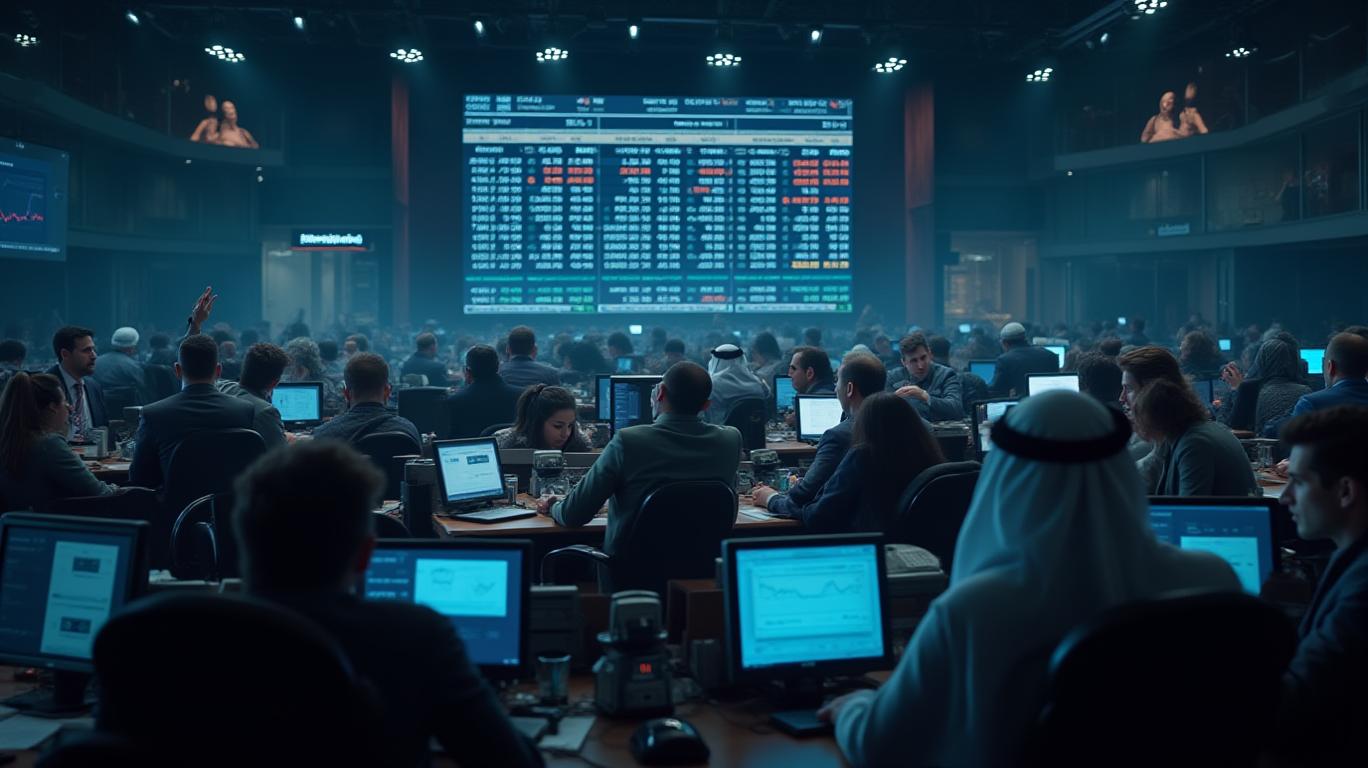
The Middle Eastern stock markets have recently faced significant challenges, with most Gulf indices declining due to escalating trade war fears. This has led to a cautious investor sentiment, impacting stock indices across the region. Despite these broader market fluctuations, there remains a niche for investors interested in smaller or newer companies through penny stocks. These investments can still offer surprising value and potential growth opportunities when backed by strong financials and strategic positioning.
Top Performing Penny Stocks
Let's take a closer look at some of the top-performing penny stocks in the Middle East with market capitalizations larger than US$10 million.
# Alarum TechnologiesALAR-- (TASE:ALAR)
Alarum Technologies stands out with a market capitalization of ₪170.79 million and a financial health rating of ★★★★★★. The company's strong financial position is supported by its robust revenue generation and strategic investments in the technology sector. Despite recent share price volatility, AlarumALAR-- Technologies remains a compelling investment opportunity for those looking to capitalize on the growth potential of the tech industry.
# Thob Al Aseel (SASE:4012)
Thob Al Aseel, with a market capitalization of SAR1.54 billion and a financial health rating of ★★★★★★, is another standout performer. The company's strong financial health is underpinned by its diversified revenue streams and effective debt management. Thob Al Aseel's strategic positioning in the growing sectors of education and healthcare makes it a resilient investment option amidst market volatility.
# Oil Refineries (TASE:ORL)
Oil Refineries, with a market capitalization of ₪3.15 billion and a financial health rating of ★★★★★★, is a leader in the energy sector. The company's strong revenue generation capabilities and strategic investments in oil and gas exploration make it a reliable investment choice. Despite the challenges faced by the energy sector, Oil Refineries' robust financial position and experienced management team position it well for long-term success.
Key Factors Driving Growth
The growth and financial stability of top-performing penny stocks in the Middle East are driven by several key factors:
1. Financial Health Ratings: Companies with strong financial health ratings, such as Alarum Technologies and Thob Al Aseel, are better positioned to weather market volatility and capitalize on growth opportunities.
2. Revenue Generation: Robust revenue generation is crucial for financial stability. Companies like Oil Refineries, with strong revenue streams, are better equipped to navigate market challenges.
3. Strategic Positioning: Penny stocks that are strategically positioned in growing sectors, such as technology and healthcare, tend to perform better. For example, Big Tech 50 R&D-Limited Partnership (TASE:BIGT) and Hub Girisim Sermayesi Yatirim Ortakligi (IBSE:HUBVC) have strong financial health ratings and are well-positioned in their respective sectors.
4. Debt Management: Effective debt management is another key factor. Companies like Duran Dogan Basim ve Ambalaj Sanayi (IBSE:DURDO) have satisfactory debt levels, which contribute to their financial stability.
5. Liquidity Management: Strong liquidity management is crucial for financial stability. Companies like Matricelf Ltd (TASE:MTLF) benefit from strong short-term asset coverage over both their short and long-term liabilities, despite being unprofitable.
Mitigating Risks
Geopolitical tensions and trade war concerns have a significant impact on the volatility and liquidity of Middle Eastern penny stocks. To mitigate these risks, investors can employ several strategies:
1. Diversification: Investing in a diversified portfolio of penny stocks can help spread risk. For example, the article highlights a variety of sectors including technology, healthcare, and real estate, suggesting that diversification across different industries can provide a buffer against sector-specific risks.
2. Financial Health Evaluation: Carefully evaluating the financial health of penny stocks is crucial. Companies like Al-Baha Investment and Development Company (SASE:4130) have shown impressive earnings growth but also face liquidity challenges. Investors should look for companies with strong financial health ratings and stable cash runways, such as Amanat Holdings PJSC (DFM:AMANAT).
3. Monitoring Geopolitical and Macroeconomic Indicators: Investors should stay informed about regulatory developments and geopolitical risks in the MEA region. The article notes that "changes in government policies and regulations can create new opportunities or pose challenges for penny stocks." By monitoring these factors, investors can adjust their portfolios accordingly and make more informed investment decisions.
4. Liquidity Management: Strong liquidity management is crucial for financial stability. The article mentions that "companies like Matricelf Ltd (TASE:MTLF) benefit from strong short-term asset coverage over both their short and long-term liabilities, despite being unprofitable." Investors should look for companies with strong liquidity positions to ensure they can weather market volatility.
Conclusion
The Middle East and Africa (MEA) region is home to a diverse range of penny stocks with market capitalizations below US$2 billion, offering investors unique opportunities and risks. By carefully evaluating the financial health, growth potential, and risks associated with these stocks, investors can identify attractive opportunities and build well-diversified portfolios. As the region continues to evolve, investors should remain vigilant and adapt their strategies to capitalize on emerging trends and mitigate geopolitical risks.
In the ever-evolving landscape of global finance, investors are increasingly turning their attention to the Middle East, a region rich with opportunities and challenges. As trade tensions and geopolitical uncertainties cast a shadow over major Gulf markets, penny stocks with market capitalizations under US$100 million are emerging as a compelling investment avenue. These smaller-cap companies, often overlooked due to their size, present unique opportunities for growth and high returns, especially when backed by strong financial fundamentals.
Market Dynamics
The Middle Eastern stock markets have recently faced significant challenges, with most Gulf indices declining due to escalating trade war fears. This has led to a cautious investor sentiment, impacting stock indices across the region. Despite these broader market fluctuations, there remains a niche for investors interested in smaller or newer companies through penny stocks. These investments can still offer surprising value and potential growth opportunities when backed by strong financials and strategic positioning.
Top Performing Penny Stocks
Let's take a closer look at some of the top-performing penny stocks in the Middle East with market capitalizations larger than US$10 million.
# Alarum TechnologiesALAR-- (TASE:ALAR)
Alarum Technologies stands out with a market capitalization of ₪170.79 million and a financial health rating of ★★★★★★. The company's strong financial position is supported by its robust revenue generation and strategic investments in the technology sector. Despite recent share price volatility, AlarumALAR-- Technologies remains a compelling investment opportunity for those looking to capitalize on the growth potential of the tech industry.
# Thob Al Aseel (SASE:4012)
Thob Al Aseel, with a market capitalization of SAR1.54 billion and a financial health rating of ★★★★★★, is another standout performer. The company's strong financial health is underpinned by its diversified revenue streams and effective debt management. Thob Al Aseel's strategic positioning in the growing sectors of education and healthcare makes it a resilient investment option amidst market volatility.
# Oil Refineries (TASE:ORL)
Oil Refineries, with a market capitalization of ₪3.15 billion and a financial health rating of ★★★★★★, is a leader in the energy sector. The company's strong revenue generation capabilities and strategic investments in oil and gas exploration make it a reliable investment choice. Despite the challenges faced by the energy sector, Oil Refineries' robust financial position and experienced management team position it well for long-term success.
Key Factors Driving Growth
The growth and financial stability of top-performing penny stocks in the Middle East are driven by several key factors:
1. Financial Health Ratings: Companies with strong financial health ratings, such as Alarum Technologies and Thob Al Aseel, are better positioned to weather market volatility and capitalize on growth opportunities.
2. Revenue Generation: Robust revenue generation is crucial for financial stability. Companies like Oil Refineries, with strong revenue streams, are better equipped to navigate market challenges.
3. Strategic Positioning: Penny stocks that are strategically positioned in growing sectors, such as technology and healthcare, tend to perform better. For example, Big Tech 50 R&D-Limited Partnership (TASE:BIGT) and Hub Girisim Sermayesi Yatirim Ortakligi (IBSE:HUBVC) have strong financial health ratings and are well-positioned in their respective sectors.
4. Debt Management: Effective debt management is another key factor. Companies like Duran Dogan Basim ve Ambalaj Sanayi (IBSE:DURDO) have satisfactory debt levels, which contribute to their financial stability.
5. Liquidity Management: Strong liquidity management is crucial for financial stability. Companies like Matricelf Ltd (TASE:MTLF) benefit from strong short-term asset coverage over both their short and long-term liabilities, despite being unprofitable.
Mitigating Risks
Geopolitical tensions and trade war concerns have a significant impact on the volatility and liquidity of Middle Eastern penny stocks. To mitigate these risks, investors can employ several strategies:
1. Diversification: Investing in a diversified portfolio of penny stocks can help spread risk. For example, the article highlights a variety of sectors including technology, healthcare, and real estate, suggesting that diversification across different industries can provide a buffer against sector-specific risks.
2. Financial Health Evaluation: Carefully evaluating the financial health of penny stocks is crucial. Companies like Al-Baha Investment and Development Company (SASE:4130) have shown impressive earnings growth but also face liquidity challenges. Investors should look for companies with strong financial health ratings and stable cash runways, such as Amanat Holdings PJSC (DFM:AMANAT).
3. Monitoring Geopolitical and Macroeconomic Indicators: Investors should stay informed about regulatory developments and geopolitical risks in the MEA region. The article notes that "changes in government policies and regulations can create new opportunities or pose challenges for penny stocks." By monitoring these factors, investors can adjust their portfolios accordingly and make more informed investment decisions.
4. Liquidity Management: Strong liquidity management is crucial for financial stability. The article mentions that "companies like Matricelf Ltd (TASE:MTLF) benefit from strong short-term asset coverage over both their short and long-term liabilities, despite being unprofitable." Investors should look for companies with strong liquidity positions to ensure they can weather market volatility.
Conclusion
The Middle East and Africa (MEA) region is home to a diverse range of penny stocks with market capitalizations below US$2 billion, offering investors unique opportunities and risks. By carefully evaluating the financial health, growth potential, and risks associated with these stocks, investors can identify attractive opportunities and build well-diversified portfolios. As the region continues to evolve, investors should remain vigilant and adapt their strategies to capitalize on emerging trends and mitigate geopolitical risks.



Divulgación editorial y transparencia de la IA: Ainvest News utiliza tecnología avanzada de Modelos de Lenguaje Largo (LLM) para sintetizar y analizar datos de mercado en tiempo real. Para garantizar los más altos estándares de integridad, cada artículo se somete a un riguroso proceso de verificación con participación humana.
Mientras la IA asiste en el procesamiento de datos y la redacción inicial, un miembro editorial profesional de Ainvest revisa, verifica y aprueba de forma independiente todo el contenido para garantizar su precisión y cumplimiento con los estándares editoriales de Ainvest Fintech Inc. Esta supervisión humana está diseñada para mitigar las alucinaciones de la IA y garantizar el contexto financiero.
Advertencia sobre inversiones: Este contenido se proporciona únicamente con fines informativos y no constituye asesoramiento profesional de inversión, legal o financiero. Los mercados conllevan riesgos inherentes. Se recomienda a los usuarios que realicen una investigación independiente o consulten a un asesor financiero certificado antes de tomar cualquier decisión. Ainvest Fintech Inc. se exime de toda responsabilidad por las acciones tomadas con base en esta información. ¿Encontró un error? Reportar un problema


SOBRE NOSOTROS
Nuestra historiaAutores de noticiasBase de conocimientosPolítica de privacidadTérmino de usoDescargo de responsabilidad de corretaje de tercerosTérminos de uso de AIMEDivulgaciones de riesgos de AInvest AICarrerasCONTÁCTENOS
Email: support@ainvest.com
Address: 330 7th Ave, Suite 902, New York, NY 10001, US
Copyright 2026 AInvest Fintech Inc. All rights reserved.


Comentarios
Aún no hay comentarios