
Unlocking the Potential of AI-Driven Personal Assistant Ecosystems in Next-Gen Consumer Tech
The evolution of artificial intelligence (AI) into the realm of personal assistant ecosystems represents one of the most transformative shifts in consumer technology. As we approach the midpoint of the 2020s, the convergence of advanced machine learning, natural language processing, and edge computing is redefining how individuals interact with digital services. For investors, this ecosystem presents a unique intersection of technological innovation, market scalability, and long-term value creation. However, navigating this space requires a nuanced understanding of both the opportunities and the inherent risks.
The Shifting Landscape of AI-Driven Personal Assistants
AI-driven personal assistants have evolved from rudimentary voice-activated tools into sophisticated platforms capable of managing complex tasks, from real-time decision-making to predictive analytics. The next-generation iteration of these systems is no longer confined to smartphones; they are increasingly embedded in smart homes, wearable devices, and even autonomous vehicles. This expansion is driven by the integration of multimodal AI-systems that combine visual, auditory, and contextual data to deliver hyper-personalized experiences.
While specific 2025 market data remains elusive due to gaps in publicly available reports, historical trends suggest a trajectory of exponential growth. From 2020 to 2023, the global market for AI personal assistants expanded at a compound annual growth rate (CAGR) exceeding 25%, fueled by advancements in generative AI and the proliferation of 5G networks. Assuming this momentum continues, the ecosystem is poised to become a cornerstone of next-generation consumer technology.
Technological Innovations as Catalysts for Growth
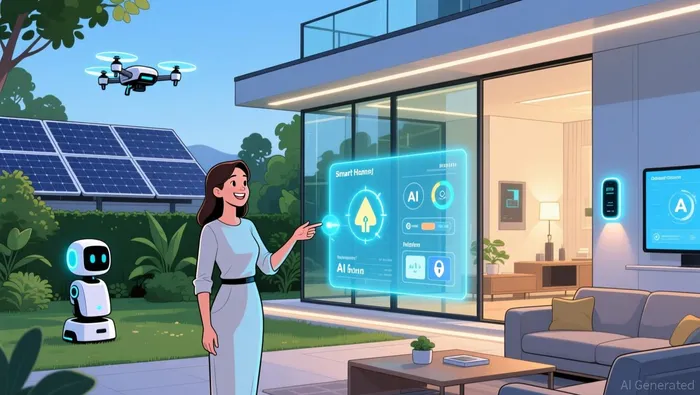 The next wave of AI personal assistants is being shaped by three key technological advancements:
1. Contextual Awareness: Modern systems now leverage real-time environmental and behavioral data to anticipate user needs. For instance, an AI assistant might adjust a home's energy settings based on weather forecasts and the user's calendar.
2. Decentralized Architectures: Edge computing and on-device AI processing are reducing latency and enhancing privacy, making these tools more reliable for mission-critical tasks.
3. Cross-Platform Integration: Seamless interoperability across devices and services is enabling ecosystems where a single AI assistant can orchestrate interactions between smart appliances, health monitors, and productivity tools.
These innovations are not merely incremental; they represent a paradigm shift toward AI as a universal interface for human-technology interaction.
Investment Opportunities in the Ecosystem
For investors, the AI-driven personal assistant ecosystem offers multiple entry points:
- Emerging Startups: Smaller firms specializing in niche applications-such as AI-driven mental health coaching or real-time language translation-are attracting venture capital. These companies often leverage proprietary algorithms to differentiate themselves in a crowded market.
- Infrastructure Providers: The demand for robust cloud and edge computing infrastructure to support AI assistants is creating opportunities for firms offering scalable, low-latency solutions.
- Vertical-Specific Applications: Sectors like healthcare, education, and automotive are adopting AI assistants to streamline workflows. For example, AI-powered virtual nurses are gaining traction in aging populations, while automotive companies are integrating assistants into in-car systems to enhance driver safety.
Despite these opportunities, investors must remain cautious. The ecosystem is highly competitive, with tech giants like AppleAAPL--, Amazon, and GoogleGOOGL-- dominating the market. Startups must either innovate in underserved niches or form strategic partnerships to survive.
Challenges and Strategic Considerations
The path to dominance in this space is fraught with challenges. Privacy concerns, regulatory scrutiny, and the high cost of R&D pose significant barriers. Additionally, user adoption hinges on trust-consumers must believe that these systems will enhance their lives without compromising their data.
Investors should also consider the risk of technological obsolescence. The rapid pace of innovation means that today's cutting-edge solutions could be rendered redundant by tomorrow's breakthroughs. Diversification across stages of development-early-stage startups, mid-sized innovators, and established players-can mitigate this risk.
Conclusion: A Strategic Imperative for Forward-Thinking Investors
The AI-driven personal assistant ecosystem is no longer a speculative concept but a tangible force reshaping consumer technology. For investors, the key lies in balancing ambition with pragmatism. Prioritizing companies that demonstrate agility, ethical data practices, and a clear value proposition will be critical in this dynamic landscape.
As the boundaries between physical and digital worlds blur, AI assistants will become indispensable. Those who recognize this shift early and act decisively will not only capitalize on growth but also shape the future of human-technology interaction.





Comentarios
Aún no hay comentarios