
Unlocking Value in U.S. Manufacturing: Undervalued Industrial and Materials Stocks Thriving Amid Tariff-Driven Reshoring
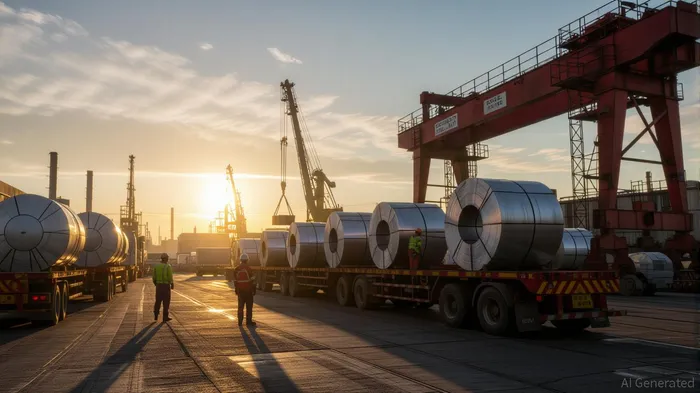
The U.S. manufacturing landscape in 2025 is a battleground of resilience and reinvention. Trade tensions, inflationary pressures, and aggressive tariff policies have reshaped supply chains, forcing companies to adapt or face obsolescence. Yet, amid this turbulence, a new opportunity emerges: undervalued equities in the industrial and materials sectors that stand to gain from the long-term shift toward domestic production. For investors with a contrarian mindset, these stocks represent a compelling case for growth in an era of forced reshoring.
The Tariff-Driven Transformation
The Trump administration's 2025 trade policies have created a seismic shift in U.S. manufacturing. Tariffs on steel (25%), aluminum (50%), and Chinese goods (104%) have not only raised costs for importers but also incentivized domestic production. These policies, while controversial, have accelerated the reshoring of high-value industries such as transportation equipment, machinery, and advanced materials. The economic model suggests that while tariffs reduce GDP by 0.7% in the short term, they create a structural tailwind for domestic manufacturers by eroding the cost advantages of offshore production.
For example, the 25% Section 232 tariffs on autos and auto parts have already reduced U.S. GDP by 0.1%, but they've also spurred investment in domestic steel and aluminum production. Companies like Cleveland-Cliffs Inc. (CLF), a vertically integrated steel producer with iron ore mines in Minnesota and Michigan, are poised to benefit. With a price-to-sales (P/S) ratio of 0.30 and a price-to-book (P/B) ratio of 0.93, CLFCLF-- trades at a significant discount to its intrinsic value. The company's low-cost production model and strategic alignment with tariff-driven demand make it a prime candidate for outperformance.
Materials Sector: A Goldmine for Resilient Investors
The materials sector, particularly steel and copper producers, is another area of untapped potential. Tariffs on copper (50%) and the broader push for reshoring have driven up demand for domestically produced raw materials. Kinder Morgan (KMI), a midstream energy and logistics giant, is an unexpected beneficiary. While not a materials producer per se, KMI's infrastructure supports the transportation of critical materials like steel and copper, which are now in higher demand due to reshoring. With a forward P/E ratio of 12x and a dividend yield of 4.2%, KMIKMI-- offers a blend of defensive income and growth potential.
Similarly, Caterpillar Inc. (CAT), a leader in heavy machinery, is capitalizing on the agricultural and construction booms driven by precision agriculture and infrastructure spending. Despite trading at a 15% discount to its 5-year average P/E, CAT's exposure to domestic demand and its robust balance sheet make it a compelling long-term hold.
Industrial Innovators: Aerospace and Defense as a Safe Haven
While the broader industrials sector has outperformed the S&P 500 by 15.7% year-to-date, aerospace and defense stocks have been the standout performers. Companies like Lockheed Martin (LMT) and Raytheon Technologies (RTX) are benefiting from a 47% surge in defense spending since the April 2025 market bottom. With long-term contracts and stable cash flows, these firms are insulated from the volatility of trade policy. LMT, trading at a P/E of 18x, is undervalued relative to its 10-year average of 22x, offering a margin of safety for investors.
The Risks and Rewards of Reshoring
Investing in these undervalued equities is not without risks. Tariff-driven demand is cyclical, and retaliatory measures from trade partners could dampen exports. Additionally, inflationary pressures—core PCE at 2.8% in May 2025—remain a headwind for input costs. However, the long-term benefits of reshoring, including reduced supply chain vulnerabilities and policy tailwinds, outweigh these near-term challenges.
For instance, CNH Industrial (CNH), a farm and construction machinery firm, is undergoing a restructuring that could unlock value. Despite lagging behind DeereDE-- (DE), CNH's large dealer network and finance subsidiary position it to capitalize on the precision agriculture boom. With a P/E of 10x and a debt-to-EBITDA ratio of 3.5x, CNHCNH-- offers a compelling risk-reward profile.
Conclusion: A Strategic Edge in a Shifting Landscape
The U.S. manufacturing sector is at a crossroads. While trade tensions and inflation create headwinds, they also generate opportunities for investors who can identify undervalued equities poised to benefit from reshoring. Companies in the materials, industrial, and aerospace sectors—particularly those with low valuations and strong alignment with domestic demand—are well-positioned to thrive in this new era. For those willing to look beyond the noise, these stocks represent a strategic edge in a market still grappling with the implications of a reshaped global supply chain.
Investment Takeaway: Prioritize companies with strong balance sheets, exposure to tariff-driven demand, and undervalued metrics. Diversify across materials, industrial, and defense sectors to hedge against cyclical risks while capitalizing on long-term reshoring trends.





Comentarios
Aún no hay comentarios