
Unlocking Institutional-Grade Trading in Renewables: Regulatory and Liquidity Innovations Reshape Clean Energy Markets
Regulatory Breakthroughs: CFTC-Approved Platforms as Catalysts
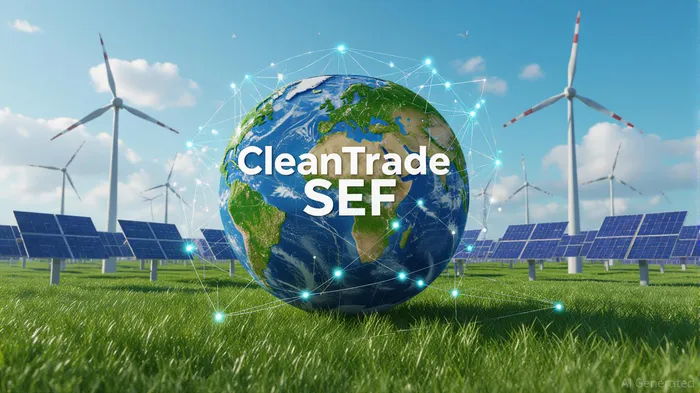
The CFTC's 2025 approval of CleanTrade as the first clean energy Swap Execution Facility (SEF) marks a watershed moment. By standardizing trading for Virtual Power Purchase Agreements (VPPAs), Power Purchase Agreements (PPAs), and Renewable Energy Certificates (RECs), CleanTrade has addressed critical inefficiencies in the sector. Within two months of its launch, the platform processed a $16 billion notional trading volume, a testament to institutional demand for transparent, regulated markets. This surge reflects broader trends: U.S. clean energy investment hit $75 billion in Q3 2025, with institutions seeking to hedge energy price volatility while meeting ESG mandates.
The CFTC's regulatory framework has also spurred innovation. For instance, the withdrawal of the proposed Operational Resilience Framework for SEFs has encouraged platforms to prioritize compliance without stifling technological experimentation. This flexibility is critical for scaling renewable assets, which require robust infrastructure to manage risks such as project-specific carbon impacts and price fluctuations according to market analysis.
Technological Foundations: Blockchain and Tokenization
 Blockchain technology is enabling the tokenization of energy infrastructure. Astar Network's ASTR 2.0 roadmap, for example, includes cross-chain integration with major blockchains and partnerships with firms like Toyota and Sony. These advancements create a technological backbone for fractionalizing and trading energy assets, aligning with CFTC-regulated platforms like CleanTrade. Tokenization not only enhances liquidity but also reduces transaction costs, making renewables more accessible to a broader range of investors.
Institutional Adoption: Case Studies in ESG-Driven Capital Allocation
BlackRock and Goldman Sachs have emerged as key players in this evolving landscape. BlackRock's Mosaic platform, a proprietary investment tool, streamlines money market fund management while integrating advanced risk analytics. This system allows the firm to allocate capital efficiently in clean energy derivatives, leveraging CleanTrade's standardized instruments to hedge against decarbonization risks. Similarly, Goldman Sachs has expanded its clean energy financing target to $150 billion by 2025, channeling capital through platforms like CleanTrade to align with its Environmental Policy Framework.
The firms' strategies highlight a shift in institutional investing. BlackRock emphasizes capital reallocation as a "mega force" in the low-carbon transition, while Goldman Sachs employs Alpha Enhanced approaches to balance passive ESG equity strategies with active risk management. These tactics mitigate unintended sector tilts-such as overexposure to growth stocks or underrepresentation in energy sectors-while maintaining financial performance.
Challenges and Risks: Legal Scrutiny of ESG Initiatives
Despite progress, ESG-driven investments face growing legal and antitrust challenges. A 2025 case in the Eastern District of Texas ruled that coordinated climate initiatives, such as BlackRock's Net Zero Asset Managers (NZAM), could reduce competition by influencing corporate behavior. Similarly, a Northern District of Texas court found that ESG factors improperly influenced a 401(k) plan's investment decisions, violating the Employee Retirement Income Security Act (ERISA). These rulings underscore the need for governance frameworks that separate ESG objectives from fiduciary duties, ensuring compliance with regulatory standards.
The Road Ahead: A $125 Trillion Opportunity
The clean energy market's potential is vast. ESG-driven investments in renewables are projected to grow from $39.08 trillion in 2025 to $125.17 trillion by 2032. This trajectory hinges on continued regulatory support, technological innovation, and institutional confidence. Platforms like CleanTrade and Astar Network are critical to bridging the gap between fragmented markets and scalable infrastructure, enabling institutions to balance profitability with environmental stewardship.
However, success will require navigating legal complexities and refining risk management strategies. As BlackRock and Goldman Sachs demonstrate, the future of clean energy investing lies in leveraging institutional-grade tools to align financial returns with sustainability goals-a transition that is as much about governance as it is about technology.





Comentarios
Aún no hay comentarios