
Unlocking Industrial Real Estate Value in Post-Xerox Webster, NY: A Strategic Analysis of Municipal Infrastructure and Grant-Driven Development
Strategic Infrastructure as a Catalyst for Development
The FAST NY Shovel-Ready Grant Program has positioned Webster as a test case for how infrastructure spending can catalyze industrial growth. The $9.8 million allocated to the Xerox campus and NEAT site is being directed toward road upgrades, sewer system expansion, and electrical grid modernization-foundational elements for attracting advanced manufacturing and renewable energy firms according to city officials. These improvements are not merely cosmetic; they address the logistical demands of modern industry, such as heavy freight access and reliable utility capacity, which are critical for firms in logistics and clean energy sectors.
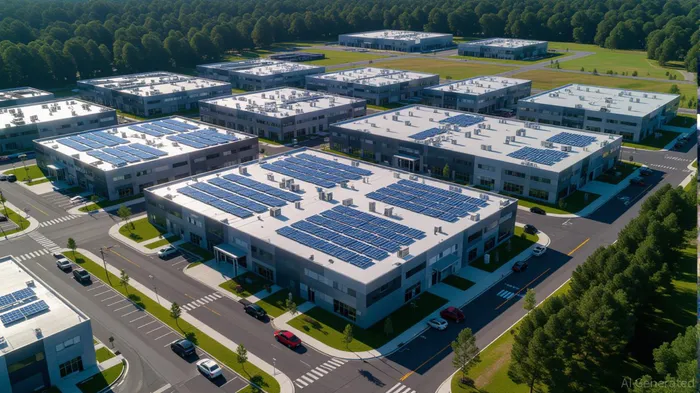 Complementing this is the $20 million in wastewater treatment improvements from the NYS Environmental Facilities Corporation, underscoring a long-term commitment to environmental sustainability according to the state agency. Such investments mitigate risks for developers by ensuring compliance with regulatory standards while enhancing the site's appeal to ESG-conscious investors. The phased timeline of these projects-from 2023 to 2025-aligns with a strategic rollout of development-ready land, reducing uncertainty for stakeholders entering the market.
Xerox Campus Reconfiguration: From Brownfield to Blueprint
The reconfiguration of the 569-acre Xerox campus under the Brownfield Opportunity Area (BOA) program exemplifies how blight removal can unlock latent value. Historically underutilized, the site is now being redeveloped into a mixed-use hub for advanced manufacturing, logistics, and commercial activity according to city planning documents. Environmental remediation efforts, coupled with modernized infrastructure, have already driven a 10.1% year-over-year increase in residential property values in Webster, signaling broader economic confidence according to recent market analysis.
This transformation is further amplified by the integration of pedestrian infrastructure and connectivity enhancements, funded by a $2.5 million public-private partnership involving the Community Access Project. Such amenities are increasingly vital for attracting firms that prioritize walkability and workforce accessibility, particularly in the post-pandemic economy. The result is a site that balances industrial utility with urban livability-a rare combination in traditional manufacturing zones.
Blight Removal and the Economics of Opportunity
Blight removal in Webster is not just about aesthetics; it is a calculated strategy to reduce development costs and attract capital. By repurposing the Xerox campus and NEAT site, the city is converting liabilities into assets. The $4.5 million in NY Forward funding for downtown revitalization projects, including upgrades to Veterans Memorial Park and Harmony House, illustrates a holistic approach to urban renewal. These investments create a cultural and recreational backbone that enhances the area's appeal to both businesses and residents.
For industrial real estate investors, the removal of blight reduces regulatory and environmental risks while expanding the available land inventory. Nearly 300 acres of pre-developed land are now primed for advanced manufacturing and logistics, with infrastructure costs subsidized by public grants. This de-risks private investment and accelerates time-to-revenue for developers, making Webster a compelling alternative to more saturated markets.
A Model for Future-Proof Industrial Development
Webster's approach offers a blueprint for how municipalities can future-proof industrial real estate. By aligning infrastructure spending with the needs of emerging industries-such as renewable energy and automated logistics-the city is positioning itself to capture growth in high-margin sectors. The proximity to the U.S.-Canada border further enhances the site's strategic value, according to cross-border trade analysts.
For investors, the key takeaway is clear: Webster's grant-driven model reduces the traditional barriers to entry in industrial real estate. The combination of public funding, environmental remediation, and forward-looking infrastructure creates a "shovel-ready" environment where private capital can deploy with confidence. As the global economy pivots toward localized production and green manufacturing, Webster's post-Xerox renaissance is not just a local success story-it is a national case study in strategic development.





Comentarios
Aún no hay comentarios