
Unlocking Income Potential in a Low-Yield World: The VanEck BDC Income ETF Strategy
The BDC Ecosystem: A Niche with High-Yield Potential
Business development companies are specialized investment vehicles that provide capital to small and mid-sized businesses, often through debt and equity financing. These firms typically distribute a significant portion of their income to shareholders, making them attractive in a low-yield environment. According to a VanEck report, BIZD seeks to replicate the performance of the MVIS® US Business Development Companies Index (MVBDCTRG), which tracks publicly traded BDCs. As of October 2025, the ETF holds 36 assets, according to its holdings list, with top allocations including United States Treasury Bills (22.89%), Ares CapitalARCC-- (16.52%), and Blue Owl CapitalOBDC-- (10.23%). This diversified yet concentrated portfolio allows investors to tap into the high-yield potential of BDCs while mitigating some of the risks inherent in private lending.
Performance in a Low-Yield Environment: Yield vs. Volatility
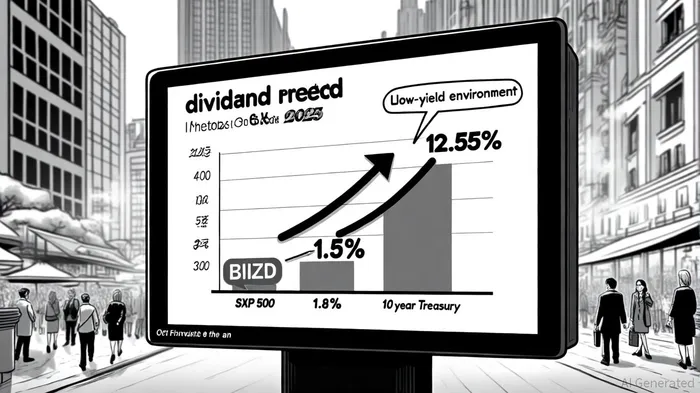
BIZD's dividend yield of 12.55% as of October 2025 is a compelling figure in a landscape where the 10-year U.S. Treasury yield hovers near 3.5%. However, this yield has declined by 6.98% year-over-year, reflecting broader market pressures on BDCs, including rising interest rates and tighter credit conditions, according to BestETF data. Despite this, the fund's strategy of investing at least 80% of assets in securities tied to its benchmark index provides a structural advantage. By focusing on BDCs that lend to middle-market businesses, BIZD captures the higher returns associated with private debt while benefiting from the liquidity of publicly traded securities, as described on VanEck's site.
A critical consideration is the fund's expense ratio of 12.86%, which is elevated compared to broad-market ETFs but not uncommon for specialized strategies. For investors prioritizing yield over cost efficiency, this trade-off may be justified, particularly if BDCs continue to outperform traditional fixed-income assets. Data from Morningstar indicates that performance metrics as of July 31, 2025, show a mixed picture, with returns influenced by the sector's sensitivity to economic cycles.
Strategic Allocation and Risk Mitigation
The ETF's portfolio structure highlights its dual focus on income and capital preservation. For instance, its 22.89% allocation to U.S. Treasury Bills serves as a stabilizer, reducing volatility while still generating modest returns (see the holdings list referenced above). Meanwhile, larger positions in BDCs like Ares Capital and Blue Owl Capital expose investors to the sector's growth potential. These firms operate in a regulatory environment that mandates high dividend payouts, ensuring a steady income stream for BIZD holders, as detailed by VanEck.
However, the fund's performance is not without risks. BDCs are sensitive to interest rate hikes, as rising borrowing costs can compress their net interest margins. Additionally, the high expense ratio may erode returns during periods of market stagnation. Investors must weigh these factors against the fund's historical resilience during economic downturns, as BDCs often benefit from increased demand for alternative financing.
Conclusion: A High-Yield Strategy for the Patient Investor
VanEck BDC Income ETF (BIZD) offers a compelling case for investors seeking income in a low-yield world. By leveraging the unique structure of BDCs, the fund provides access to high-dividend securities that are less correlated with traditional markets. While risks such as interest rate sensitivity and high fees persist, the sector's focus on middle-market lending and regulatory requirements for distributions positions BIZD as a viable option for those willing to accept added volatility for enhanced yield. As always, due diligence is essential-investors should align their allocation to BIZD with their risk tolerance and long-term financial goals.





Comentarios
Aún no hay comentarios