
Unlocking Emerging Market Opportunities in Gender-Driven Innovation: The Future of Toys and Entertainment
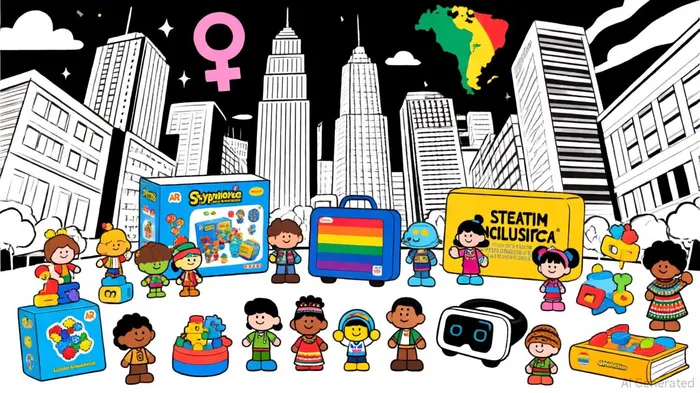
The global toy and entertainment sectors are undergoing a transformative shift, driven by the rise of gender-inclusive innovation. Emerging markets in Asia-Pacific and Latin America, in particular, are becoming hotspots for investment opportunities as consumer demand for diverse, educational, and technologically advanced toys surges. With the Asia-Pacific toy market projected to grow at a compound annual growth rate (CAGR) of 5.73% from USD 76.05 billion in 2024 to USD 118.73 billion by 2032 [1], and Latin America's market expanding at 3.28% CAGR to USD 23.28 billion by 2033 [2], the economic potential for gender-driven innovation is undeniable.
Market Trends: From Stereotypes to Inclusivity
Traditional gender stereotypes in toy marketing—such as pink for girls and blue for boys—have long reinforced societal norms. However, recent data reveals a paradigm shift. According to a report by the Geena Davis Institute on Gender in Media, 85% of children from minority groups express a desire for more diverse toys, while 60% of parents believe inclusive toys foster social awareness [3]. This demand is being met by companies reimagining product design and marketing strategies. For instance, LEGO's 2023 DREAMZzz line, featuring co-ed characters and adventure-themed play, has been lauded for dismantling gender norms [4]. Similarly, Mattel's gender-neutral doll lines and Hasbro's removal of “Mr.” from Mr. Potato Head signal a broader industry commitment to inclusivity [5].
Technological integration is further amplifying this trend. Smart toys leveraging AI, AR, and IoT are not only enhancing play experiences but also enabling gender-neutral narratives. In Asia-Pacific, brands like Bandai Namco and VTech are embedding AR and robotics into educational toys, aligning with the region's emphasis on STEM learning [6]. Meanwhile, sustainability is becoming a key differentiator, with eco-friendly materials and biodegradable designs gaining traction as regulatory standards tighten [7].
Case Studies: Leading the Charge in Emerging Markets
Asia-Pacific
China and India are at the forefront of gender-driven innovation. LEGO's DREAMZzz line, which emphasizes coed play and diverse characters, has seen robust sales in China, where the toy market alone contributed USD 43.9 billion in 2024 [8]. Similarly, Bandai Namco's partnerships with global franchises like Pokémon and Marvel have enabled the creation of inclusive, tech-enhanced toys that appeal to a broad demographic. In India, the demand for STEM-based toys has surged, with companies like POP MART leveraging blind-box strategies and artist collaborations to drive a 40% growth in 2023 [9].
Latin America
While direct data on Latin American toy companies is sparse, the region's cultural localization efforts are noteworthy. Mattel's Frida Kahlo-themed Barbie in Mexico and Hasbro's Carnaval-inspired action figures in Brazil exemplify how regional representation can drive inclusivity [10]. E-commerce platforms like Mercado Libre have also amplified market reach, reporting a 67% year-on-year sales increase during the 2023 holiday season [11]. The 22% rise in inclusive toy sales globally during the same period [12] suggests similar momentum in Latin America, where 23% of the population is under 14 [13].
Financial Performance and Investment Potential
The economic upside of gender-driven innovation is clear. The global market for inclusive toys is projected to reach USD 15 billion by 2025 [14], with Asia-Pacific leading the charge. Companies prioritizing diversity are outperforming peers: LEGO's DREAMZzz line, for example, has driven a 22% sales increase in inclusive toys during the 2023 holiday season [15]. In Latin America, the toy market's CAGR of 3.28% [2] is bolstered by e-commerce growth and a rising middle class, creating fertile ground for investment.
Challenges remain, however. Only 20% of top-selling toys in 2023 featured diverse characters [16], and 30% of companies with diversity policies lack measurable initiatives [17]. Investors must prioritize firms with transparent, data-driven strategies for inclusivity.
Conclusion: A Strategic Imperative for Investors
Gender-driven innovation in toys and entertainment is no longer a niche trend but a market imperative. Emerging markets in Asia-Pacific and Latin America offer unparalleled growth potential, driven by urbanization, technological adoption, and shifting consumer values. Investors who align with companies like LEGO, MattelMAT--, and regional innovators leveraging AR, AI, and sustainability will be well-positioned to capitalize on this USD 157.24 billion global toy market by 2033 [18]. The future of play is inclusive—and the returns are equally promising.





Comentarios
Aún no hay comentarios