
Unlocking Climate Resilience: How Budget 2025 and COP30 Policies Catalyze Sustainable Governance and Decentralized Solutions
The global climate crisis has shifted from a distant threat to an urgent priority, demanding immediate action to build resilience and transition to sustainable systems. In 2025, two pivotal developments-the U.S. and Canadian Budget 2025 allocations and the outcomes of COP30-have emerged as critical catalysts for investment in climate resilience infrastructure. These policies are reshaping the landscape of sustainable governance and decentralized climate solutions, unlocking opportunities for private capital while exposing gaps in regulatory coherence.
Budget 2025: A Mixed Bag for Climate Finance
The U.S. FY2025 budget request includes direct and indirect climate finance of $3.0 billion, primarily directed at international climate goals. However, domestically, the Biden administration's retreat from sustainable finance frameworks-such as the withdrawal of climate-related financial risk management principles by major banking regulators in October 2025-has created uncertainty for financial institutions according to analysis. This regulatory ambiguity risks inconsistent practices in quantifying and disclosing climate risks, potentially undermining long-term investment confidence.
In contrast, Canada's Budget 2025 offers a more cohesive approach. The Canada Infrastructure Bank (CIB) has seen its capital envelope expanded from $35 billion to $45 billion, enabling it to fund projects like the Darlington New Nuclear Project and the Contrecoeur Terminal Container Project according to Dentons. The budget also introduces a Canadian sustainable finance taxonomy and a Sustainable Bond Framework, designed to mobilize private capital for climate resilience and transition projects as reported by Yahoo Finance. These measures align with COP30's emphasis on decentralized solutions, though critics note that support for nature-based initiatives lags behind industrial carbon capture efforts according to the same report.
COP30: A Global Push for Decentralized Solutions
COP30 in 2025 marked a turning point in prioritizing decentralized climate solutions, particularly in vulnerable regions. The conference underscored the role of renewable energy systems-such as solar microgrids-in maintaining essential services during extreme weather events as highlighted by REN21. For instance, IRENA's events highlighted how decentralized energy can transform lives in remote communities, such as those in the Amazon, by improving healthcare and education.
The Baku-to-Belém Roadmap, presented by Brazil's COP30 presidency, aims to scale climate finance to $1.3 trillion annually by 2035 through blended finance, private investment, and innovative mechanisms like debt-for-climate swaps according to Boell. Brazil's Tropical Forests Forever Facility (TFFF) exemplifies this approach, leveraging $25 billion in public and philanthropic funding to mobilize $100 billion in private capital for tropical forest conservation according to Green Climate Fund. Similarly, Eco Invest Brasil has already attracted R$75 billion in domestic and international capital for sustainable projects, including land restoration and clean energy as reported by COP30.
Synergies Between Policy and Investment
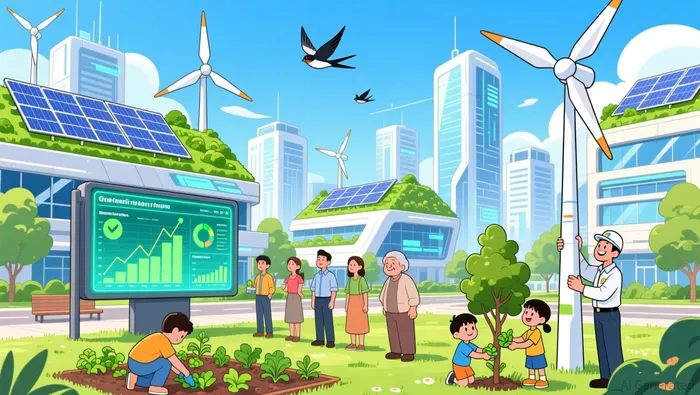
The interplay between Budget 2025 and COP30 frameworks is creating fertile ground for private capital. Blended finance mechanisms, such as guarantees and de-risking tools, are critical for reducing investor risk in emerging markets. For example, the Emerging Market Climate Investment Compact (EMCIC) seeks to streamline investments in developing countries by aligning public and private funding as detailed in Boell's report.
National Transition Plans, which outline sector-specific pathways for decarbonization, are also gaining traction. These plans serve as investment roadmaps, clarifying how private capital can align with national climate goals. In Canada, the Major Projects Office (MPO) streamlines federal approvals for infrastructure projects, accelerating the deployment of clean technologies according to Dentons. Meanwhile, COP30's emphasis on tripling adaptation finance by 2035 as noted by WRI highlights the need for scalable solutions in Least Developed Countries and Small Island Developing States.
Challenges and the Path Forward
Despite progress, challenges persist. The U.S. retreat from standardized climate risk disclosures according to analysis risks fragmenting domestic sustainable finance efforts. Similarly, while COP30 secured commitments for adaptation finance, it fell short of binding agreements on fossil fuel phase-outs as reported by WRI. To bridge these gaps, policymakers must prioritize regulatory clarity and international cooperation.
For investors, the path forward lies in leveraging policy frameworks to identify high-impact opportunities. Projects like Brazil's Tocantins-Araguaia Basin restoration-funded through a $47 million concessional loan from the Climate Investment Funds-demonstrate how public-private partnerships can drive large-scale impact according to CIF. Additionally, the Canada Green Building Council's call for long-term, low-cost financing for energy-efficient infrastructure underscores the need for tailored financial instruments.
Conclusion
Budget 2025 and COP30 have redefined the contours of climate resilience infrastructure, emphasizing decentralized solutions and sustainable governance. While regulatory inconsistencies and funding gaps remain, the convergence of policy innovation and private capital presents a historic opportunity. Investors who align with these frameworks-whether through blended finance, nature-based solutions, or technology-driven resilience-will not only mitigate climate risks but also capitalize on a rapidly evolving market.







Comentarios
Aún no hay comentarios