
Unlocking China's Tokenized Real Estate: A New Frontier for Early-Stage Investors
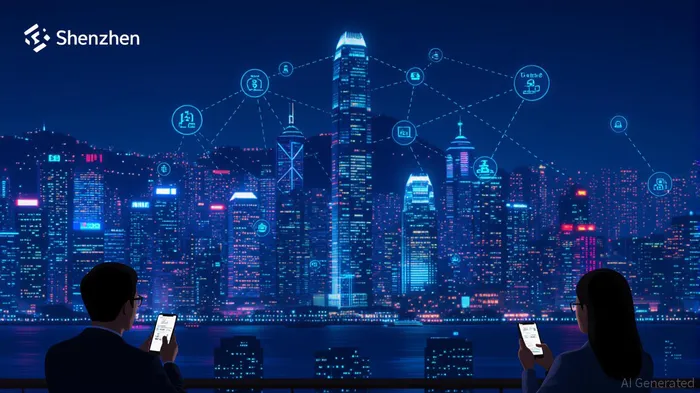
The real estate market in China is undergoing a quiet revolution. As property developers and regulators experiment with blockchain-based tokenization, a new asset class is emerging—one that could democratize access to high-value property investments while reshaping liquidity dynamics. For early-stage investors, this represents a rare opportunity to capitalize on a nascent market before it scales.
The Chinese Model: Permissioned Chains and Programmable Money
China’s approach to real-estate tokenization is distinct from its global counterparts. Unlike the U.S. or Singapore, where public blockchain platforms dominate, China mandates the use of permissioned blockchains such as the Blockchain-based Service Network (BSN) or AntChain. These systems prioritize regulatory control, ensuring that tokenized assets remain fully asset-backed and registered under strict oversight [1]. This framework minimizes risks of speculative trading while aligning with the government’s broader digital economy goals.
A critical enabler is the Digital Yuan (e-CNY), China’s central bank digital currency (CBDC). By integrating e-CNY into tokenized asset platforms, the People’s Bank of China (PBoC) is creating a seamless, traceable settlement mechanism. For instance, e-CNY’s programmable features allow automated dividend distributions and smart contract executions, reducing transaction costs and settlement times [1]. This synergy between CBDC and tokenization is not just theoretical—PBoC trials in 2025 suggest a future where e-CNY becomes the default medium for tokenized asset trading [1].
Regulatory Guardrails and Institutional Momentum
The China Securities Regulatory Commission (CSRC) has drawn a clear line: any tokenized asset functioning as a security must comply with existing regulations, including prospectus disclosures and licensing requirements [1]. While this creates a steeper entry barrier for startups, it also signals institutional confidence. Major developers like Seazen Group are already establishing digital asset institutes to explore tokenizing intellectual property and income streams, signaling a shift toward blockchain-driven asset management [1].
Meanwhile, Hong Kong has emerged as a regulatory sandbox. In February 2025, China Asset Management (Hong Kong) launched the region’s first tokenized fund, the ChinaAMC HKD Digital Money Market Fund, leveraging blockchain for real-time liquidity [2]. This development, coupled with Hong Kong’s evolving legal framework for digital assets, positions the city as a bridge between China’s cautious mainland and global markets [2].
Global Context and Growth Projections
China’s experiments are part of a broader Asia-Pacific trend. The region’s real-world asset (RWA) tokenization market hit $65 billion in total value locked (TVL) in 2025, driven by infrastructure and real estate projects in Singapore, Japan, and Australia [3]. Globally, the market is projected to grow from $2.6 billion in 2024 to $21.8 billion by 2035, with China’s regulatory environment playing a pivotal role in determining its share of this growth [4].
Risks and Rewards for Early Investors
Despite the optimismOP--, challenges persist. Regulatory uncertainty, smart contract vulnerabilities, and compliance with China’s stringent data privacy laws (e.g., the Personal Information Protection Law) remain hurdles [1]. However, these risks also create a competitive moat for early adopters who can navigate the regulatory landscape.
For instance, platforms that integrate e-CNY and permissioned blockchains may gain first-mover advantages in cities like Shenzhen and Shanghai, where pilot projects are already underway [1]. Additionally, the tokenization of commercial real estate—such as office towers or retail complexes—could unlock liquidity for developers while offering retail investors exposure to high-value assets with lower entry barriers [1].
Conclusion: A Calculated Bet on the Future
Real-estate tokenization in China is not a speculative fad—it’s a calculated experiment in modernizing asset management. For investors, the key lies in balancing innovation with caution. While the regulatory environment is still evolving, the integration of e-CNY, institutional backing, and global market trends suggest that tokenized real estate could become a cornerstone of China’s digital economy.
As the market matures, early-stage investors who align with compliant platforms and focus on asset-backed tokens may find themselves at the forefront of a transformative shift—one where blockchain turns bricks and mortar into programmable, tradable assets.
**Source:[1] China RWA Tokenization Development Services
https://www.antiersolutions.com/blogs/how-the-regulatory-landscape-in-china-for-rwa-tokenization-development-services-is-changing/[2] Hong Kong update: Recent and future milestones
https://www.nortonrosefulbright.com/en/knowledge/publications/706866b9/hong-kong-update-recent-and-future-milestones[3] Unlocking Asia-Pacific's RWA Tokenization Potential
https://www.ainvest.com/news/unlocking-asia-pacific-rwa-tokenization-potential-high-conviction-investment-opportunities-2025-2508[4] Real Estate Tokenization Market Size, Trends Forecast to 2035
https://www.prophecymarketinsights.com/market_insight/Global-Real-Estate-Tokenization-Market-4857






Comentarios
Aún no hay comentarios