
Unlocking Baltic Growth: AS Merko Ehitus and the Future of Estonian Infrastructure
Estonia's infrastructure landscape is undergoing a transformative phase, driven by ambitious public-private partnership (PPP) projects and urban renewal initiatives. At the forefront of this evolution is AS Merko Ehitus, a construction and development group that has positioned itself as a key player in the Baltic region. With a strategic focus on large-scale infrastructure, renewable energy, and urban regeneration, Merko Ehitus is capitalizing on a confluence of favorable policy frameworks, EU funding, and regional connectivity projects. For investors, the company's recent contracts and financial performance present a compelling case for long-term growth in a market poised for sustained development.
The PPP Opportunity in Estonia
Estonia's infrastructure strategy hinges on PPPs to bridge funding gaps and accelerate project delivery. While the country lacks a dedicated PPP law, the Public Procurement Act of 2007 and EU-funded mechanisms like the Cohesion Fund and Connecting Europe Facility (CEF) create a robust ecosystem for private-sector participation. Platforms such as Tender Impulse and TendersOnTime have become critical for tracking opportunities, from EPC contracts to design-and-build projects.
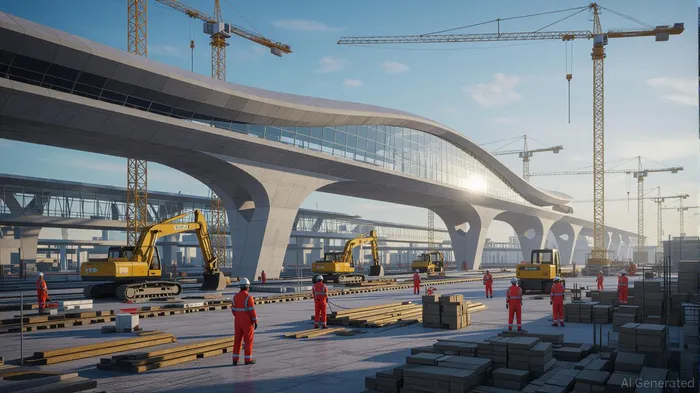
Merko Ehitus has mastered this environment. Its most high-profile recent contract is the €85 million Ulemiste international passenger terminal for the Rail Baltica project in Tallinn. Funded by the EU, this terminal—designed by Zaha Hadid Architects—will serve as a multimodal transport hub, integrating rail, bus, and tram services. The project, set to begin in November 2025 and conclude by October 2028, exemplifies how PPPs can align private expertise with public infrastructure goals.
Strategic Diversification and Regional Expansion
Merko Ehitus's growth is not confined to Estonia. The company has expanded its footprint across the Baltic region, leveraging its expertise in renewable energy and residential development. In Lithuania, its subsidiary Merko Statyba has become a leader in wind farm construction, having installed over 220 turbine foundations since 2015. In 2024 alone, it completed 87 turbine foundations in Kelmė, Pagėgiai, and Telšiai, demonstrating operational scale and efficiency.
In Latvia, the company is part of a joint venture (MB.MS) building the Augstkalni wind farm, a €30 million project involving 16 turbines. These ventures highlight Merko Ehitus's ability to diversify revenue streams while aligning with global sustainability trends.
Urban renewal projects further underscore its strategic depth. In Tallinn, the company has delivered the Arter Quarter and TKM Group logistics center, while its Vilnelės Skverai residential complex in Vilnius has seen over 85% of its units sold. These projects reflect a dual focus on commercial and residential markets, ensuring steady cash flow and long-term asset value.
Financial Strength and Market Position
Merko Ehitus's 2024 financials underscore its resilience. The group reported €539 million in revenue and a net profit of €64.7 million, with a secured order book of €340.6 million as of year-end. Its balance sheet is equally robust, with a negative net debt of €58.5 million and a cash balance of €91.9 million, providing flexibility for new bids and acquisitions.
The company's involvement in the Rail Baltica consortium—a €394 million contract for the Ülemiste–Pärnu rail line—further cements its role in regional connectivity. This project, part of a larger €726 million contract awarded to Alliance 1, is critical to Estonia's goal of integrating with the EU's high-speed rail network by 2030.
Investment Implications
For investors, Merko Ehitus represents a rare combination of sector-specific expertise, financial discipline, and strategic alignment with EU priorities. The company's ability to secure high-value PPP contracts—such as the Ulemiste terminal and Rail Baltica rail line—positions it to benefit from Estonia's €10 billion infrastructure investment plan over the next decade.
Moreover, its diversification into renewable energy and residential development mitigates sector-specific risks. With the Baltic real estate market showing resilience and EU funding for green projects increasing, Merko Ehitus is well-placed to outperform peers.
Conclusion
AS Merko Ehitus is not merely a construction firm but a strategic partner in Estonia's infrastructure renaissance. By leveraging PPP frameworks, EU funding, and a diversified project portfolio, the company is building a legacy of sustainable growth. For investors seeking exposure to the Baltic region's development story, Merko Ehitus offers a compelling blend of scale, innovation, and long-term value creation.







Comentarios
Aún no hay comentarios