
Unlocking AI's Potential: Identify Your Bottlenecks First
Generado por agente de IAHarrison Brooks
miércoles, 26 de marzo de 2025, 12:56 pm ET3 min de lectura
AMZN--
In the relentless pursuit of AI dominance, chief information officers (CIOs) are racing to deploy cutting-edge technology. However, the harsh reality is that their IT infrastructure is often ill-prepared for the demands of AI. From GPU shortages to energy consumption spikes, these bottlenecks can undermine performance and inflate costs, turning AI's promise into a costly nightmare.
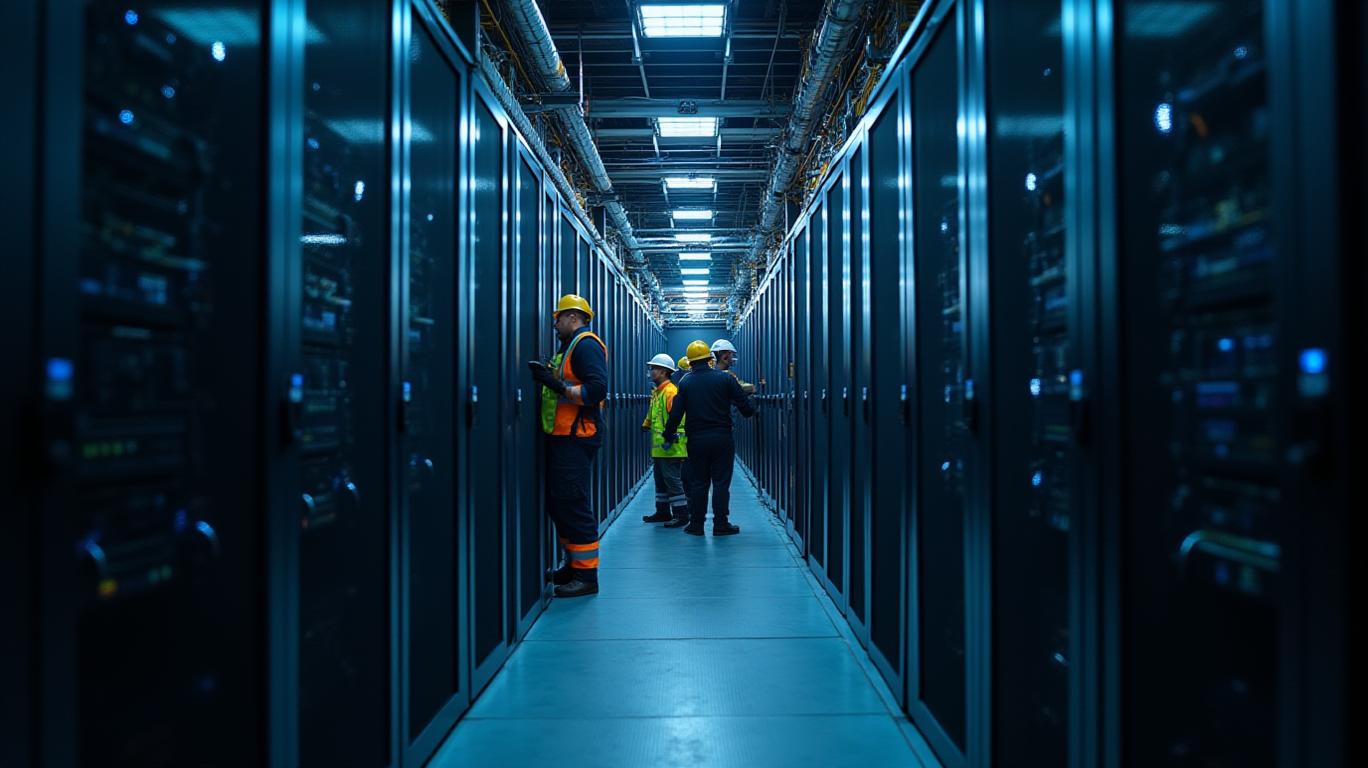
The most glaring issue is the scarcity of high-end GPUs, the lifeblood of AI models. Nvidia's Blackwell GPUs, for instance, have been nearly impossible to find, with major tech giants like AmazonAMZN--, GoogleGOOGL--, MetaMETA--, and MicrosoftMSFT-- snapping them up. Even if a business can secure these units, the cost is astronomical—around $3 million for a fully configured server. This shortage doesn't just affect enterprises; it also impacts major cloud providers, who increasingly ration resources and capacity. As Sid Nag, vice president of research at Gartner, notes, "Lacking an adequate hardware infrastructure that’s required to build AI models, training a model can become slow and unfeasible. It can also lead to data bottlenecks that undermine performance."
But GPU shortages are just the tip of the iceberg. Network latency, another significant challenge, can trip up AI initiatives with even small delays in processing queries. Many networks still rely on legacy copper, which significantly slows data transfers. As Terry Thorn, vice president of commercial operations for Ayar Labs, explains, "Many networks continue to rely on legacy copper, which significantly slows data transfers."
Energy consumption is another critical issue. AI workloads, particularly those running on high-density GPU clusters, draw vast amounts of power. As deployment scales, CIOs may scramble to add servers, hardware, and advanced technologies like liquid cooling. Inefficient hardware, network infrastructure, and AI models exacerbate the problem. Upgrading power and cooling infrastructure is complicated and time-consuming, often requiring a year or longer to complete, thus creating additional short-term bottlenecks.
To strategically rethink their IT infrastructure to better support AI workloads, organizations need to address these key challenges. Here are specific measures that can be taken to tackle these issues:
1. Addressing GPU Shortages:
- Leverage Cloud Services and Specialty AI Providers: Organizations can consider using cloud services from providers like AWS, Google, or Microsoft, which offer specific products and services tailored for AI workloads. Additionally, niche and specialty AI service companies, along with consulting firms like Accenture and Deloitte, have partnerships with GPU vendors and can provide access to necessary hardware. As Teresa Tung, global data capability lead at Accenture, notes, "You have to understand the vendor’s relationships with GPU providers, what types of alternative chips they offer, and what exactly you are gaining access to."
- Invest in Alternative Chips: Organizations can explore the use of alternative chips such as TPUs (Tensor Processing Units) and ASICs (Application-Specific Integrated Circuits), which offer higher efficiency and performance for specific AI tasks compared to general-purpose GPUs. This can help mitigate the impact of GPU shortages and provide more flexible solutions.
2. Reducing Network Latency:
- Upgrade to High-Speed Interconnects: Many networks still rely on legacy copper, which significantly slows data transfers. Organizations can replace these interconnects with high-speed optical interconnects, which reduce latency, power consumption, and heat generation. For example, Ayar Labs specializes in AI-optimized infrastructure and replaces copper interconnects with high-speed optical interconnects, resulting in better GPU utilization and more efficient model processing.
- Optimize Network Design: Organizations should design their networks to minimize latency and maximize data transfer speeds. This includes using advanced electrical and optical methods to improve power and bandwidth efficiency at the chip level. Innovations in photonics are enabling faster optical communication, connecting boards, servers, and racks at the speed of light.
3. Managing Energy Consumption:
- Implement Energy-Efficient Solutions: Running AI models at scale consumes enormous amounts of electricity. Organizations can adopt emerging innovations such as improved power-conversion technologies and on-site power generation to reduce energy consumption. For instance, novel battery chemistries could provide low-cost grid storage to reduce dependency on traditional power sources.
- Enhance Thermal Management: Innovations in thermal management, like liquid cooling, can allow data centers to operate more efficiently by minimizing the power required to keep servers cool. Liquid cooling systems, which immerse components in non-conductive fluids, have the potential to drastically reduce energy costs. As Sid Nag, vice president of research at Gartner, points out, "Inefficient hardware, network infrastructure and AI models exacerbate the problem, Nag says."
By taking these measures, organizations can strategically rethink their IT infrastructure to better support AI workloads, addressing key challenges and optimizing performance. The AI arms race is on, and those who ignore these challenges risk falling behind, undercutting business performance, and missing out on the transformative potential of AI.
GOOGL--
META--
MSFT--
NVDA--
In the relentless pursuit of AI dominance, chief information officers (CIOs) are racing to deploy cutting-edge technology. However, the harsh reality is that their IT infrastructure is often ill-prepared for the demands of AI. From GPU shortages to energy consumption spikes, these bottlenecks can undermine performance and inflate costs, turning AI's promise into a costly nightmare.
The most glaring issue is the scarcity of high-end GPUs, the lifeblood of AI models. Nvidia's Blackwell GPUs, for instance, have been nearly impossible to find, with major tech giants like AmazonAMZN--, GoogleGOOGL--, MetaMETA--, and MicrosoftMSFT-- snapping them up. Even if a business can secure these units, the cost is astronomical—around $3 million for a fully configured server. This shortage doesn't just affect enterprises; it also impacts major cloud providers, who increasingly ration resources and capacity. As Sid Nag, vice president of research at Gartner, notes, "Lacking an adequate hardware infrastructure that’s required to build AI models, training a model can become slow and unfeasible. It can also lead to data bottlenecks that undermine performance."
But GPU shortages are just the tip of the iceberg. Network latency, another significant challenge, can trip up AI initiatives with even small delays in processing queries. Many networks still rely on legacy copper, which significantly slows data transfers. As Terry Thorn, vice president of commercial operations for Ayar Labs, explains, "Many networks continue to rely on legacy copper, which significantly slows data transfers."
Energy consumption is another critical issue. AI workloads, particularly those running on high-density GPU clusters, draw vast amounts of power. As deployment scales, CIOs may scramble to add servers, hardware, and advanced technologies like liquid cooling. Inefficient hardware, network infrastructure, and AI models exacerbate the problem. Upgrading power and cooling infrastructure is complicated and time-consuming, often requiring a year or longer to complete, thus creating additional short-term bottlenecks.
To strategically rethink their IT infrastructure to better support AI workloads, organizations need to address these key challenges. Here are specific measures that can be taken to tackle these issues:
1. Addressing GPU Shortages:
- Leverage Cloud Services and Specialty AI Providers: Organizations can consider using cloud services from providers like AWS, Google, or Microsoft, which offer specific products and services tailored for AI workloads. Additionally, niche and specialty AI service companies, along with consulting firms like Accenture and Deloitte, have partnerships with GPU vendors and can provide access to necessary hardware. As Teresa Tung, global data capability lead at Accenture, notes, "You have to understand the vendor’s relationships with GPU providers, what types of alternative chips they offer, and what exactly you are gaining access to."
- Invest in Alternative Chips: Organizations can explore the use of alternative chips such as TPUs (Tensor Processing Units) and ASICs (Application-Specific Integrated Circuits), which offer higher efficiency and performance for specific AI tasks compared to general-purpose GPUs. This can help mitigate the impact of GPU shortages and provide more flexible solutions.
2. Reducing Network Latency:
- Upgrade to High-Speed Interconnects: Many networks still rely on legacy copper, which significantly slows data transfers. Organizations can replace these interconnects with high-speed optical interconnects, which reduce latency, power consumption, and heat generation. For example, Ayar Labs specializes in AI-optimized infrastructure and replaces copper interconnects with high-speed optical interconnects, resulting in better GPU utilization and more efficient model processing.
- Optimize Network Design: Organizations should design their networks to minimize latency and maximize data transfer speeds. This includes using advanced electrical and optical methods to improve power and bandwidth efficiency at the chip level. Innovations in photonics are enabling faster optical communication, connecting boards, servers, and racks at the speed of light.
3. Managing Energy Consumption:
- Implement Energy-Efficient Solutions: Running AI models at scale consumes enormous amounts of electricity. Organizations can adopt emerging innovations such as improved power-conversion technologies and on-site power generation to reduce energy consumption. For instance, novel battery chemistries could provide low-cost grid storage to reduce dependency on traditional power sources.
- Enhance Thermal Management: Innovations in thermal management, like liquid cooling, can allow data centers to operate more efficiently by minimizing the power required to keep servers cool. Liquid cooling systems, which immerse components in non-conductive fluids, have the potential to drastically reduce energy costs. As Sid Nag, vice president of research at Gartner, points out, "Inefficient hardware, network infrastructure and AI models exacerbate the problem, Nag says."
By taking these measures, organizations can strategically rethink their IT infrastructure to better support AI workloads, addressing key challenges and optimizing performance. The AI arms race is on, and those who ignore these challenges risk falling behind, undercutting business performance, and missing out on the transformative potential of AI.



Divulgación editorial y transparencia de la IA: Ainvest News utiliza tecnología avanzada de Modelos de Lenguaje Largo (LLM) para sintetizar y analizar datos de mercado en tiempo real. Para garantizar los más altos estándares de integridad, cada artículo se somete a un riguroso proceso de verificación con participación humana.
Mientras la IA asiste en el procesamiento de datos y la redacción inicial, un miembro editorial profesional de Ainvest revisa, verifica y aprueba de forma independiente todo el contenido para garantizar su precisión y cumplimiento con los estándares editoriales de Ainvest Fintech Inc. Esta supervisión humana está diseñada para mitigar las alucinaciones de la IA y garantizar el contexto financiero.
Advertencia sobre inversiones: Este contenido se proporciona únicamente con fines informativos y no constituye asesoramiento profesional de inversión, legal o financiero. Los mercados conllevan riesgos inherentes. Se recomienda a los usuarios que realicen una investigación independiente o consulten a un asesor financiero certificado antes de tomar cualquier decisión. Ainvest Fintech Inc. se exime de toda responsabilidad por las acciones tomadas con base en esta información. ¿Encontró un error? Reportar un problema


SOBRE NOSOTROS
Nuestra historiaAutores de noticiasBase de conocimientosPolítica de privacidadTérmino de usoDescargo de responsabilidad de corretaje de tercerosTérminos de uso de AIMEDivulgaciones de riesgos de AInvest AICarrerasCONTÁCTENOS
Email: support@ainvest.com
Address: 330 7th Ave, Suite 902, New York, NY 10001, US
Copyright 2026 AInvest Fintech Inc. All rights reserved.


Comentarios
Aún no hay comentarios