
University of California Workers' Strike: A Labor Market Crossroads
Generado por agente de IAWesley Park
miércoles, 20 de noviembre de 2024, 6:59 pm ET1 min de lectura
The University of California (UC) system is grappling with a two-day strike by nearly 40,000 healthcare and service workers, highlighting labor market dynamics and wage concerns. The strike, organized by the American Federation of State, County and Municipal Employees (AFSCME) Local 3299, underscores the challenges faced by workers in a rapidly evolving labor market and the potential consequences for the university's operational continuity and financial stability.
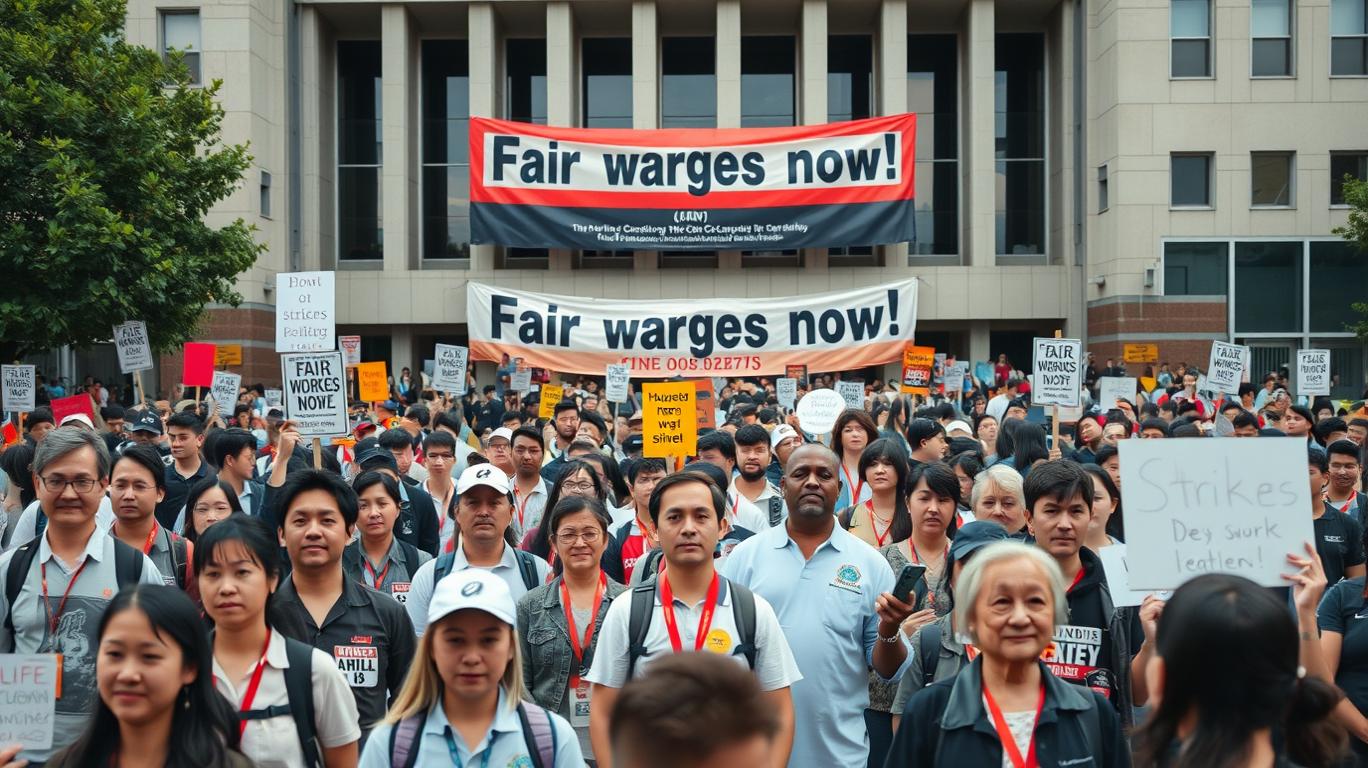
The strike, driven by allegations of unfair bargaining tactics and staff shortages, could lead to temporary disruptions in patient care and student services, potentially affecting UC's operational continuity and financial performance. According to AFSCME Local 3299, UC's "illegal conduct" in negotiations has left workers with no choice but to strike. UC officials, however, maintain that they have been working collaboratively with labor unions and have proposed economic increases totaling 700 million U.S. dollars for AFSCME-represented employees, including a direct response to the union's request for a 25-dollar-an-hour minimum wage or a 5-percent across-the-board raise.
The strike's resolution will significantly impact UC's future labor relations. If UC addresses workers' concerns, it could foster a more collaborative environment, enhancing employee satisfaction and retention. However, if UC maintains its stance, it may face ongoing labor disputes and potential damage to its reputation. Legal action could result in a court-mandated settlement, influencing UC's future bargaining strategies.
The University of California workers' strike serves as a cautionary tale for investors, highlighting the importance of understanding labor market dynamics and their impact on companies' operational continuity and financial stability. As the labor market evolves, investors should closely monitor wage inflation, staffing levels, and worker satisfaction to make informed investment decisions. By prioritizing risk management, informed market predictions, and thoughtful asset allocation, investors can navigate the complexities of the labor market and identify enduring companies with robust management and business models.
In conclusion, the University of California workers' strike underscores the challenges faced by workers in a rapidly evolving labor market and the potential consequences for companies' operational continuity and financial stability. Investors must remain vigilant and adapt their strategies to address labor market dynamics and ensure the long-term success of their portfolios.
The strike, driven by allegations of unfair bargaining tactics and staff shortages, could lead to temporary disruptions in patient care and student services, potentially affecting UC's operational continuity and financial performance. According to AFSCME Local 3299, UC's "illegal conduct" in negotiations has left workers with no choice but to strike. UC officials, however, maintain that they have been working collaboratively with labor unions and have proposed economic increases totaling 700 million U.S. dollars for AFSCME-represented employees, including a direct response to the union's request for a 25-dollar-an-hour minimum wage or a 5-percent across-the-board raise.
The strike's resolution will significantly impact UC's future labor relations. If UC addresses workers' concerns, it could foster a more collaborative environment, enhancing employee satisfaction and retention. However, if UC maintains its stance, it may face ongoing labor disputes and potential damage to its reputation. Legal action could result in a court-mandated settlement, influencing UC's future bargaining strategies.
The University of California workers' strike serves as a cautionary tale for investors, highlighting the importance of understanding labor market dynamics and their impact on companies' operational continuity and financial stability. As the labor market evolves, investors should closely monitor wage inflation, staffing levels, and worker satisfaction to make informed investment decisions. By prioritizing risk management, informed market predictions, and thoughtful asset allocation, investors can navigate the complexities of the labor market and identify enduring companies with robust management and business models.
In conclusion, the University of California workers' strike underscores the challenges faced by workers in a rapidly evolving labor market and the potential consequences for companies' operational continuity and financial stability. Investors must remain vigilant and adapt their strategies to address labor market dynamics and ensure the long-term success of their portfolios.



Divulgación editorial y transparencia de la IA: Ainvest News utiliza tecnología avanzada de Modelos de Lenguaje Largo (LLM) para sintetizar y analizar datos de mercado en tiempo real. Para garantizar los más altos estándares de integridad, cada artículo se somete a un riguroso proceso de verificación con participación humana.
Mientras la IA asiste en el procesamiento de datos y la redacción inicial, un miembro editorial profesional de Ainvest revisa, verifica y aprueba de forma independiente todo el contenido para garantizar su precisión y cumplimiento con los estándares editoriales de Ainvest Fintech Inc. Esta supervisión humana está diseñada para mitigar las alucinaciones de la IA y garantizar el contexto financiero.
Advertencia sobre inversiones: Este contenido se proporciona únicamente con fines informativos y no constituye asesoramiento profesional de inversión, legal o financiero. Los mercados conllevan riesgos inherentes. Se recomienda a los usuarios que realicen una investigación independiente o consulten a un asesor financiero certificado antes de tomar cualquier decisión. Ainvest Fintech Inc. se exime de toda responsabilidad por las acciones tomadas con base en esta información. ¿Encontró un error? Reportar un problema


SOBRE NOSOTROS
Nuestra historiaAutores de noticiasBase de conocimientosPolítica de privacidadTérmino de usoDescargo de responsabilidad de corretaje de tercerosTérminos de uso de AIMEDivulgaciones de riesgos de AInvest AICarrerasCONTÁCTENOS
Email: support@ainvest.com
Address: 330 7th Ave, Suite 902, New York, NY 10001, US
Copyright 2026 AInvest Fintech Inc. All rights reserved.


Comentarios
Aún no hay comentarios