
United Rentals' Q4 Earnings Outlook: Assessing Growth Potential in a Shifting Construction Landscape
The construction equipment rental sector is navigating a pivotal inflection point, with United RentalsURI-- (URI) emerging as a key player poised to capitalize on evolving industry dynamics. As the largest equipment rental company in North America, URI's strategic positioning in non-residential construction and its aggressive expansion into high-margin specialty rentals are critical to its long-term growth narrative. With UBSUBS-- recently upgrading its thesis on the stock and analysts forecasting robust earnings growth, the question remains: How does URI's exposure to construction demand and its operational agility position it for sustained profitability in a volatile market?
UBS's Upgraded Thesis: A Bet on Construction Rebound and Specialty Rentals
from Neutral underscores a compelling narrative of sector recovery and operational differentiation. The firm projects 5.0% year-over-year EBITDA growth in 2026 and 7.2% in 2027, significantly outpacing the estimated 3% growth in 2025. This optimism is rooted in two pillars: the anticipated rebound in U.S. non-residential construction activity and the company's strategic pivot toward higher-margin specialty rentals.
Non-residential construction, which includes commercial, industrial, and infrastructure projects, and , according to UBS. This aligns with broader industry forecasts, such as like office and data centers in 2026. For URI, this translates to a direct tailwind, as its business model is heavily skewed toward infrastructure and non-residential projects. CEO Matthew Flannery has emphasized that will drive demand for URI's equipment, particularly in sectors like data centers and warehousing.
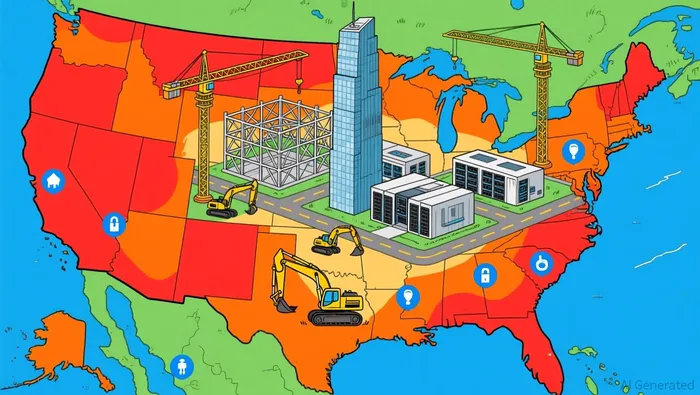
Equally critical is URI's expansion into specialty rentals, a segment that offers higher margins and less cyclical exposure. to $1.265 billion, driven by demand for niche solutions such as trench safety equipment and HVAC systems. While the segment's gross margin dipped due to inflation and depreciation pressures, the underlying growth trajectory remains intact. UBS anticipates that URI's focus on bundling specialty rental capabilities and leveraging its M&A pipeline will further enhance profitability.
Earnings Momentum and Capital Allocation: A Foundation for Resilience
URI's Q3 2025 results reinforce its operational strength. The company reported $4.23 billion in revenue, a 5.9% year-over-year increase, with rental revenue hitting a record $3.66 billion according to earnings data. Despite missing EPS estimates by 5.03%, the firm raised full-year revenue guidance to $16.0–$16.2 billion, reflecting confidence in sustained demand as reported. This momentum is underpinned by a $4.0–$4.2 billion capital expenditure guidance for 2025, signaling a commitment to fleet modernization and capacity expansion.
URI's capital allocation strategy further strengthens its growth profile. In July 2025, the company announced a $2.0 billion share repurchase program, demonstrating its ability to return value to shareholders while maintaining a robust balance sheet. With a leverage ratio of ~3.5x EBITDA (as of Q3 2025), URI's financial flexibility positions it to navigate macroeconomic headwinds and fund strategic initiatives.
Navigating Challenges: Construction Sector Headwinds and Margin Pressures
Despite the bullish outlook, URI faces near-term challenges. The non-residential construction sector is grappling with , and a . Additionally, the specialty rental segment's margin compression-driven by inflation and higher depreciation-requires careful management.
However, URI's diversified revenue streams and focus on high-margin verticals mitigate these risks. For instance, -adding 18 new locations in Q3 2025-expands its footprint in underserved markets. Moreover, its emphasis on data-driven operations and occupancy optimization (a tactic borrowed from its real estate peers) ensures pricing discipline and cost efficiency.
Long-Term Outlook: A Compelling Investment Thesis
URI's strategic alignment with long-term industry trends-infrastructure investment, AI-driven data center growth, and specialty rental innovation-creates a durable competitive advantage. UBS's price target of (a 20% upside from its current price of $845.06) reflects confidence in these dynamics. Analysts at KeyCorp also maintain an , projecting 9.62% EPS growth in 2026.
For investors, the key takeaway is clear: URI's exposure to non-residential construction and its proactive expansion into specialty rentals position it to outperform peers in both upturns and downturns. While macroeconomic risks persist, the company's operational agility, capital discipline, and sector-specific tailwinds make it a compelling long-term play.





Comentarios
Aún no hay comentarios