
United-Guardian's Q1 Earnings Collapse: A Contrarian Opportunity or Red Flag?
The cosmetics industry is notorious for its volatility, but United-Guardian’s (UG) 63% plunge in Q1 2025 cosmetics sales—dropping to $698,998 from $1.88 million—has sparked a critical debate: Is this a fleeting stumble or a sign of deeper trouble? With its stock price languishing at $8.09 (down 43% year-to-date), investors are torn between exploiting a valuation discount or fleeing a sinking ship. Let’s dissect the data to uncover whether UG presents a rare contrarian buy or a warning sign to avoid.
The Cosmetic Sales Meltdown: Temporary Hurdle or Structural Shift?
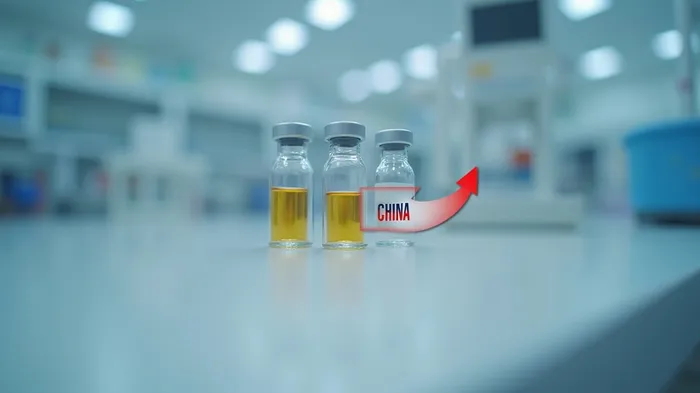
The collapse stems from Ashland Specialty Ingredients (ASI), UG’s largest distributor, which slashed orders by 74%. ASI cited two key factors: excess inventory in China and misaligned ordering timing. Crucially, there’s no evidence of lost customers or deteriorating relationships. Management insists this is a cyclical issue, not a structural decline.
The argument for optimism:
- ASI confirmed it’s working through inventory overhang, not abandoning UG’s products.
- China’s cosmetics market remains robust, with 2024 sales up 14% despite short-term disruptions.
- No regulatory shifts or trade policy changes (yet)—the decline is purely operational.
The risk:
- If Chinese distributors continue delaying restocking, UG’s cosmetics segment could face prolonged weakness.
- ASI’s reliance on UG’s niche ingredients (e.g., emollients, thickeners) is strong, but overcorrection in inventory could stretch recovery timelines.
The Pharmaceutical Segment: A Steady Anchor in Stormy Waters
While cosmetics tanked, UG’s pharmaceutical division grew 23% to $1.17 million, driven by stabilized supply chains for its flagship products:
- Renacidin: A broad-spectrum antiseptic saw a 38% sales surge as supply issues eased.
- Clorpactin WCS-90: A wound-care disinfectant expanded into new markets.
The medical lubricants segment also surged 43%, fueled by demand in India and China. These gains highlight UG’s diversified revenue streams, with healthcare products now accounting for 58% of total sales (up from 42% in 2024).
Why this matters: The pharmaceutical division’s resilience suggests UG isn’t a one-trick pony. Its pipeline of niche healthcare products—protected by patents and regulatory barriers—creates a moat against competitors.
Valuation: A Fire Sale on a Growing Business?
UG’s valuation metrics scream mispricing:
- P/E Ratio: 12.88 vs. an industry average of 16.7x and peers like Zhong Yuan Bio-Technology (117.2x) or Big Tree Cloud (131x).
- EV/EBITDA: 8.4x, far below the sector average of 11.3x.
A Discounted Cash Flow (DCF) analysis estimates UG’s intrinsic value at $18.59—a 130% premium to its current stock price. Even if we factor in a 20% discount for risk, the stock still looks undervalued.
Key drivers of upside:
1. Cosmetics recovery: Once ASI restocks, cosmetics sales could rebound sharply.
2. Pharmaceutical growth: With Renacidin and Clorpactin expanding into European markets (via Azelis Group), this segment could offset cosmetics headwinds indefinitely.
3. Cost discipline: Lower cosmetics volume reduced the cost of sales by 27%, improving margins.
The Risks: Why Some Investors Are Still Cautious
- Trade policy uncertainty: U.S. tariffs on Chinese imports could disrupt supply chains, though UG claims this hasn’t impacted results yet.
- Client concentration: ASI still accounts for ~30% of cosmetics sales. A prolonged inventory overhang here could trigger a liquidity crunch.
- R&D limitations: Unlike peers investing in biologics or gene therapies, UG focuses on incremental improvements in existing products.
Verdict: A Buying Opportunity with a Safety Net
The evidence leans heavily toward UG being a contrarian buy at current levels. The cosmetics slump is cyclical, not structural, and the pharmaceutical segment’s growth justifies its valuation. Even if cosmetics take a year to recover, the stock’s DCF premium and peer underperformance suggest significant upside.
Actionable strategy:
- Aggressive investors: Buy now, targeting a $12–$15 price target within 12 months.
- Conservative investors: Wait for ASI’s Q2 2025 orders to stabilize, then accumulate.
- Safety net: Set a stop-loss at $7.00 (13% below current price) to guard against prolonged weakness.
In a market obsessed with growth at any cost, UG’s beaten-down valuation offers a rare chance to profit from a temporary setback. The beauty here isn’t in the cosmetics—it’s in the math.





Comentarios
Aún no hay comentarios