
United Airlines' Strategic Shift Under Scott Kirby: Navigating Post-Pandemic Challenges and Competitive Dynamics
Strategic Reorientation: From Commodity to Brand-Driven
Scott Kirby has consistently framed United's post-pandemic strategy around the idea that the airline industry is no longer a "commodities business" but one where brand loyalty and customer experience determine success. In a 2025 interview on the Airlines Confidential podcast, Kirby asserted that United and Delta are the only two U.S. carriers capable of competing on brand strength, forcing rivals like American to rely on price wars to retain market share. This philosophy has driven United's operational decisions, including the elimination of change fees on most tickets, the introduction of seat-back entertainment screens, and the rollout of premium services such as its acclaimed business class wine under Kirby's leadership.
Kirby's vision extends beyond . In 2021, United committed to procuring 270 new Boeing and Airbus jets to prepare for a post-pandemic demand surge, Kirby described as critical to "building a foundation for long-term growth". This investment, coupled with a 10% increase in staffing per block hour compared to pre-pandemic levels, reflects a deliberate effort to address industry-wide challenges like and operational bottlenecks. Kirby's emphasis on -via his "Straight from Scott" video series and frequent employee engagement-has also been central to fostering a culture of accountability and innovation as Kirby's leadership demonstrates.
Operational Efficiency: A Mixed Picture
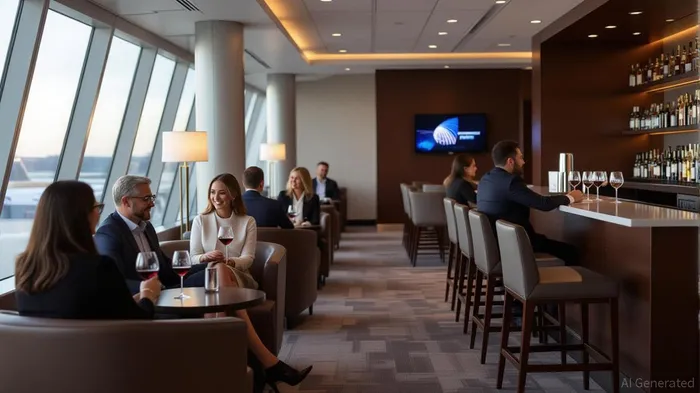 While United's strategic initiatives have bolstered its brand, its lags behind Delta's but outperforms American's. In Q3 2025, , the lowest among the three carriers, driven by its long-haul network and cargo revenue according to industry analysis. DeltaDAL--, however, maintained tighter , as industry reports show. American Airlines, meanwhile, , underscoring its challenges in balancing costs and profitability as data indicates.
also highlight divergent performance. , , respectively according to Q3 2025 earnings data. Delta's disciplined -flattening domestic growth in 2025 to align with demand-has been a key factor in its resilience as industry analysts note. United, by contrast, has faced capacity/demand misalignment, particularly in its domestic routes as Q3 data shows. On-time performance further underscores Delta's operational edge: industry reports indicate Delta maintains a 5% reliability advantage over United and a 10% edge over American, attributed to superior hub management and .
Competitive Positioning: Brand vs. Debt
United's market share (16% of domestic capacity) trails Delta (19%) and American (21%), but its focus on has driven revenue growth. In 2025, , according to market analysis. Kirby's confidence in United's brand-evidenced by his bold declaration that it is "the best airline in the history of aviation"-is rooted in its ability to capture high-margin travelers as industry reports confirm. Delta, however, remains the industry leader in profitability, as financial data shows. Delta's , , has further solidified its competitive edge as financial reports indicate.
American Airlines, meanwhile, faces an . , , as financial data shows. While American has pledged to invest $3.8 billion in 2025 for brand improvements, its reliance on a low-cost model during the pandemic has left it playing catch-up in premium offerings as industry analysis shows.
Risks and Opportunities
United's is not without risks. Its higher and debt burden remain vulnerabilities, particularly as the post-pandemic travel boom slows as industry analysts note. Delta's disciplined and American's potential to leverage its credit card partnership with Citibank could further widen the gap as market trends suggest. However, United's investments in technology (e.g., complimentary Wi-Fi) and fleet modernization position it to capitalize on evolving customer preferences as industry reports indicate. Kirby's emphasis on employee engagement and transparency also provides a buffer against operational shocks, a critical asset in an industry prone to volatility.
Conclusion
Scott Kirby's leadership has redefined United Airlines as a brand-focused competitor in a post-pandemic industry where operational efficiency and customer loyalty are paramount. While Delta's financial discipline and American's debt-laden recovery present distinct challenges, United's strategic investments in premium services, technology, and employee engagement offer a compelling case for long-term resilience. For investors, the key question is whether United can sustain its operational improvements while closing the profitability gap with Delta-a challenge that will define its competitive positioning in the years ahead.







Comentarios
Aún no hay comentarios